The Metaverse Bet Is Rerouting From Headsets to Glasses
The strategic route in extended reality is changing. Meta's vast Reality Labs spending built a sophisticated VR ecosystem, but 2026 market forecasts point toward lighter smart glasses as the faster path to everyday adoption.
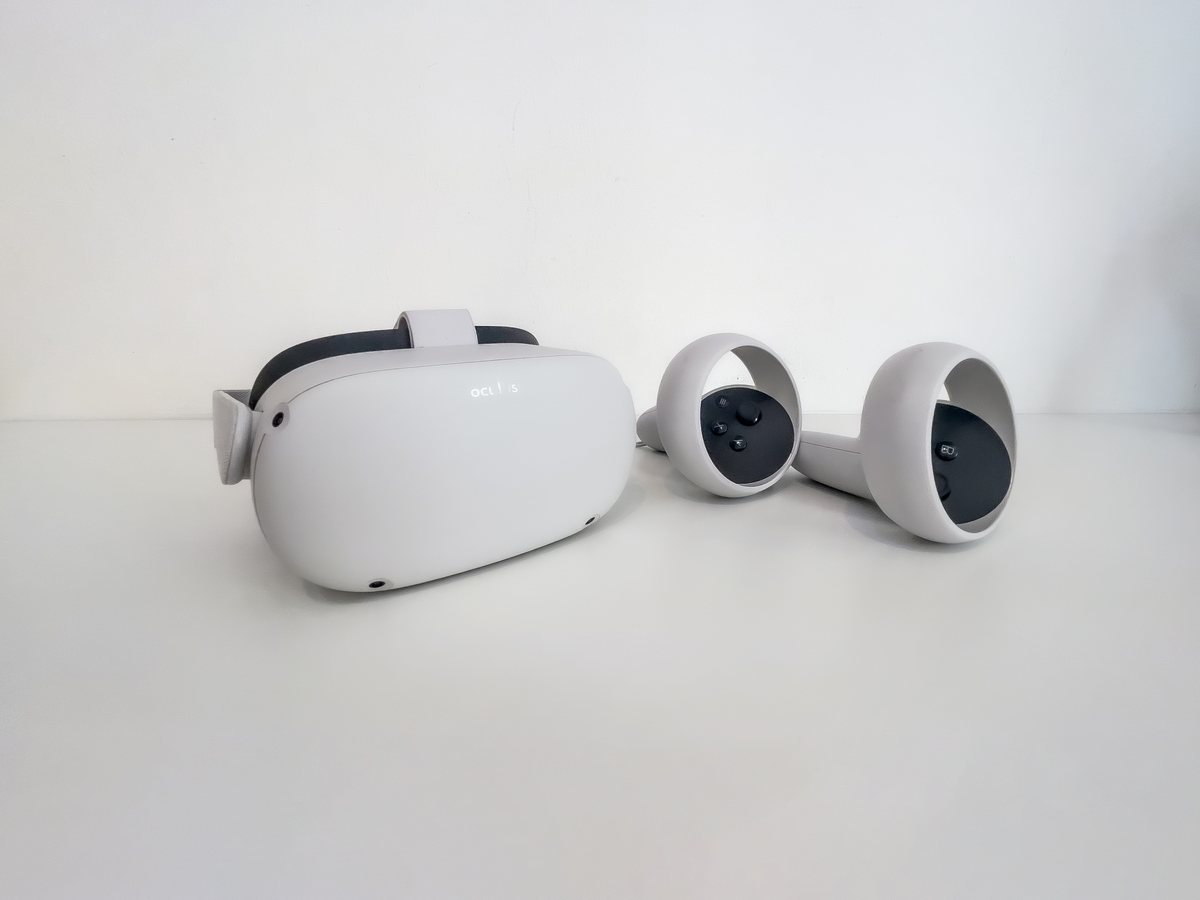
The metaverse was presented as a destination. The market may be turning it into a supply chain.
When Facebook renamed itself Meta in 2021, the company described the metaverse as the next evolution of social technology. The strategic idea was large: build the hardware, software and social layer for an internet people would enter spatially rather than view through flat screens.
Five years later, the technology has advanced but the route to mass adoption has changed. Reality Labs has accumulated about $92.2 billion in operating losses from 2020 through the first half of 2026. In 2025 the unit reported $2.207 billion of revenue and a $19.193 billion operating loss; the first six months of 2026 added $833 million of revenue and $8.647 billion of operating loss.
Those figures do not represent a simple “metaverse burn rate.” Meta's reporting places VR and AR hardware, software, content, wearables and foundational research inside Reality Labs. That distinction is crucial because the assets created by the investment can travel into products that no longer resemble the original destination.
The repeated cycles leading to this point are mapped in Science Official's research “Why Virtual Reality Keeps Missing the Mass Market.” Nintendo's Virtual Boy, Google Cardboard and Daydream, Oculus Rift, Quest and Apple Vision Pro all approached the same problem from different price and technology levels. The experience improved. The need to persuade a person to put on a headset remained.
That is a distribution problem as much as a technical one. A smartphone is an always-available node in the digital economy. A headset is usually a scheduled environment. Fewer sessions mean fewer opportunities for communications, commerce, advertising and services, which in turn makes it harder to build the density of applications that reinforces a platform.
Market data now suggests a rerouting. IDC reported 44.4% growth in the broader XR market in 2025, but said it was driven primarily by smart glasses while traditional VR/MR headsets continued to decline. Quest headset shipments fell 42.3% year on year. For 2026, IDC forecasts about 13.6 million display-less smart glasses versus around 3.2 million mixed-reality devices.
The products solve a different adoption equation. Smart glasses can add cameras, microphones, speakers and AI while preserving a user's view of the world. The social cost is lower because the form is familiar. The usage window can be longer because the device does not demand a separate immersive session.
Apple Vision Pro shows the limits of solving the opposite equation with premium engineering. The M5 version still starts at $3,499 and weighs roughly 750–800 grams before its 353-gram external battery is counted. It can be valuable for specialist design, training, visualisation and medical uses. Those are meaningful markets, but they do not automatically create a universal interface.
Meta's strategic question is therefore no longer simply whether Quest can win the headset market. It is whether years of optics, tracking, spatial-computing, AI and wearable R&D can be transferred into a product with much lower behavioural friction.
If that transfer works, the metaverse era may look less like a failed route and more like an expensive tunnel bored toward another destination. If it does not, the accumulated losses will stand as a warning about confusing technical immersion with consumer utility.
Either way, the direction of travel has changed. The industry spent years trying to bring people into virtual spaces. The fastest-growing branch is now trying to bring digital intelligence back out into ordinary streets, offices and conversations.
49