
Russia Does Not Need Starlink Scale to Change the Battlefield
Rassvet’s strategic threshold may be a few hundred satellites, not ten thousand. The key issue is whether Russia can turn two batch launches into a sustained industrial cadence.
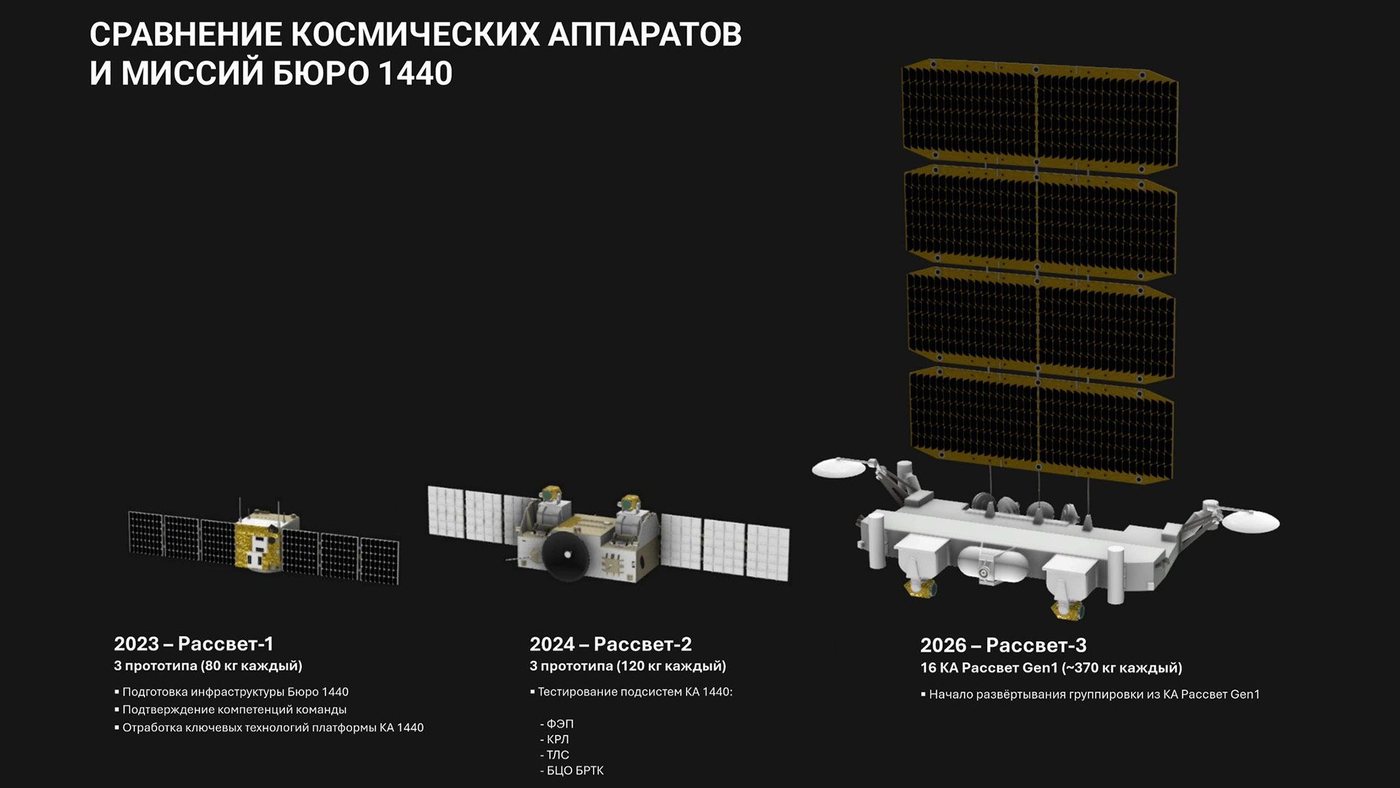
The strategic significance of Russia’s Rassvet constellation is not whether it can reproduce Starlink globally. It is whether Moscow can create enough persistent low-orbit connectivity over Russia and Ukraine to alter military communications.
That threshold is much lower.
Science Official’s technical analysis places the current open-source fleet at roughly 37 Rassvet-related spacecraft, depending on the status of six earlier prototypes. The system is therefore still sparse, but the transition to serial launches is real: a 16-satellite batch flew in March and another batch in July.
At roughly 800 kilometres altitude, each spacecraft circles Earth in about 100.7 minutes. It does not remain over the front. The network works by moving coverage zones and rapid hand-offs between satellites.
This is why orbital architecture matters more than the headline fleet number. A simplified configuration of 12 planes with 21 satellites each — 252 spacecraft — can maintain continuous geometric visibility over Kyiv at a 25-degree minimum elevation. Actual service would still depend on beam capacity, routing, terminals and electronic-warfare resilience, but the geometry itself is plausible.
That creates an important asymmetry. Starlink has more than 10,000 active satellites because it serves users across the world and needs enormous aggregate capacity and redundancy. A Russian military system focused on Eurasian latitudes can become useful with far fewer spacecraft.
The first operational benefits may emerge even before continuous coverage. Sparse constellations create predictable windows that can support scheduled data transfer, mission updates and communications for platforms that can tolerate interruptions. As more orbital planes fill, those windows overlap and the network becomes increasingly persistent.
Moscow has publicly discussed 156 satellites in 2026 and 292 in 2027. The first figure now looks especially difficult. From an estimated 37 spacecraft, the programme would need around eight additional 16-satellite launches by the end of December, roughly one mission every 18 days.
The public record also undermines the “ahead of schedule” narrative. A mass launch once expected in December 2025 slipped to March 2026. The second batch then flew only in July.
The important strategic question is therefore industrial. Can Bureau 1440 build identical spacecraft fast enough? Can Russia allocate enough Soyuz launches without crowding out other missions? Can it produce terminals that are small, rugged and resistant to jamming?
If the answer becomes yes, Rassvet will not need to defeat Starlink in a commercial comparison. It will only need to provide Russian forces with a sovereign layer of moving communications nodes that are harder to cut than fibre, towers or fixed relays.
That would be enough to change the communications contest in the war. The evidence to watch is no longer rhetoric about a “Russian Starlink”, but the next sequence of launch dates, batch sizes and operational terminal deployments.
53