Number of over-90s in UK soars as social care crisis deepens
The sharp rise in people living to 90 in the UK is putting pressure on the social care system. Prime Minister Andy Burnham has made a pledge to end the funding crisis, but critics say action is overdue.
The number of people in the UK living to the age of 90 has risen sharply, intensifying the debate over how the country will fund its social care system. With an ageing population placing increasing demands on care services, Prime Minister Andy Burnham has announced plans to tackle the long-running crisis that has left many families struggling to afford care for elderly relatives.
Burnham, whose father suffers from Alzheimer's, has made an emotional pledge to end what he described as decades of failure in social care. He has invited opposition leaders for urgent talks to address the crisis, accusing previous governments of a «shameful» response to the issue. The Prime Minister said the situation has «gone on too long» and that immediate action is needed to fix a system that is failing both care recipients and workers.
Official figures show a dramatic rise in the over-90 age group, raising concerns about the long-term sustainability of current funding models. Care homes face chronic staff shortages, rising costs, and increasing demand, while many older people are forced to sell their homes to pay for care. The soaring number of people living to 90 is expected to put additional strain on an already overstretched system.
Burnham has also linked the social care issue to the assisted dying debate. He argued that introducing assisted dying legislation would be «very challenging» until the care system is in a better place. The Prime Minister said he is not opposed to having the debate on assisted dying, but emphasised that palliative care and social care must be fixed first. His comments come as the assisted dying bill continues to generate controversy in Parliament.
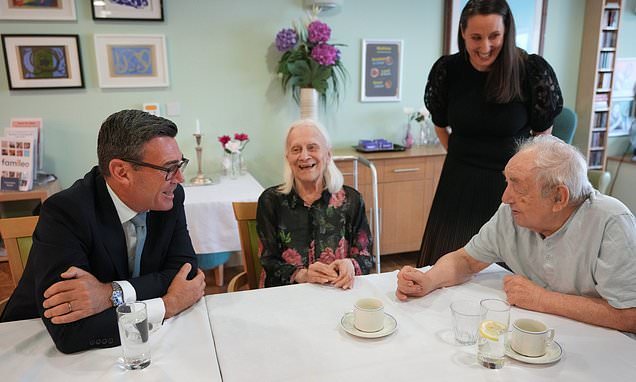
Frontline carers and care home residents have voiced their frustrations with the political response to the crisis. One care home resident, upon meeting Burnham, remarked: «What, a new one? They keep changing every five minutes?» — a comment that reflects public disillusionment with repeated political promises that have failed to deliver lasting change. Meanwhile, carers say they feel abandoned by a system that offers low pay, poor support, and little recognition for their work.
Burnham's proposals include increased funding, better pay for care workers, and a more integrated health and social care system that aims to reduce the gap between the NHS and social care provision. However, critics argue that the scale of the challenge is immense and that previous initiatives have failed to deliver meaningful reform. The social care sector has been underfunded for years, leading to a crisis in recruitment and retention of staff.
As the population continues to age, the pressure on both families and the state to provide adequate care will only grow. Political leaders across the spectrum acknowledge the need for reform, but agreement on how to fund and deliver it remains elusive. With the number of people living to 90 soaring, the urgency for a sustainable solution has never been greater. Burnham has promised to make social care a priority, but the clock is ticking for millions of elderly people and their families who are counting on a functioning system.