Early humans avoided Arabian lakes lacking suitable stone for tools
Researchers crossing the Empty Quarter found ancient freshwater lakes without any sign of human settlement, suggesting access to tool-making stone shaped where early people lived.
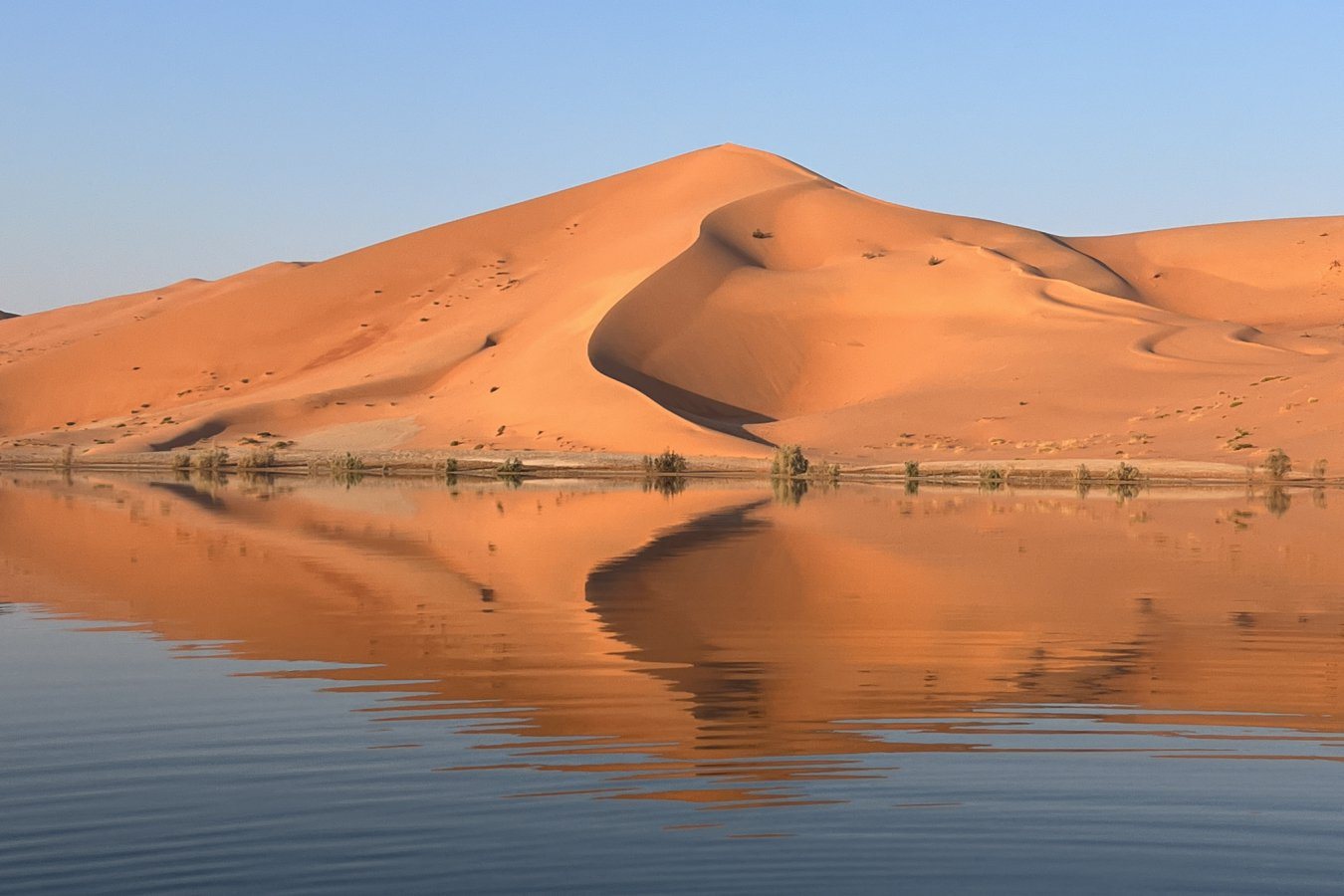
Early humans appear to have avoided settling around ancient freshwater lakes in the Empty Quarter of the Arabian peninsula, because those lakes lacked nearby deposits of stone suitable for making tools. Scientists say water alone did not draw prehistoric people to the region; they also needed exposed formations of flint and quartz within reach.
The Empty Quarter, known in Arabic as the Rub’ al-Khali, is the world’s largest continuous expanse of wind-swept dunes, covering about 650,000 square kilometres of the southern Arabian peninsula. Today it is overwhelmingly dry, apart from a few permanent lakes in its interior fed by groundwater. Over the past century, however, scientists have found evidence of numerous ancient lakes that formed during wetter periods, when stronger Indian Ocean monsoons transformed parts of the peninsula into what researchers call Green Arabia.
Researchers have long suspected that these greener periods opened routes for early humans spreading out of Africa and across Arabia, an idea supported by stone tools found near ancient lakes. However, those sites lie largely along the desert’s margins, and its vast interior has remained poorly explored. To address this gap, Rudolf Dellmour at the University of Vienna and his team spent 35 days in 2023 crossing the dunes on an expedition of about 1,500 kilometres, examining 125 locations for traces of ancient lakes. They focused on lakes present between roughly 122,000 and 67,000 years ago, when early humans were spreading into Arabia.
The team found evidence of ancient lakes at 55 of those locations. It included freshwater snail and clam shells, ostrich eggshell fragments, and traces of animals that once burrowed into muddy lake beds. Despite these signs of a once-thriving environment, the researchers found no stone tools or other evidence that prehistoric humans had settled by any of the 55 lakes. “If we could spot a snail shell the size of a fingernail, we would have spotted a stone tool,” Dellmour says. “But there were none.”
To test whether a shortage of suitable stone could explain the absence of settlements, Dellmour, Jeffrey Rose at the University of Algarve in Portugal, and their colleagues used computer modelling. They mapped ancient water sources and the geology of the Arabian peninsula, then compared the results with the distribution of hundreds of archaeological sites identified in earlier research. The analysis showed that 57 per cent of the peninsula’s terrain within reach of water lacked suitable stone for tool-making, and that prehistoric settlements were concentrated in places offering both water and stone.
Rose says people who live by stone tools rarely stray far from good stone. “You just really don’t see Stone Age sites unless you’re within a few kilometres of an outcrop.” Ancient toolmaking was also highly resource-intensive. “They weren’t thinking about efficiency,” he says. “So, you’d have a pile of garbage produced for one spear point.” Groundwater-fed lakes in the sand sea, unlike rivers, would not have carried flint, chert, obsidian or quartz into the desert, and while people could have carried tools into resource-poor areas, this would probably have supported only small groups for short periods.
The findings suggest that geology may have been as important as climate in shaping prehistoric human migrations, Rose says. Manuel Will at the University of Tübingen in Germany, who was not part of the study, says the research sheds light on a long-standing debate among archaeologists about the role of raw stone at ancient sites, especially in harsh environments. “Probably what’s most surprising to me is the lack of archaeological stone tools in otherwise perfectly fine circumstances, and close access to fresh water,” he says. “It really shows that early humans were picky with where they went and that they did not settle for just any spot.”
5