
Italy’s McDonald’s security network shows how private space absorbs public problems
Fast-food restaurants at transport hubs are becoming nodes in a wider security system connecting franchisees, private guards, surveillance and police.
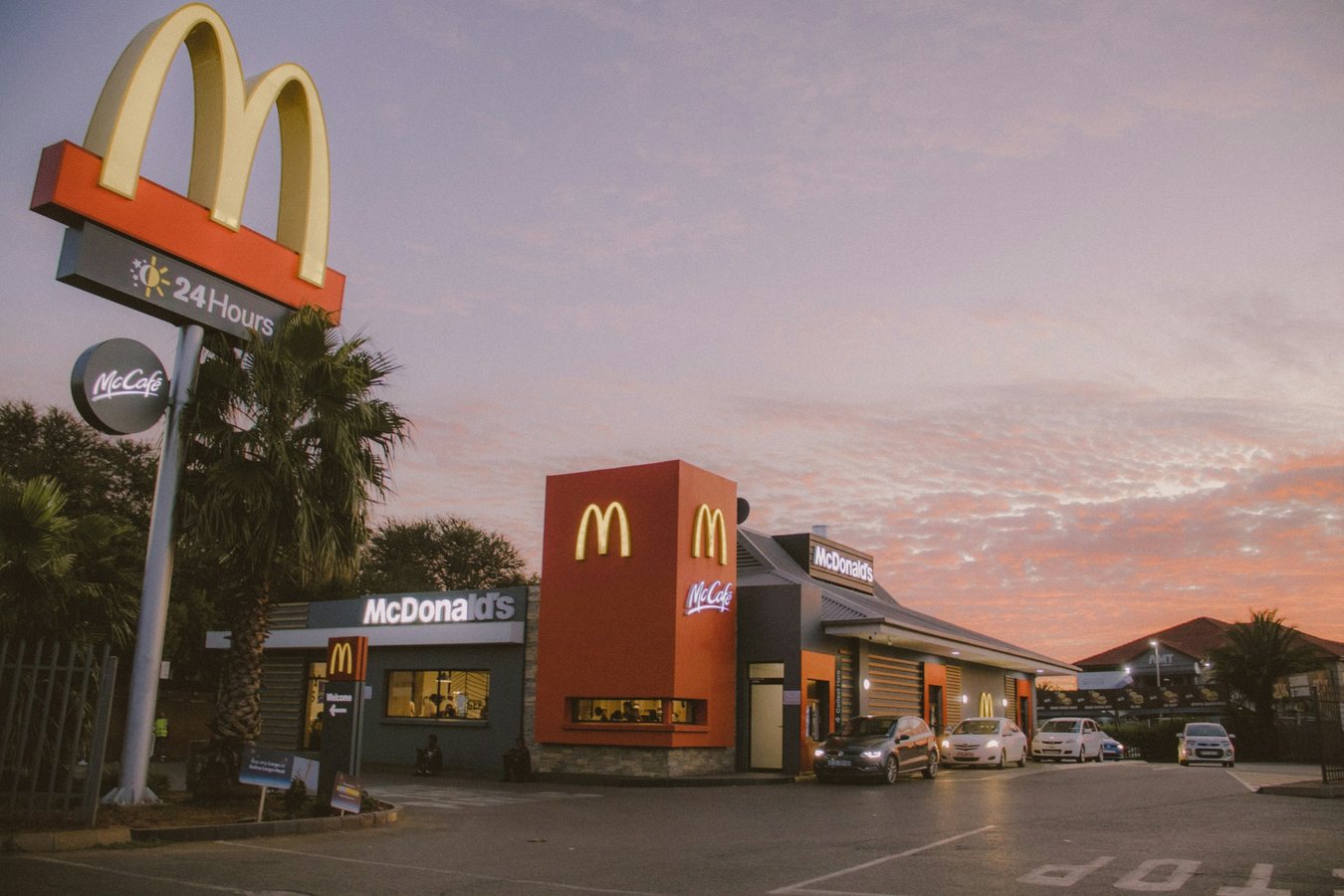
A train station, a tourist square and a fast-food restaurant may look like separate nodes in a city, but the movement of people connects them. That is why security problems from the street often travel directly into a McDonald’s dining room. MAIR’s Italian publication Ascensio traced this pattern through Milan, Naples and Frosinone in “Guardie e mendicanti nei McDonald’s italiani.” Its reporting found no evidence for the viral claim that African guards are deliberately hired to control other Africans. The stronger finding is that some restaurants are becoming part of a wider urban security network.
Milan customer reviews describe the first layer of that network: people at entrances, receipt checks and restrictions on restroom access. Those controls are local attempts to define who can use a commercial space and on what terms. A 2025 reviewer near Piazzale Loreto described a man perceived as African enforcing a purchase-before-restroom rule. The observation cannot establish the man’s official role or the motive for hiring him.
Another node appears in Naples. A reviewer at Piazza Garibaldi reported two security workers but also repeated requests for money inside the restaurant. That location sits beside a major transport hub, where tourists, commuters, informal workers and vulnerable people cross the same physical space.
Milan’s 2017 stabbing case shows what happens when those flows turn into conflict. ANSA, citing police, reported that a group described as North African had occupied tables and disturbed customers. The manager asked a guard to remove them. A customer who verbally supported the guard was stabbed.
Frosinone’s 2026 security protocol represents the next stage: formal connection between the private node and public institutions. The plan links surveillance, lighting and staff training with rapid law-enforcement communication. Instead of treating the restaurant as an isolated property, the model places it inside a system of information and response.
This is particularly relevant because McDonald’s Italia is largely a franchise network. More than 90 percent of restaurants are run by franchisees, and the company cited more than 165 local franchise entrepreneurs in early 2026. Each operator is responsible for a specific location but shares a brand.
The network perspective also clarifies why the ethnic explanation is weak. A security worker’s background is only one personal characteristic in a much larger system. The key variables are location, staffing, procedures, visibility, information flow and police response.
For cities, the case raises a strategic question about the migration of public functions into private places. If people rely on restaurants for restrooms, seating, warmth and waiting space because other infrastructure is missing or uncomfortable, commercial operators inherit problems they were not designed to solve.
Italy’s McDonald’s cases therefore map a route from the street to the table and from the table to the police. The more useful story is not the identity of the person at the door. It is the growing network of institutions behind that door — and the question of who should ultimately carry responsibility for order in shared urban life.
61