
Russia’s Manpower Pipeline Is Spreading Across the Civilian State
A Ryazan employer quota, rising recruitment payments and student campaigns point to a networked model of military replenishment. The strategic question is whether that network can carry Russia through the post-election period without a new mobilisation order.
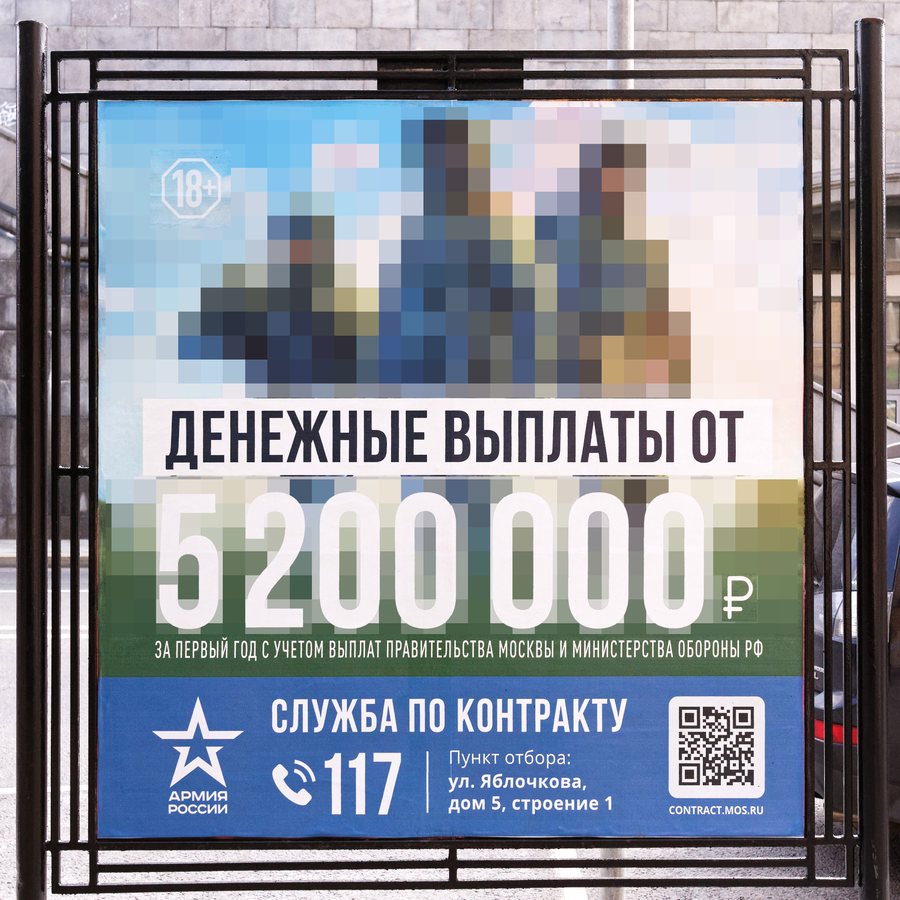
Russia is no longer relying on a single route to replenish its armed forces. It is building a network that runs through regional governments, employers, paid recruiters, universities, the draft system and the volunteer reserve. A Pladrom investigation shows how those routes are beginning to converge ahead of the 20 September State Duma election.
Ryazan region provides the most explicit administrative example. A gubernatorial order gives organisations with at least 150 workers numerical tasks for identifying contract candidates. Depending on workforce size, an employer is expected to find two, three or five people. The order remains in force through election day.
The mechanism matters because it shifts recruitment from a defence-sector function into the civilian economy. It does not legally compel an employee to enlist, but it gives civilian management a state-defined role in producing potential soldiers. In a system governed heavily through regional performance targets, that is a meaningful extension of the military manpower chain.
The financial route is expanding at the same time. Important Stories estimated from federal payments that 71,200 new contract soldiers were recruited in the first quarter of 2026, down 20 per cent year on year. Regional budgets show a sharp increase in the money paid to intermediaries who bring in candidates, with at least Rbs7.7bn spent on recruitment rewards.
This creates a market around manpower. The state pays the serviceman, while regions may also pay the person who found him. The model can preserve the formal language of voluntary service even as the administrative and financial pressure to produce recruits rises.
A separate route targets skills rather than geography. Students are being encouraged to join Russia’s unmanned-systems forces under contracts presented as technical service. Reporting based on contract documents found that recruits are not guaranteed to remain in drone roles and can be assigned elsewhere. Accounts of pressure within educational institutions add another layer to a system that increasingly treats specific civilian populations as recruitment pools.
The reserve is also being used differently. Citizens who have already volunteered for the mobilisation manpower reserve can be sent to special training and protection duties for critical infrastructure. That is not a new mass call-up, but strategically it can free regular forces from tasks inside Russia and keep more trained personnel available for the war effort.
The election calendar shapes expectations because of 2022. Partial mobilisation was announced ten days after that year’s unified voting day. In 2026, independent outlets have reported discussions of a possible autumn mobilisation, including an October scenario. Those reports are not evidence of an order: the sources themselves said no decision had been made, and the Kremlin earlier denied that a new wave was on the agenda.
The key question is therefore one of pipeline capacity. If contract recruitment, regional coercive incentives, targeted student campaigns and reserve use can replace losses and staff expanding formations, the Kremlin can continue to avoid the social shock associated with the word mobilisation. If the pipeline falls short, the post-election period becomes strategically and politically more attractive for a harder step.
What is already visible is a change in route. Russia’s manpower system is becoming more dispersed, more expensive and more deeply embedded in civilian institutions. Whether that network substitutes for mobilisation or prepares the ground for it will depend on how well it performs after September.
69