Boehly and Walter sell Chelsea stakes as Clearlake takes full control
Todd Boehly and Mark Walter have sold their Chelsea shareholdings, leaving Clearlake Capital in full control of the Premier League club. Boehly steps down as chairman after a deal reported at around £1bn.
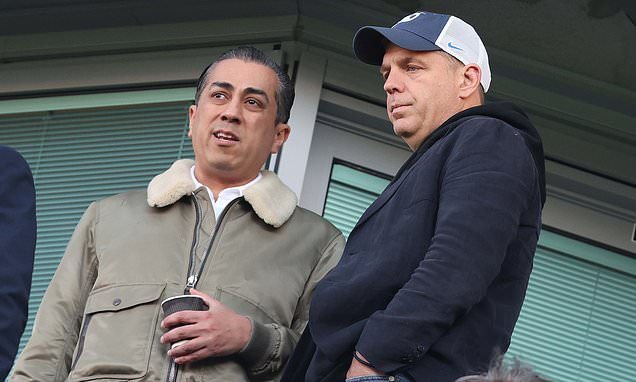
Todd Boehly and Mark Walter have sold their stakes in Chelsea, handing full control of the Premier League club to the private equity firm Clearlake Capital. Boehly, who had served as chairman since the consortium's takeover in 2022, is leaving his role at Stamford Bridge as part of the transaction.
Clearlake previously held 61.5% of the club, with Boehly and Walter dividing the remaining shares alongside the Swiss investor Hansjörg Wyss. The buyout of the minority holdings, reported to be worth around £1bn, ends a four-year shared ownership arrangement that began when the group purchased Chelsea from Roman Abramovich in a sale mandated by the UK government in May 2022.
The deal leaves Clearlake, co-founded by Behdad Eghbali, as the club's sole controlling shareholder. Eghbali is expected to take a more prominent role in the running of the club following the departure of the American businessmen who had fronted the original acquisition.
Boehly said in a statement that he was confident about the club's future. «I am confident that Chelsea is well positioned,» he said, signalling an amicable exit after a period in which the ownership structure had been the subject of persistent internal tension.
The change of control draws a line under an ownership model that had been closely watched across English football. When the Clearlake-led consortium completed its £2.5bn purchase of Chelsea in 2022, the structure was unusual: a private equity fund held the majority of the equity while individual investors, including Boehly and Walter, held significant minority positions. That arrangement gave rise to competing centres of influence, with Boehly acting as the public face of the club while Clearlake retained the largest single stake.
For Chelsea, the immediate effect is a simplified ownership structure. Decisions on football operations, stadium redevelopment and commercial strategy will now rest with a single controlling shareholder rather than a partnership of investors with differing priorities. The club has invested heavily in its playing squad since 2022 and has been exploring options for redeveloping Stamford Bridge, both of which require sustained capital commitments.
The sale also reflects a broader trend in European football, where private equity and institutional investors have taken larger roles in club ownership. Clearlake's move to full control places Chelsea among a growing group of top-flight clubs whose ultimate owners are investment funds rather than individual proprietors.
Boehly's departure from the chairmanship ends a high-profile tenure that began with the rapid restructuring of the club after the Abramovich era. During his time at Chelsea, the club changed managers, broke transfer spending records and sought to establish a new identity on and off the pitch. His exit, alongside Walter's, removes two of the most visible figures from the ownership group.
Walter, who also owns a stake in the Los Angeles Dodgers baseball franchise, had been a less public presence at Chelsea than Boehly but was part of the original investment team. Wyss, the third minority investor, is also understood to have exited as part of the same transaction, though the precise terms of the individual share sales have not been disclosed.
The Premier League is expected to review the change in ownership under its directors' and owners' test, a standard procedure for any transaction involving a top-flight club. Clearlake's existing status as the majority shareholder means the regulatory process is likely to be straightforward, but formal approval remains a requirement before the new structure is fully ratified.
For supporters, the most immediate question is what full Clearlake control means for the club's direction. The firm has emphasised continuity, and Eghbali has been closely involved in Chelsea's operations for several years. The end of the dual-investor model may reduce the internal friction that occasionally surfaced in public, but it also concentrates responsibility for results on a single owner.
Chelsea's financial position remains a central issue. The club has committed substantial sums to player recruitment and wages, and its ability to comply with profit and sustainability rules will depend on continued revenue growth and player trading. A unified ownership structure could make long-term planning easier, particularly on infrastructure projects that require patient capital.
The transaction is one of the largest ownership changes in the Premier League in recent years and underlines the scale of institutional money now involved in the English top flight. Clearlake's full ownership of Chelsea is expected to be confirmed once the remaining formalities are completed.