
Federal Reserve Raises Interest Rates for First Time in Nearly Three Years
The US central bank has lifted its benchmark rate for the first time since 2023, ending a long pause and signalling that further increases may follow. The move defies pressure from President Trump for a cut and marks the first policy shift under the new Fed chief.
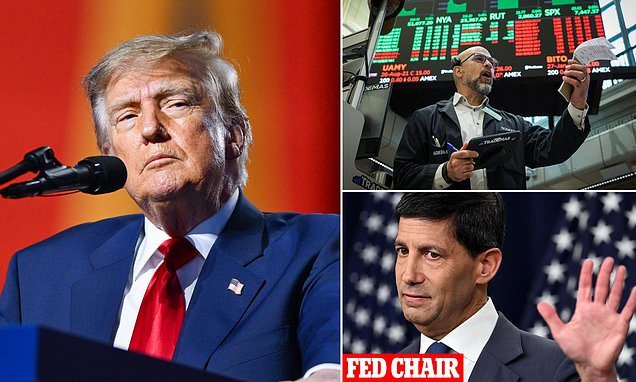
The Federal Reserve has raised its key interest rate for the first time in nearly three years, ending a prolonged period of policy stability and warning that additional increases could be on the horizon. The decision, taken at the central bank's September meeting, marks a significant shift in monetary policy and defies public pressure from President Donald Trump, who had repeatedly called for a rate cut.
The rate hike is the first since 2023 and the first policy move under the new Fed chair, who took office in late May after being selected by Trump. The president had expected his appointee to lower borrowing costs, but the central bank instead opted to tighten, citing the need to address economic conditions. The move underscores the Fed's stated independence from political pressure, even as it sets up a potential clash with the White House.
Officials cautioned that more hikes could be coming if inflation remains elevated or if economic data continues to surprise on the upside. The decision reflects the central bank's assessment that the economy can withstand higher borrowing costs, though it risks slowing growth in sectors sensitive to interest rates, such as housing and business investment.
The rate increase will affect millions of Americans, raising the cost of mortgages, credit cards, and business loans. It also strengthens the dollar and could weigh on exports by making US goods more expensive abroad. Financial markets had been divided ahead of the meeting, with some investors betting on a hold and others anticipating a hike. The Fed's move is likely to trigger a reassessment of expectations for future policy.
The new Fed chief's first rate decision is being closely watched as a signal of his approach. His predecessor had kept rates steady for an extended period, and the shift to tightening suggests a more hawkish stance than some had anticipated. The chair has emphasised a data-dependent approach, meaning future moves will hinge on incoming economic indicators.
Trump's demands for a cut had added a political dimension to the Fed's deliberations. The president has frequently criticised the central bank on social media, arguing that lower rates would boost the economy. The Fed's decision to raise rates instead is a rebuke to that pressure and reinforces the institution's commitment to its dual mandate of price stability and maximum employment.
Economists are divided on the implications. Some argue that the hike is premature and could tip the economy into a downturn, while others contend that it is necessary to prevent inflation from becoming entrenched. The Fed's own projections, released after the meeting, will provide further clues about the expected path of rates.
The rate increase is the latest development in a global monetary tightening cycle that has seen central banks around the world adjust policy in response to post-pandemic inflation. The European Central Bank and the Bank of England have also raised rates in recent years, though at different paces. The Fed's move could influence other central banks' decisions, particularly in emerging markets where dollar-denominated debt is a concern.
For American households and businesses, the immediate impact will be felt in higher borrowing costs. Mortgage rates, already elevated, may climb further, cooling the housing market. Credit card rates, which are tied to the prime rate, will rise, squeezing consumer budgets. Companies that rely on credit to fund operations may delay expansion plans.
The Fed's decision also has political ramifications. With the 2026 midterm elections approaching, the rate hike could become a campaign issue. Democrats may point to the Fed's independence as a strength, while Republicans could argue that the central bank is harming growth. Trump has already signalled that he will continue to criticise the Fed, setting the stage for a prolonged battle over monetary policy.
Looking ahead, the Fed's next meeting in November will be crucial. If economic data continues to show resilience, another hike is possible. If growth slows sharply, the central bank may pause. The new chair's leadership will be tested as he navigates these competing pressures while maintaining the Fed's credibility.