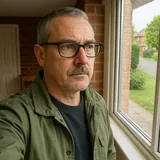
Far-right extremist Ivan Jennings jailed for encouraging terrorism
Ivan Jennings, 46, has been sentenced to five years after pleading guilty to encouraging terrorism, having called for the killing of Jews, Muslims and migrants in extreme far-right groups during 2024.
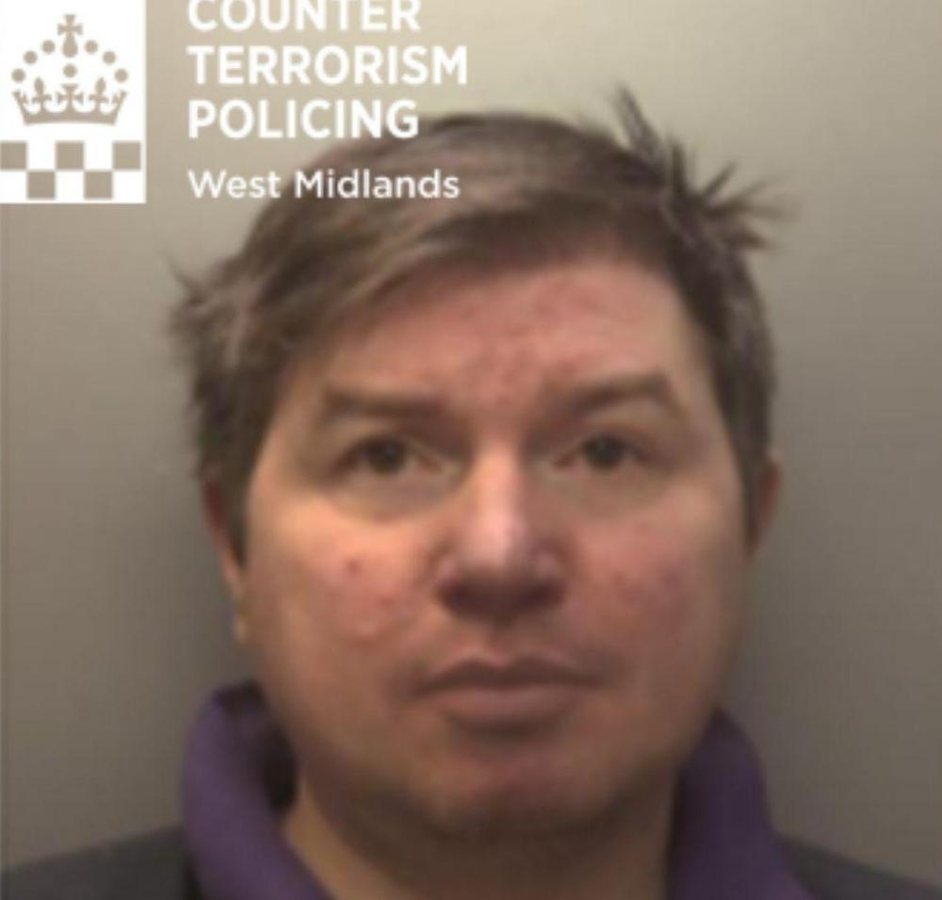
A 46-year-old man has been jailed for five years after admitting to encouraging terrorism, following a campaign in which he discussed poisoning Jews and Muslims and called for the killing of migrants and members of minority communities.
Ivan Jennings, from Stafford, used extreme far-right groups over a three-month period in 2024 to call for the murder of hundreds of people he described as «subhumans», telling his audience that such killings were «justified and actually needed». He pleaded guilty to encouraging terrorism and was sentenced at court on the basis of his online activity.
The case is the latest in a series of prosecutions involving individuals who use social media and encrypted messaging platforms to promote violent extremism. Jennings did not carry out any physical attack himself, but the court treated his statements as serious offences because they explicitly urged others to commit murder against named religious and ethnic groups.
According to the evidence, his posts and messages spanned three months in 2024 and were directed at people he identified as Jews, Muslims and migrants. He framed the killing of hundreds of people as both «justified and actually needed», language that prosecutors argued was intended to incite others to act.
The sentencing reflects the legal position in England and Wales, where encouraging terrorism is a criminal offence regardless of whether any violence follows. Courts have repeatedly emphasised that calling for the killing of groups defined by religion, ethnicity or migration status can create a real risk of harm by inspiring others.
Jennings, who is 46, was identified as a rightwing extremist who operated within extreme far-right groups. His case adds to concerns among police and counter-terrorism officials about the volume of violent material circulating online and the speed with which such content can reach potentially receptive audiences.
The five-year sentence places the case among the more significant recent prosecutions for encouragement of terrorism, a charge that carries a maximum penalty of life imprisonment. The guilty plea entered by Jennings was taken into account during sentencing.
Details of the case emerged as the court confirmed the sentence. The offences took place in 2024, when Jennings used social media and group communications to promote the killing of Jews, Muslims and migrants. He described those he targeted as «subhumans» and presented mass murder as necessary.
The case highlights the continuing challenge for authorities in monitoring far-right networks that operate across multiple platforms. While Jennings acted alone in producing the material, the groups he addressed form part of a wider ecosystem in which violent rhetoric is exchanged and amplified.
No physical attack has been linked to Jennings in the information released about the case. The prosecution rested on his statements and the intent they demonstrated, rather than on any plot that was carried out.
Community organisations representing Jewish and Muslim communities have long warned that online incitement can translate into real-world danger, even when no specific plan is executed. The sentencing of Jennings is likely to be cited as evidence that such language carries criminal consequences.
Jennings, of Stafford, will serve five years in custody. The case is one of several in which British courts have dealt with far-right extremists who use digital platforms to call for violence against religious and ethnic minorities.