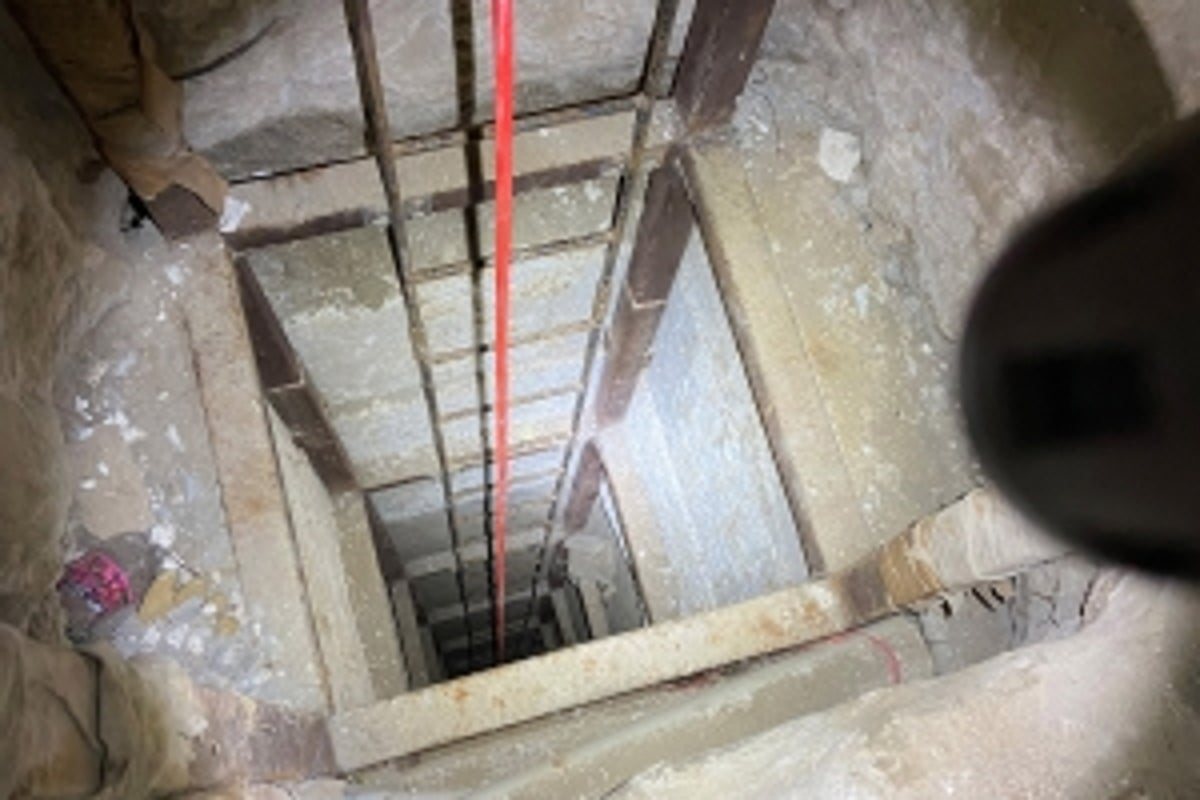
A man accused of using a highly sophisticated underground tunnel to smuggle large quantities of drugs from Mexico into the United States has made his first court appearance in San Diego, marking a significant step in a long-running investigation. The tunnel, described by authorities as an engineering marvel of the criminal underworld, featured reinforced walls, a rail system, electricity, and ventilation, allowing traffickers to move narcotics with remarkable efficiency.
The suspect, identified as Genaro Lopez, was arrested after a multi-agency operation that uncovered the subterranean passageway linking Tijuana, Mexico, to a warehouse in the Otay Mesa area of San Diego. According to court documents, the tunnel was not a crude burrow but a professionally constructed corridor, complete with lighting, air circulation, and a rail system that enabled the rapid transport of drugs. Investigators believe the tunnel had been in operation for months before its discovery.
Lopez faces federal charges related to drug trafficking and conspiracy. Prosecutors allege that he played a key role in coordinating the logistics of the smuggling operation, which involved moving cocaine, methamphetamine, and other illicit substances across the border. The case has drawn attention to the evolving tactics of drug cartels, which have increasingly turned to underground tunnels to evade detection by border security.
The tunnel was discovered during a joint operation involving U.S. Immigration and Customs Enforcement (ICE), the Drug Enforcement Administration (DEA), and the U.S. Border Patrol. Officials said the passageway was equipped with a pulley system and tracks, allowing smugglers to move drugs in carts, significantly increasing the volume of narcotics that could be transported in a single trip. The tunnel also had electrical wiring for lighting and fans to ensure airflow, making it safe for repeated use.
During the court hearing, Lopez was advised of the charges against him and ordered to remain in custody pending further proceedings. His attorney did not immediately comment on the allegations. The case is being handled by the U.S. Attorney's Office for the Southern District of California, which has a history of prosecuting cross-border tunnel cases.
This is not the first time authorities have uncovered a sophisticated tunnel along the U.S.-Mexico border. In recent years, law enforcement has discovered dozens of such passages, some stretching for hundreds of meters and equipped with advanced infrastructure. However, the tunnel linked to Lopez is considered one of the most elaborate, reflecting the lengths to which drug trafficking organizations will go to bypass border security measures.
The discovery of the tunnel has raised questions about the effectiveness of current border surveillance technologies. While ground-penetrating radar and seismic sensors have been deployed to detect underground activity, smugglers have adapted by digging deeper and reinforcing tunnels to avoid detection. Experts note that the construction of such tunnels requires significant financial investment and engineering expertise, indicating the involvement of well-organized criminal networks.
Lopez's arrest and court appearance are part of a broader effort by U.S. authorities to dismantle drug trafficking operations that rely on tunnels. In recent years, federal agencies have increased cooperation with Mexican law enforcement to identify and shut down these passages. The case also highlights the ongoing challenges faced by border security agencies in preventing the flow of illegal drugs into the United States.
The court proceedings are expected to continue in the coming weeks, with prosecutors likely to present evidence gathered from the tunnel and related surveillance. If convicted, Lopez could face a lengthy prison sentence. The case serves as a reminder of the persistent threat posed by cross-border drug smuggling and the innovative methods used by traffickers to circumvent law enforcement.