Foreign Office warns of high risk of sudden escalation as UK nuclear submarines go to sea
The Foreign Office has warned that the risk of sudden escalation in the Middle East is high, as three of the UK's four nuclear deterrent submarines are understood to be at sea in an unusual deployment.
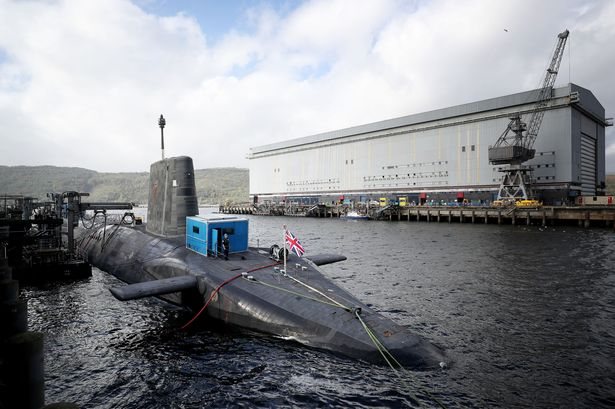
The Foreign Office has warned that "the risk of sudden escalation is high" in the Middle East, as three of the UK's four nuclear deterrent submarines are understood to be at sea. The warning was accompanied by advice to Britons to brace for possible travel disruption in the region.
Reports indicate that the deployment is unusual in its scale, with three of the Vanguard Class submarines operating at the same time. The Royal Navy's ballistic missile submarines form the backbone of the country's nuclear deterrent, and they are normally kept at sea on a rotating basis, so a simultaneous deployment of this size has drawn attention across the media. Coverage of the deployment has described it as an unusual decision, a framing that reflects how rarely more than one of the four boats is seen at sea at the same time.
The Foreign Office advisory centres on rising tensions in the Middle East and the possibility that events could move quickly. Britons travelling in or near the region have been urged to check official travel guidance and to prepare for possible changes to flights, transport links and itineraries. The travel warning has been reported as a direct consequence of the escalation risk identified by the department, and it is the element of the message most likely to affect ordinary travellers in the coming days.
Coverage of the story has highlighted two elements in particular: the explicit language used by the Foreign Office about the level of risk, and the decision to keep a larger share of the deterrent fleet at sea than is customary. Taken together, the two developments have been presented as a signal of heightened caution in Whitehall as the situation in the region develops. The use of the phrase "sudden escalation" in official messaging points to concern that a shift in the situation could occur with little notice, rather than through a gradual build-up that would allow more time for response.
The Ministry of Defence does not usually disclose the precise location or patrol schedule of the submarines, and the reports available do not indicate where the vessels are operating. Officials have not, in the material reviewed, linked the deployment directly to any specific incident, and no statement has been quoted explaining the reasoning behind the decision. Reporting has also not established how long the vessels will remain at sea, nor whether the arrangement is expected to continue beyond the current period of tension.
The Vanguard Class boats carry the Trident missile system and are the sole platform for the UK's continuous at-sea deterrence, a standing commitment under which at least one submarine is kept on patrol at all times. The reports reviewed do not describe any change to that commitment, and they do not state whether the extra deployment has been ordered as a precaution or in response to particular intelligence. Readers following the story are likely to look for an official explanation from the Foreign Office or the Ministry of Defence, and no such clarification appears in the material available at the time of writing.
5