
Hegseth’s Secret Plan to Cut U.S. Troops in Europe Blocked by Rubio Ahead of NATO Summit
U.S. Defense Secretary Pete Hegseth reportedly prepared a plan to significantly reduce American military forces in Europe, but Secretary of State Marco Rubio intervened to block it. The move risks causing tensions at the upcoming NATO summit.
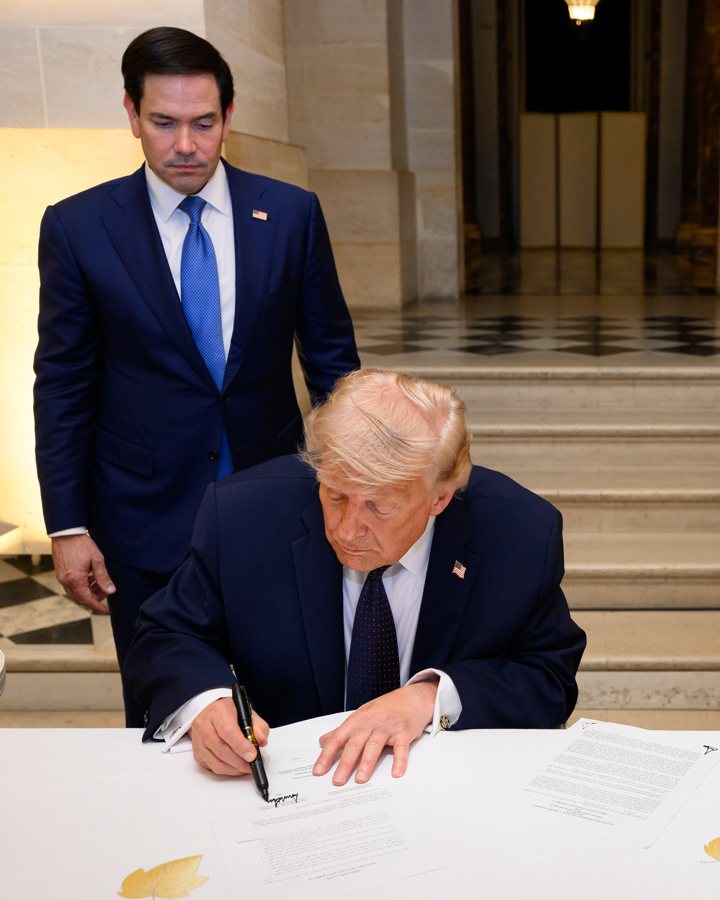
A confidential plan drafted by U.S. Defense Secretary Pete Hegseth to sharply reduce American troop levels in Europe has been blocked by Secretary of State Marco Rubio, according to a report from The Wall Street Journal. The proposal, described as a «bombshell» by the newspaper, would have marked a major shift in U.S. military posture on the continent and threatened to create a serious rift among NATO allies at the alliance’s upcoming summit.
The plan, which was prepared in recent weeks, called for a significant withdrawal of U.S. forces stationed in Europe, potentially affecting thousands of troops. Hegseth, a former Fox News host and Army veteran who took office in January, has long advocated for a more restrained U.S. military footprint abroad, arguing that European allies should shoulder a greater share of the defense burden. However, the proposal was met with immediate resistance from Rubio, who warned that such a move would undermine NATO unity and embolden adversaries, particularly Russia.
Rubio’s intervention effectively halted the plan before it could be formally presented to President Donald Trump or discussed with NATO partners. The Secretary of State reportedly argued that any unilateral reduction in U.S. forces would be perceived as a betrayal of commitments made under the NATO treaty and could trigger a crisis of confidence in the alliance. The episode highlights the ongoing internal divisions within the Trump administration over foreign policy, with Hegseth representing a more isolationist wing and Rubio advocating for a traditional, alliance-based approach.
The news comes at a particularly sensitive time, as NATO prepares for a summit in The Hague in June, where defense spending and burden-sharing are expected to dominate the agenda. Several European allies have already expressed concern about the reliability of the United States as a security partner under Trump, who has repeatedly criticized NATO members for failing to meet the 2% of GDP defense spending target. A U.S. troop reduction would likely intensify these anxieties and could lead to a fractious summit.
According to the Wall Street Journal report, Hegseth’s plan was developed in secrecy within the Pentagon, with only a small circle of aides aware of its details. It proposed cutting U.S. forces in Europe by as much as 20%, a move that would have reversed the troop increases implemented after Russia’s full-scale invasion of Ukraine in 2022. Currently, the United States maintains approximately 100,000 troops in Europe, with major deployments in Germany, Italy, the United Kingdom, and Poland. A reduction of that magnitude would have been the largest since the end of the Cold War.
European officials, who were not informed of the plan, have reacted with alarm to the news. Several NATO diplomats told European media that such a move would be «devastating» for the alliance and would send a dangerous signal to Moscow. The Kremlin has long sought to weaken NATO and reduce the U.S. military presence in Europe, and a unilateral withdrawal would be seen as a major victory for Russian President Vladimir Putin.
The internal clash between Hegseth and Rubio also reflects broader tensions within the Trump administration over the direction of U.S. foreign policy. While Trump has often expressed skepticism about NATO and questioned the value of military alliances, his administration has taken a more hawkish stance on China and Iran. Rubio, a former senator from Florida, has emerged as a leading voice for maintaining strong ties with traditional allies, arguing that the United States cannot afford to retreat from its global responsibilities.
For now, the plan has been shelved, but it is unclear whether Hegseth will attempt to revive it in a different form or push for a more gradual reduction. The Pentagon declined to comment on the report, while the State Department did not respond to requests for confirmation. The White House has not issued a statement.
The episode is likely to complicate preparations for the NATO summit, where leaders are expected to discuss a range of issues, including support for Ukraine, defense spending, and the alliance’s future strategy. European allies are already pressing the United States to reaffirm its commitment to Article 5, the collective defense clause, and to provide long-term security guarantees to Ukraine. The revelation of Hegseth’s plan could undermine trust in U.S. leadership and make it harder to reach consensus on key decisions.
Analysts say the incident underscores the volatility of U.S. foreign policy under Trump and the challenges facing NATO as it tries to adapt to a more dangerous security environment. «This is a reminder that the United States is not a reliable partner when internal divisions can produce such radical proposals in secret,» said a senior European diplomat quoted by the Wall Street Journal. «We need to prepare for the possibility that the U.S. might one day act unilaterally, regardless of the consequences for the alliance.»
The summit in The Hague will now take place against a backdrop of uncertainty, with European leaders watching closely for any signs of a shift in U.S. policy. Whether Hegseth’s plan remains buried or resurfaces in another form will be a key test of the administration’s commitment to NATO and the broader transatlantic relationship.