Chornobyl turns from invasion route into hardened strategic corridor
Russia used the Belarus–Chornobyl route to approach Kyiv in 2022. Ukraine has since converted that corridor into a layered border system, while current public assessments still show no strike-force buildup in Belarus.
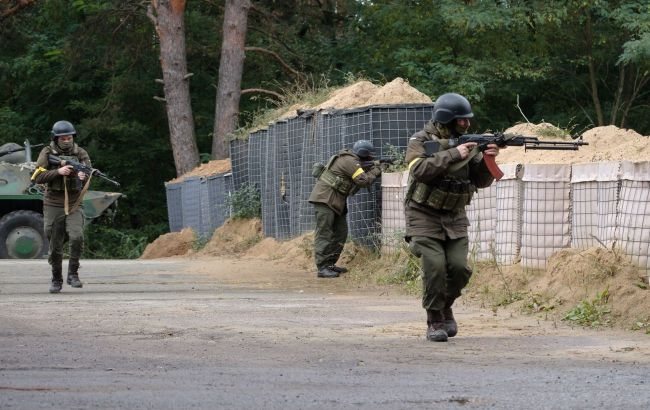
The strategic meaning of Chornobyl has reversed. In February 2022, the Belarus–Chornobyl axis was a route into Ukraine: Russian forces crossed the frontier, occupied the nuclear site and advanced toward Kyiv. By 2026, Ukraine has been turning the same geography into a route-denial system built around permanent fortifications, mine barriers and persistent surveillance.
The change is visible at the level of state institutions. A December 2024 presidential decree altered the boundaries of the Chornobyl Radiation and Ecological Biosphere Reserve and transferred 695.2 hectares along the border to State Border Guard Service units. The purpose was explicit: engineering and fortification works, fences, border clearings and communications. Ukraine effectively rewrote land governance in a protected zone to support a permanent security network.
The physical network extends along the wider Belarus frontier. Ukrainian border officials said in June 2026 that defensive lines were continuing to expand and mine-explosive barriers were being increased on the most dangerous approaches. Associated Press reporting in July described a border marked by mines, anti-tank obstacles, razor wire and anti-drone protection. Guards patrol around the clock with drones and other surveillance systems.
Seen as a strategic system, the objective is route control. Obstacles deny or slow movement; fortifications protect defenders; surveillance reduces the chance of surprise; and anti-drone measures address the fact that the northern frontier is no longer threatened only by ground columns. The architecture reflects lessons from a war in which roads, forests, airspace, communications and civilian infrastructure all interact.
The public evidence does not justify reconstructing a detailed defensive map. Claims that all roads and forests in the Chornobyl zone are densely mined are broader than the verified record. Sources support minefields and mine barriers in vulnerable directions. Around-the-clock patrols are confirmed for the border, but the locations of observation posts, routes and specific obstacle belts are not public. Strategic analysis does not require those details and should not expose them.
Chornobyl itself adds another network to the picture: nuclear safety. The exclusion zone is not just territory between Belarus and Kyiv. It contains the remains of Reactor 4, radioactive waste infrastructure and a large protected ecosystem. AP reported that Russian troops dug defenses in contaminated soil during the 2022 occupation and that fires linked to military activity affected forests.
The New Safe Confinement was then damaged by a drone strike in February 2025. In April 2026, Chornobyl NPP said the arch had lost its ability to fully maintain internal leak-tightness. The operator nevertheless reported that the site was controlled, radiation levels remained within established limits and there had been no releases above regulatory thresholds. Repairs were ongoing. That means the corridor carries both military and transnational environmental risk.
The threat assessment today is deliberately different from the defense posture. Ukraine is building as though the route must remain dangerous for any attacker, while officials say they currently see no strike group on the Belarusian side capable of launching a new invasion. AP reported the same assessment in late July. Preparedness is therefore not an intelligence claim about an attack date; it is a strategic decision to remove an option from Moscow’s future planning.
This distinction matters for Europe. Belarus remains deeply integrated with Russia’s military system, and the northern corridor can also affect drone operations and broader regional security even without a ground offensive. Ukraine’s border architecture is intended to make that space continuously observable and difficult to exploit.
The Chornobyl case shows how war reshapes routes and institutions simultaneously. A landscape once managed mainly to contain radioactive risk now functions as a security corridor meant to contain military risk as well. Ukraine is building redundancy into the northern frontier because the cost of a second surprise would not be confined to the border — it would threaten Kyiv, nuclear infrastructure and the wider European security system at once.
71