Elon Musk’s promise ledger: what helped humanity and what never arrived
A 2026 audit of Musk’s record separates useful infrastructure from spectacularly missed deadlines, unfinished products and regulatory trouble.
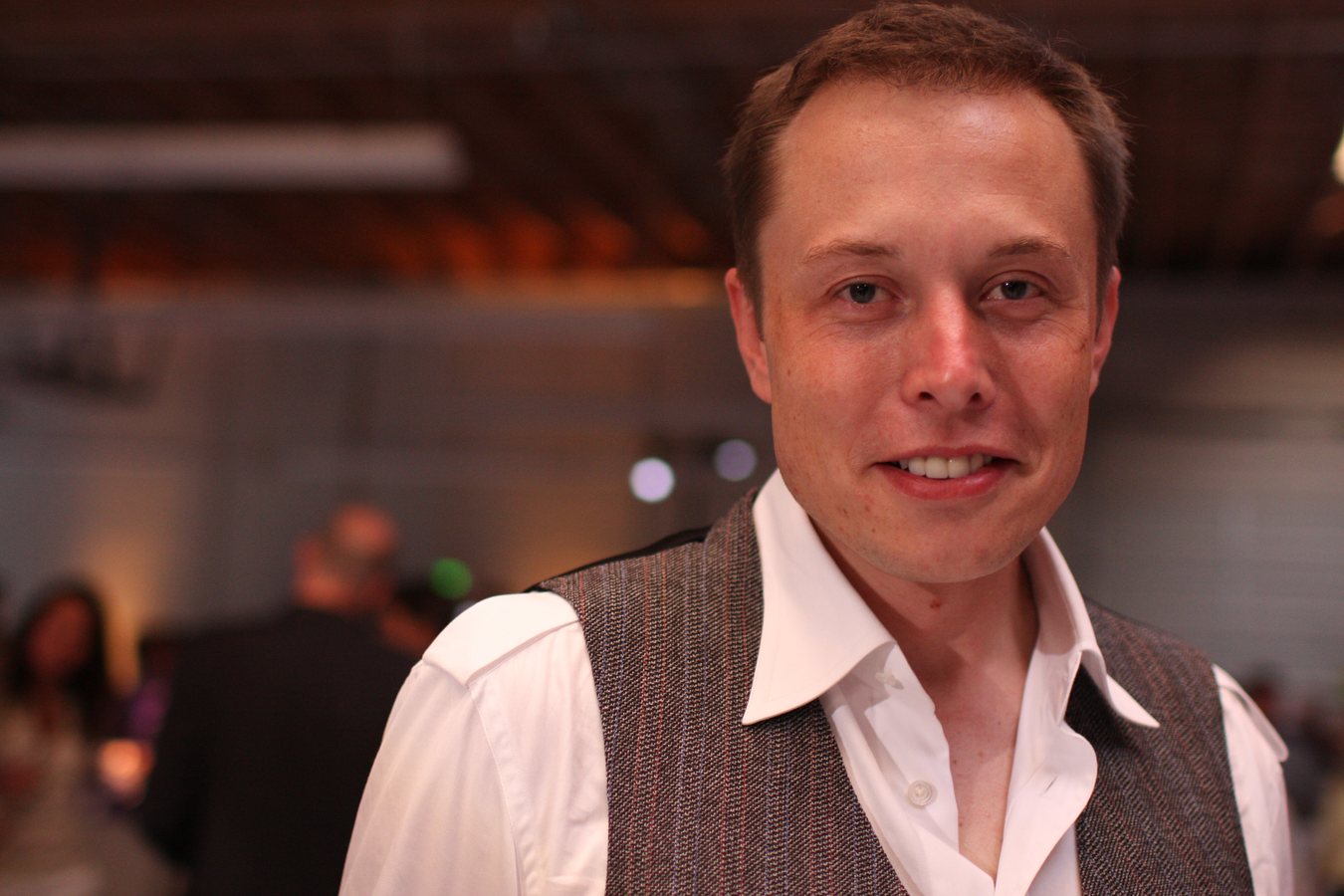
There are two easy ways to tell the Elon Musk story. One treats every rocket landing, electric car and satellite dish as proof that a singular genius has already built the future. The other treats every missed deadline, political eruption or regulatory dispute as evidence that the entire project was hype. Neither is a useful way to judge a man whose companies now operate infrastructure used by millions of people.
A harder test is to keep a ledger. Put the promise on one side, the delivered system on the other, and then ask a question that is less flattering to both fans and critics: did the result make life materially better for people who are not Elon Musk or his shareholders?
On that test, Musk’s record is unusually consequential and unusually uneven.
The clearest example of the gap between forecast and reality is autonomous driving. In 2016 Tesla said new cars were being fitted with the hardware needed for full self-driving capability. At Autonomy Day in 2019, Musk predicted more than one million Tesla robotaxis in 2020 and described a future in which cars would be able to drive without the occupant paying attention roughly by the middle of that year.
That did not happen. Six years after the robotaxi deadline, Tesla’s consumer product is still called FSD (Supervised), and Tesla explicitly says it requires active driver supervision and does not make the vehicle autonomous. NHTSA opened a preliminary investigation in 2025 into alleged traffic-safety violations while FSD was engaged. An investigation is not a finding of liability, and there is a counterpoint worth keeping in the same frame: in May 2026 NHTSA said the 2026 Model Y became the first vehicle to pass the agency’s new advanced driver-assistance tests.
The original promise was still wrong on timing and scale. Yet the technology also did not remain a PowerPoint slide. By the second quarter of 2026 Tesla said its Robotaxi service was operating in seven major metropolitan areas, with different levels of supervision, while Cybercab had entered production. That is a real transition from driver assistance toward a commercial autonomous service. It is simply not the transition Musk told the public would be effectively complete in 2020.
Roadster makes the deadline problem even cleaner. The second-generation sports car was unveiled in 2017 with deliveries promised for 2020. In Tesla’s second-quarter 2026 materials it was still listed in design development. Solar Roof is an even more revealing case because it moved from bold scaling language toward quiet disappearance. Musk targeted roughly 1,000 installations a week. On 24 August 2026 Tesla stopped selling the premium solar tiles on its website, nearly a decade after the product was introduced.
Optimus remains in the middle category: not a hoax, not a mature industry. Tesla discussed pilot production in 2025, then said in its 2025 annual report that products including Optimus had not yet been commercialised. In the second quarter of 2026 it said first-generation production lines were being installed and production was anticipated later in the year. Anyone assessing the humanoid robot today should therefore count the prototypes and factory work as engineering progress, but not count mass useful labour that has not yet arrived.
SpaceX offers the same contrast at a larger scale. In 2017 Musk laid out a Mars timetable with two cargo ships arriving in 2022 and four ships, two of them crewed, in 2024. No such Mars missions occurred. Starship is still an experimental flight programme in 2026. The missed schedule is not a small forecasting error; it is measured in years and in mission classes that have not yet existed.
But reducing SpaceX to the Mars miss would be just as misleading. NASA certified Crew Dragon and Falcon 9 for regular astronaut flights in 2020. In February 2026 Crew-12 became the twelfth rotational SpaceX crew mission to the International Space Station. In May, a SpaceX cargo mission carried about 6,500 pounds of science, hardware and supplies to the station. These are not marketing achievements. They are operating transport services for astronauts and research.
That distinction matters. A civilisation does not benefit from a Mars deadline because it sounds exciting. It benefits when launch systems can reliably move people, experiments and equipment. Reusability is valuable not because a booster landing makes a dramatic video, but because repeated use can make a launch system more operational and change the economics of access to orbit. The benefit belongs to the engineers, crews, NASA procurement system and public funding as well as to Musk’s leadership; calling it the achievement of one man erases the system that made it possible.
Starlink is another case where utility is impossible to dismiss and governance is impossible to ignore. Ukraine’s Ministry of Defence said in January 2026 that Musk’s rapid decision to activate and deliver Starlink at the start of the full-scale Russian invasion was crucial to national resilience. The network has been used by civilians, businesses and the military. FEMA also supplied Starlink terminals to first responders after Hurricane Helene when terrestrial communications were damaged.
That is direct human utility: connectivity when ordinary networks fail.
It also creates a new political fact. In 2026 Ukraine and SpaceX were working on terminal authorisation, while the Financial Times reported that Ukrainian authorities had needed SpaceX approval for expansion of some military uses. A private satellite system can be both life-saving infrastructure and a concentration of private power. Those statements are not contradictory. They are the same fact seen from the user’s side and the state’s side.
Tesla’s strongest public-benefit case is similarly less glamorous than the company’s futuristic presentations. Electric vehicles can reduce lifecycle greenhouse-gas emissions compared with similar petrol cars, according to the International Energy Agency and the US Department of Energy, although the size of the benefit depends on the grid, vehicle and battery. Tesla did not invent the electric car, but it helped turn a marginal product into a serious mass-market category and built charging infrastructure around it.
One of the most durable outcomes may be a connector. Tesla’s North American Charging Standard was standardised by SAE International as J3400 and opened for use across the industry. Standardisation is dull compared with a robot on a stage, but it solves a real problem for drivers: whether a car can use the available charging network without a proprietary dead end.
Battery storage may be still more important. Tesla reported 46.7 GWh of energy-storage deployments in 2025 and 13.5 GWh in the second quarter of 2026 alone. The IEA describes battery storage as important for short-term grid flexibility, integrating variable renewable generation, backup and energy security. A Megapack shifting electricity from one part of the day to another has less celebrity value than a Mars render. It can have more immediate public value.
Neuralink should be judged with the opposite discipline. Its first-in-human PRIME study is an early feasibility trial with a small planned enrolment and years of follow-up. Brain-computer interfaces may eventually restore useful control to people with severe paralysis, and the work is scientifically serious enough to be in human trials. It is not yet evidence of a broad medical revolution. The honest description in 2026 is promising experimental assistive technology, not a solved neurological future.
The legal and regulatory record belongs in the same ledger because execution is not only about technical output. In 2018 the US Securities and Exchange Commission charged Musk with securities fraud over his claim that funding was secured for a possible take-private transaction. Musk and Tesla settled, paying $20 million each; Musk stepped down temporarily as Tesla chairman. The settlement was made without admitting or denying the allegations. In 2022 the US Environmental Protection Agency settled Clean Air Act violations at Tesla’s Fremont factory, and in 2024 Tesla agreed to a $1.5 million California settlement over hazardous-waste allegations brought by 25 district attorneys.
These cases do not erase rockets, batteries or communications networks. They do show why the ‘ends justify the acceleration’ version of the Musk myth is inadequate. A company can produce socially valuable technology and still create safety, disclosure or environmental problems that regulators are supposed to constrain.
The central pattern is therefore not that Musk always lies, or that Musk always delivers. Missed forecasts are not automatically proved deception. The sharper pattern is that he repeatedly compresses uncertain engineering programmes into confident public timelines. Sometimes those timelines mobilise talent, capital and attention toward a system that eventually becomes useful. Sometimes the promised product arrives years late. Sometimes it remains experimental. Sometimes, as with Solar Roof, the story closes before the promised scale appears.
The fairest measure is not whether the future he describes sounds inspiring. It is whether the underlying system survives contact with users, regulators, physics and time.
By that standard, the strongest entries in Musk’s record are not the loudest. Crew Dragon carrying astronauts, cargo reaching a space station, Starlink restoring communications, a charging connector becoming an industry standard and grid batteries absorbing and returning electricity are boringly concrete. They work for people beyond the founder’s narrative.
The weakest entries are the ones in which a date itself became part of the product: one million robotaxis in 2020, Mars cargo in 2022, crewed Mars ships in 2024, a 2020 Roadster, rapid Optimus production, Solar Roof at enormous weekly scale. The future kept moving while the deadline stayed behind.
Musk deserves neither exemption from that record nor denial of it. The adult version of the story is more interesting than the hero and villain versions: a leader capable of pushing teams into genuinely useful infrastructure, who has also made a habit of presenting uncertain futures as if they were scheduled deliverables. The next claims — autonomous transport at scale, useful humanoid robots, Mars settlement and neural interfaces — should be judged with the same ledger, and not marked as achievements until ordinary reality catches up with the presentation.
59