French Pupils Face Severe Injuries as School Protest Crackdown Escalates
A wave of protests over conditions in French secondary schools has been met with a police response that has left children with fractured bones, lost sight and amputated limbs, prompting alarm over the treatment of minors.
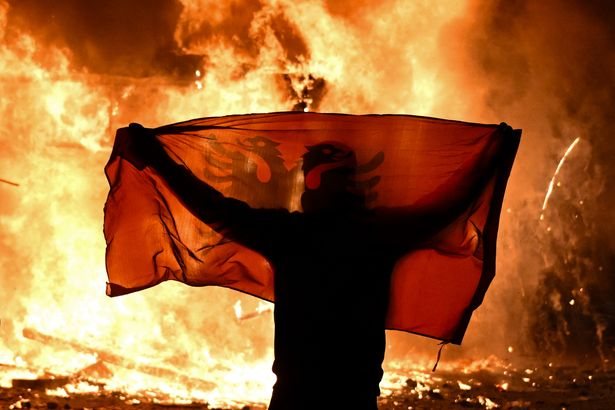
A wave of protests by secondary school pupils in France over conditions in their schools has been met with a police response that has left children with serious and lasting injuries, according to accounts from the demonstrations. The scale of the injuries has raised urgent questions about the policing of minors and the legitimacy of the grievances that sparked the unrest.
Among the cases described are a 14-year-old boy, Eden, who suffered a fractured jaw and had teeth knocked out after a police teargas grenade struck him in the face. Sixteen-year-old Maël lost the sight in one eye, allegedly after being struck by a shot from an LBD, a type of rubber-bullet launcher used by French police. Evan, 15, had his hand blown off in an explosion involving a police stun grenade.
In Dunkirk, a police SUV is alleged to have been driven repeatedly at groups of secondary school pupils, with an officer reportedly heard saying: «Come closer, we’ll smash their fucking faces in.» Accounts from children held in police custody describe treatment that left them terrified, with severe psychological and physical consequences.
The protests themselves concern what campaigners describe as shameful conditions in some French schools. Pupils have taken to the streets to demand improvements, a form of action with a long history in France. The response they have received has drawn comparisons with the policing of violent criminals rather than of children exercising a right to protest.
The unrest has not remained confined to France. Student protests have spread across Europe, with clashes in Italy and Albania where police deployed water cannons. The movement that began in France has ignited demonstrations on the continent, suggesting that grievances about education and the treatment of young people are resonating beyond national borders.
The injuries documented in France are severe enough to have prompted widespread concern. A fractured jaw, the loss of an eye and the loss of a hand are not the expected outcomes of a protest by teenagers. The use of teargas grenades, rubber-bullet launchers and stun grenades against pupils raises questions about proportionality and about the rules governing the policing of minors.
The accounts from police custody add a further dimension. Children who were detained describe experiences that have left them with lasting trauma. The psychological impact of such treatment on young people is difficult to overstate, and it is likely to shape their relationship with authority for years to come.
The history of student protest in France is long and, at times, successful. In 1994, secondary school pupils took part in protests against a reform that would have allowed employers to pay young people below the minimum wage. That campaign succeeded. The contrast with the current response is stark, and it raises the question of whether the right to protest is being upheld equally for all citizens, regardless of age.
The government’s handling of the crisis has drawn criticism from those who argue that the response has been disproportionate. The conditions that prompted the protests in the first place remain a live issue, and the injuries sustained by pupils have added a new and urgent dimension to the debate about the state of French schools and the treatment of the children who attend them.
4