
Economists Urge Global Leaders to Back International Panel on Inequality
More than 1,500 academics and economists from over 100 countries have signed an open letter backing the International Panel on Inequality, calling the growing gap between richest and poorest a policy choice that can be reversed ahead of the UN general assembly.
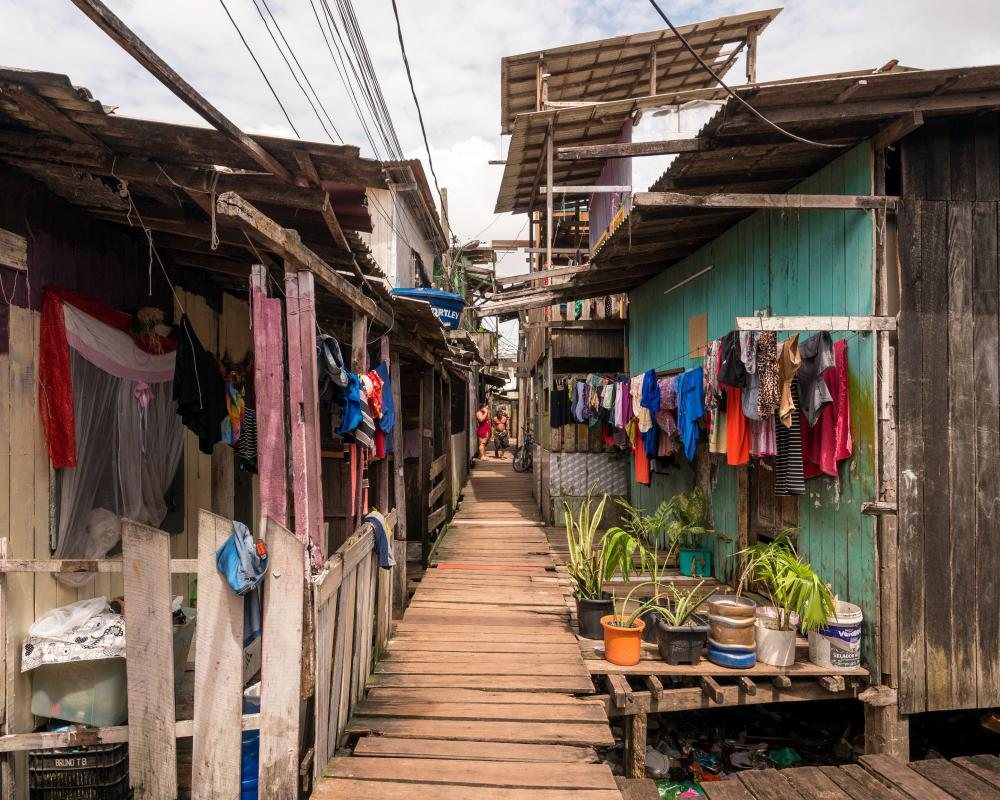
More than 1,500 academics and economists from over 100 countries have signed an open letter urging global leaders to join an initiative against extreme inequality, describing the growing gap between the world's richest and poorest as a policy choice that can be reversed.
The letter, published ahead of the UN general assembly in New York next week, backs the International Panel on Inequality (IPI), a body modelled on the Intergovernmental Panel on Climate Change. The signatories argue that extreme inequality is not an inevitable feature of modern economies but the product of deliberate political and fiscal decisions that governments can undo.
The intervention places the question of distribution squarely on the agenda of the annual gathering of heads of state and government, where economic governance and development finance are already set to feature prominently. By timing the letter before the assembly, the experts aim to press national leaders to commit to the panel and to treat inequality as a structural challenge requiring coordinated international monitoring.
The IPI is intended to gather and assess evidence on the scale, drivers and consequences of inequality across countries, providing policymakers with a shared evidence base similar to that used in climate negotiations. Its supporters say that without such a body, national debates on tax, wages and public spending are too often shaped by fragmented data and competing political narratives.
The letter's central claim is that the concentration of wealth at the top is not simply the result of technological change or globalisation, but of choices made by governments on taxation, labour protections, public services and social protection. That framing shifts responsibility from abstract market forces to identifiable policy decisions, and it implies that different outcomes are achievable within existing economic systems.
For the signatories, the breadth of support across more than 100 countries is itself part of the message. Inequality is presented not as a concern confined to low-income states or to a single region, but as a shared feature of the global economy that affects advanced and developing countries alike. The involvement of economists and academics from many national contexts is meant to reinforce the panel's claim to international legitimacy.
The appeal also reflects a broader shift in international economic debate, in which institutions such as the United Nations, the International Monetary Fund and the World Bank have increasingly acknowledged that high inequality can undermine growth, social cohesion and democratic stability. The proposed panel would formalise that concern by creating a standing mechanism for assessment rather than relying on periodic reports and ad hoc research.
Whether governments respond with concrete commitments remains uncertain. The letter does not bind states to any specific target, and the panel's authority would depend on voluntary participation and on the willingness of national administrations to submit to external scrutiny of their tax and spending policies. Even so, the scale of the signatory list gives the initiative a degree of visibility that individual national studies rarely achieve.
The coming days in New York will indicate whether the appeal translates into political momentum. If a significant group of governments endorses the panel, the initiative could become a reference point in future debates on taxation, development finance and social policy. If the response is muted, the letter will still stand as a marker of expert consensus that the current distribution of income and wealth is a political outcome rather than an unavoidable one.