
US Grants Visas to Iranian Leaders for UN General Assembly Despite War Stalemate
Washington has approved visas for Iranian officials to attend the UN General Assembly, a day after denying entry to Palestinian President Mahmoud Abbas and his delegation, highlighting the selective use of visa power amid ongoing geopolitical tensions.
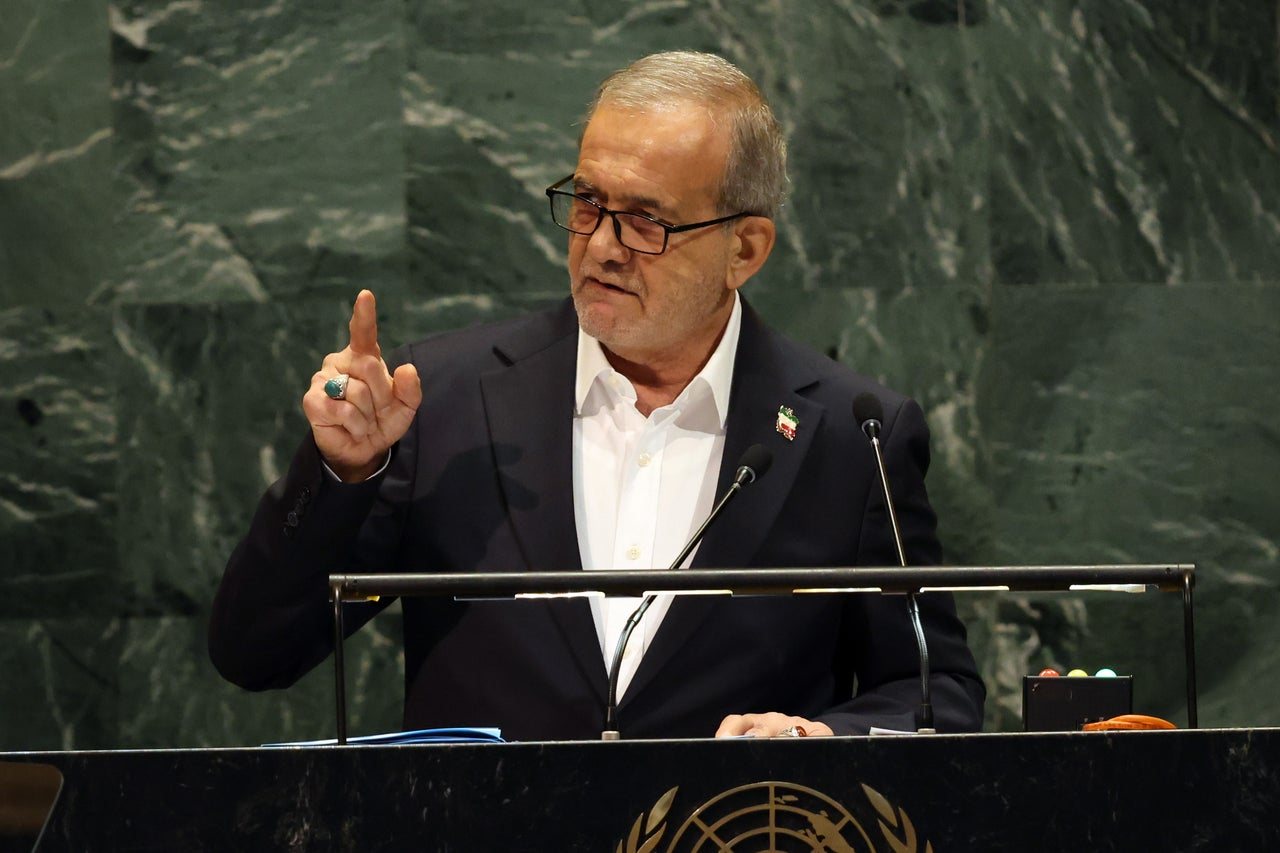
The United States has approved visas for Iranian leaders to attend the United Nations General Assembly, even as a diplomatic and military stalemate persists between Washington and Tehran. The decision, confirmed by officials, allows Iranian President Masoud Pezeshkian and other senior figures to travel to New York for the annual gathering of world leaders.
The move comes just a day after the State Department denied visas to Palestinian President Mahmoud Abbas and his delegation, a contrast that underscores the selective application of US visa authority over UN proceedings. Under the 1947 UN Headquarters Agreement, the host country is generally obliged to grant access to foreign officials attending UN meetings, though Washington has repeatedly used visa restrictions as a political tool.
Iran's participation in the General Assembly is expected to focus on regional security, the stalled nuclear negotiations, and the ongoing conflict in the Middle East. The approval suggests that the Biden administration is keeping diplomatic channels open, even as it maintains a hard line on Iran's nuclear programme and its support for armed groups across the region.
The war stalemate, which has seen neither side achieve a decisive advantage, has been accompanied by indirect talks mediated by regional powers. The visa decision may be seen as a signal that Washington is willing to allow Iran a platform at the UN, but not to ease broader sanctions or military pressure. Iranian officials have repeatedly criticised US visa policies as a violation of international law, while American lawmakers have argued that granting entry to Iranian leaders legitimises a government they accuse of destabilising the Middle East.
The General Assembly session will provide a rare opportunity for face-to-face diplomacy, though no bilateral meeting between US and Iranian officials has been announced. The Palestinian visa denial, meanwhile, has drawn condemnation from Arab states and human rights groups, who argue it undermines the UN's founding principle of equal participation. The State Department has not publicly explained the discrepancy, but analysts note that the decision on Iran may reflect a desire to avoid a direct confrontation at the UN, where Tehran could rally support among non-aligned states.
As world leaders gather in New York, the visa decisions will be closely watched for signals about the broader direction of US foreign policy. For Iran, the approval is a diplomatic victory that allows it to present its case on the world stage. For the Palestinians, the denial is a setback that reinforces their sense of exclusion from international forums. The juxtaposition is likely to fuel debates about the politicisation of UN access and the limits of host-country discretion.