
Accell’s European network is breaking into national rescue routes
The failed Dutech sale has transformed Accell from one M&A target into a set of distressed assets. Germany is ring-fencing Winora and Ghost, France is seeking autonomy for Lapierre, and Raleigh gives the breakup a British route to a new owner.
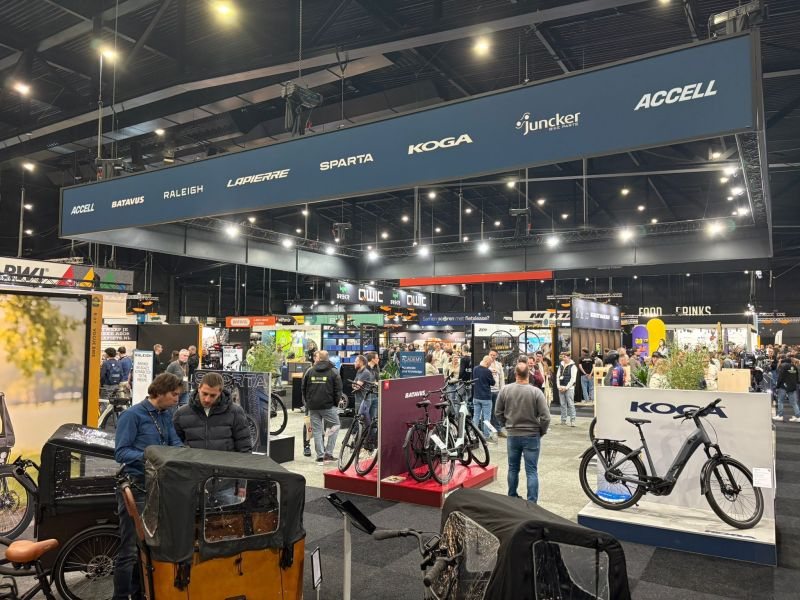
Accell Group was built as a European network: Dutch ownership and central functions linked German brands, a French manufacturer, a British heritage name and distribution businesses across the continent. Its August insolvency has reversed that logic. The network is now being unbundled along national legal routes, each designed to preserve enough value for a sale or restructuring.
On August 5, Accell’s Dutch entities received a provisional suspension of payments. The group said an exhaustive search for alternatives had failed to produce a viable solution for continuing the business in its current form. That was effectively the point at which a single European rescue route ended.
The preceding route had been a sale to Dutech Group. Tri Star E-Moving, part of Singapore-based Dutech, pursued control of Accell and made merger filings in Europe. Germany cleared the prospective transaction, and Poland also registered the concentration. The process showed that a strategic combination was plausible, but the parties never completed the commercial deal.
When those talks collapsed in early August, the financing map changed immediately. Accell’s lenders, who had taken ownership earlier in 2026, no longer had a single buyer capable of absorbing the group. Court procedures therefore became a way to stop value from leaking out while separate solutions were sought.
Germany has the most developed local route. Accell Germany, Winora Staiger, Ghost Bikes and Engelbert Wiener Bike-Parts entered self-administered insolvency. Their 370 employees are concentrated around Sennfeld and Waldsassen, and the companies generated roughly €340 million in revenue in 2025. The businesses continue trading while management seeks an investor.
The strategic logic is to ring-fence an operating cluster. Winora and Haibike are associated with Sennfeld, Ghost with Waldsassen, and Bike Parts adds a distribution platform. Winora’s history reaches back to 1914 in Schweinfurt. The package therefore combines consumer brands, regional industrial capability and wholesale relationships rather than offering only trademarks.
France is taking a narrower route around Cycles Lapierre. The company filed for judicial restructuring in Dijon because Accell’s crisis made normal short-term financing unavailable. Lapierre had €99.1 million in 2025 revenue, and its operating loss improved from €46.3 million to €27.2 million. Management had already reduced inventory and employment before the parent entered insolvency.
Lapierre chief William Perrier has described the objective in national terms: preserve a French cycling flagship and regain independence. The Dijon court is due to consider the case on August 25. If the procedure opens, Lapierre can continue operating while looking for capital, making the French route one of separation rather than simply liquidation.
Britain’s route centres on Raleigh. Founded in Nottingham in 1887, Raleigh was acquired by Accell in 2012 and remains based in its home city despite the end of UK bicycle manufacturing in 2002. Its value is therefore portable: brand recognition, product architecture and distribution can move to a new owner without recreating a large domestic factory system.
All of these routes lead back to the same financial origin. KKR led the 2022 buyout of Accell at the top of the pandemic bicycle cycle. The Financial Times values the deal at €1.8 billion. The subsequent market normalization exposed excess inventory and weak cash conversion, while the leveraged balance sheet left little room for a slow recovery.
Accell restructured its debt more than once. A 2025 recapitalization brought operating-group debt to about €800 million, and another transaction in February 2026 added funding and cut debt again. That transaction transferred control to lenders. The creditors’ later attempt to sell to Dutech was therefore not a new growth strategy; it was an exit from a distressed ownership position.
The wider European bicycle market explains why time became scarce. In France, unit sales fell 6% in 2025 and market value declined 4.8%. Repairs rose 10.5%, showing that mobility demand has not disappeared but has shifted away from new-bike purchases. Manufacturers need lower inventories and more conservative production planning to adapt.
Accell’s April 2026 announcement that it had completed a transformation now reads as a warning about mismatched timelines. Product development, manufacturing changes and dealer relationships can improve over years. Debt maturities and supplier payments require cash on exact dates. The group’s operating route did not move fast enough for its financial route.
The next map of Accell is therefore likely to have several owners and fewer cross-border links. Germany may be sold as a cluster, Lapierre could regain French autonomy, Raleigh may find a separate buyer, and Dutch brands may be reorganized differently. What was once a strategy of European consolidation has become a case study in how distressed networks are dismantled to save their strongest nodes.
77