Summer 2026 was Europe's deadliest on record as heat killed over 50,000 in cities
A new study estimates that more than 50,000 people died in urban areas across Europe during summer 2026, making it the continent's deadliest summer on record, with climate change responsible for around two thirds of the deaths.
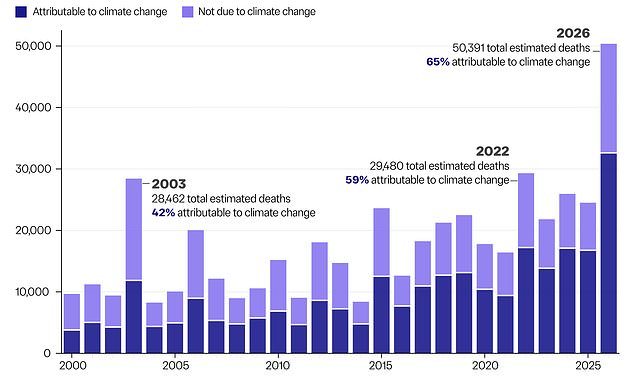
More than 50,000 people died in urban areas across Europe during the summer of 2026, according to a new study that estimates the season was the continent's deadliest on record and attributes roughly two thirds of the deaths to climate change. The findings place the toll from extreme heat far above previous seasonal mortality estimates and point to the built environment of European cities as a central factor in the loss of life.
The study estimates that around two thirds of the deaths — a figure in the region of 33,000 — would not have occurred without the influence of human-driven climate change. That attribution makes the summer of 2026 a landmark moment in the assessment of how global warming is already affecting public health in Europe, rather than a distant future risk. The research focuses specifically on urban areas, where dense construction, limited green space and heat-retaining materials can push temperatures well above those recorded in surrounding countryside.
The scale of the estimate is significant because heat-related deaths are frequently undercounted. Mortality linked to high temperatures often occurs among elderly people and those with existing health conditions, and is recorded on death certificates as cardiovascular or respiratory failure rather than as heat exposure. Studies that model excess mortality during hot periods therefore tend to produce higher figures than official daily records, and the new estimate places summer 2026 in a category of its own among European summers.
The findings carry direct implications for city authorities across the continent. Urban planning, housing standards, access to cooling, the provision of public water and the protection of vulnerable residents during heatwaves are all areas that the study's conclusions bring into focus. Cities with large elderly populations, limited air conditioning and high levels of concrete and asphalt are likely to have borne a disproportionate share of the deaths, although the study's headline figure covers urban areas across Europe as a whole.
The attribution of two thirds of the deaths to climate change reflects a growing body of research that seeks to separate the effect of human greenhouse gas emissions from natural variability. Such attribution studies compare observed temperatures with modelled scenarios in which industrial emissions are absent, allowing scientists to estimate how much more likely or more severe a given heat event has become. Applying that method to seasonal mortality produces an estimate of the number of deaths that can be linked to warming rather than to other factors.
The record set in 2026 follows a series of increasingly hot European summers that have repeatedly tested public health systems and emergency services. Heatwaves have disrupted transport, strained electricity grids and prompted temporary restrictions in several countries in recent years. The new estimate suggests that the cumulative human cost of these events is larger than official figures have generally conveyed, and that the trend is moving in a direction that leaves cities exposed.
The study's conclusions are likely to feed into debates over adaptation funding and urban heat policy, particularly as European institutions assess how to protect ageing populations in densely built neighbourhoods. For now, the central finding is stark: a single summer in Europe's cities is estimated to have caused more than 50,000 deaths, with the majority attributed to a climate that is being altered by human activity.
6