
Russia’s glide-bomb reach is pushing a new air-war frontier toward Odesa
Reports of possible guided-bomb launches toward Odesa highlight a broader shift: Russia has extended the reach of cheap, heavy glide bombs, forcing Ukraine to defend cities once considered beyond the weapon’s routine range.
Odesa was under renewed air threat on the evening of August 31 as Ukraine’s Air Force warned of hostile aerial targets approaching from the Black Sea. At the same time, operational reports indicated possible launches of several guided aerial bombs toward the city. As of publication, Ukrainian authorities had not issued a final assessment confirming the exact munition type or whether a bomb landed inside Odesa, so claims of a first KAB strike on the city itself remain preliminary.
The strategic trend behind the alert, however, is already clear. Russia has been extending the reach of its glide-bomb arsenal, gradually moving a weapon once associated mainly with front-line cities into a wider zone of Ukraine.
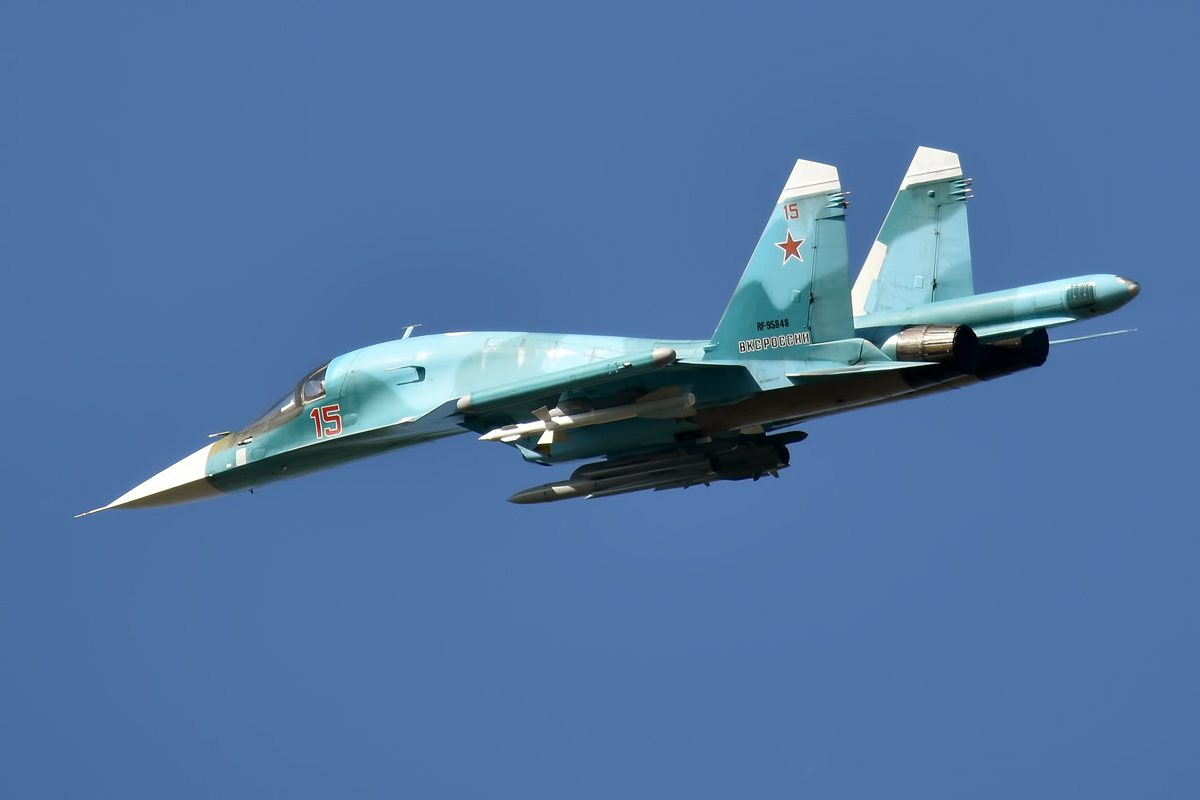
On October 24, 2025, Russian forces used guided aerial bombs against civilian infrastructure in Odesa region for the first time since the full-scale invasion. Ukraine’s southern air command said three extended-range bombs were released from a Su-34. Two were destroyed by air defence and a third fell in open terrain without reported consequences.
That event marked a technical boundary shift. Earlier mass-produced Russian UMPK kits — wing and guidance packages fitted to conventional free-fall bombs — generally allowed weapons to glide roughly 60 to 80 kilometres. The launch aircraft still had to climb high and approach close enough to give the bomb the speed and altitude required for the glide.
By 2026, Ukraine’s Defence Ministry was reporting new variants with ranges of roughly 90 to 150 kilometres, depending on release altitude and configuration. The principal carriers remain the Su-34 and Su-35. Every additional kilometre matters because it allows the aircraft to remain farther from Ukrainian surface-to-air missile systems while bringing new cities into range.
The model has already been used with devastating effects elsewhere. Kharkiv was struck by UMPB-5 bombs released from a Su-34 at an estimated distance of about 100 kilometres in July 2025. Dozens of civilians were injured across a series of strikes, including children, and a medical facility was hit. In Zaporizhzhia, a guided bomb struck a residential building. Sumy has repeatedly faced KAB attacks on civilian infrastructure. In Kherson, four bombs hit the city centre within about 15 minutes.
The appeal of glide bombs for Russia is partly economic. They turn large stocks of conventional Soviet-designed bombs into stand-off weapons at a cost far below that of many cruise or ballistic missiles. They also carry far larger explosive loads than most one-way attack drones.
That combination creates a brutal asymmetry. A guidance kit does not make a 500-kilogram or larger bomb safe around civilians. Even a relatively small navigation error in a dense urban area can shift the blast from one building to another. The destructive radius, blast pressure and fragmentation make the weapon inherently dangerous when used against or near populated areas.
The challenge for Ukraine is that intercepting the bomb itself is only one part of the problem. The more effective defensive concept is to threaten the launch aircraft before it reaches its release line.
That requires long-range air defence, fighter aircraft with modern air-to-air missiles, persistent radar coverage and rapid exchange of targeting data. Ukraine’s Air Force has repeatedly argued that pushing Russian tactical aviation farther from the border and front line reduces the number of targets available to glide bombs.
Electronic warfare adds another layer. Russian guided bombs rely on combinations of satellite and inertial navigation. Jamming can reduce accuracy, although Russia has responded by introducing more resilient antenna systems designed to resist interference. The contest is therefore technological and continuous rather than a one-time solution.
There is also a strategic-strike dimension. Aircraft, munitions depots, maintenance sites and the logistics network that supports Su-34 operations are part of the system that generates glide-bomb attacks. Ukraine’s ability to disrupt that system affects how frequently Russian aircraft can operate and how safely they can approach launch areas.
For Odesa, the danger is amplified by geography and strategic value. The city is a major Black Sea port, a logistics hub and a dense civilian centre. Russia has already attacked it with missiles and drones. A credible glide-bomb threat adds a weapon with a different warning profile and a very large warhead.
If the August 31 launches are ultimately confirmed as the first use of KABs directly against Odesa, the event will not represent a sudden new invention. It will be the visible result of a gradual Russian effort to increase stand-off range and preserve aircraft while continuing pressure on Ukrainian cities.
The defensive race now turns on whether Ukraine and its partners can extend the reach of air defence and fighter cover faster than Russia can extend the reach of its bombs. That contest will determine whether Odesa becomes another city living under a threat that Kharkiv, Sumy, Zaporizhzhia and Kherson have already experienced for years.
65