Google Demonstrates More Efficient Quantum Error Correction
Google Quantum AI researchers have used the Willow quantum computer to show that magic state cultivation can reduce error rates 40-fold, a step toward smaller, more practical quantum machines.
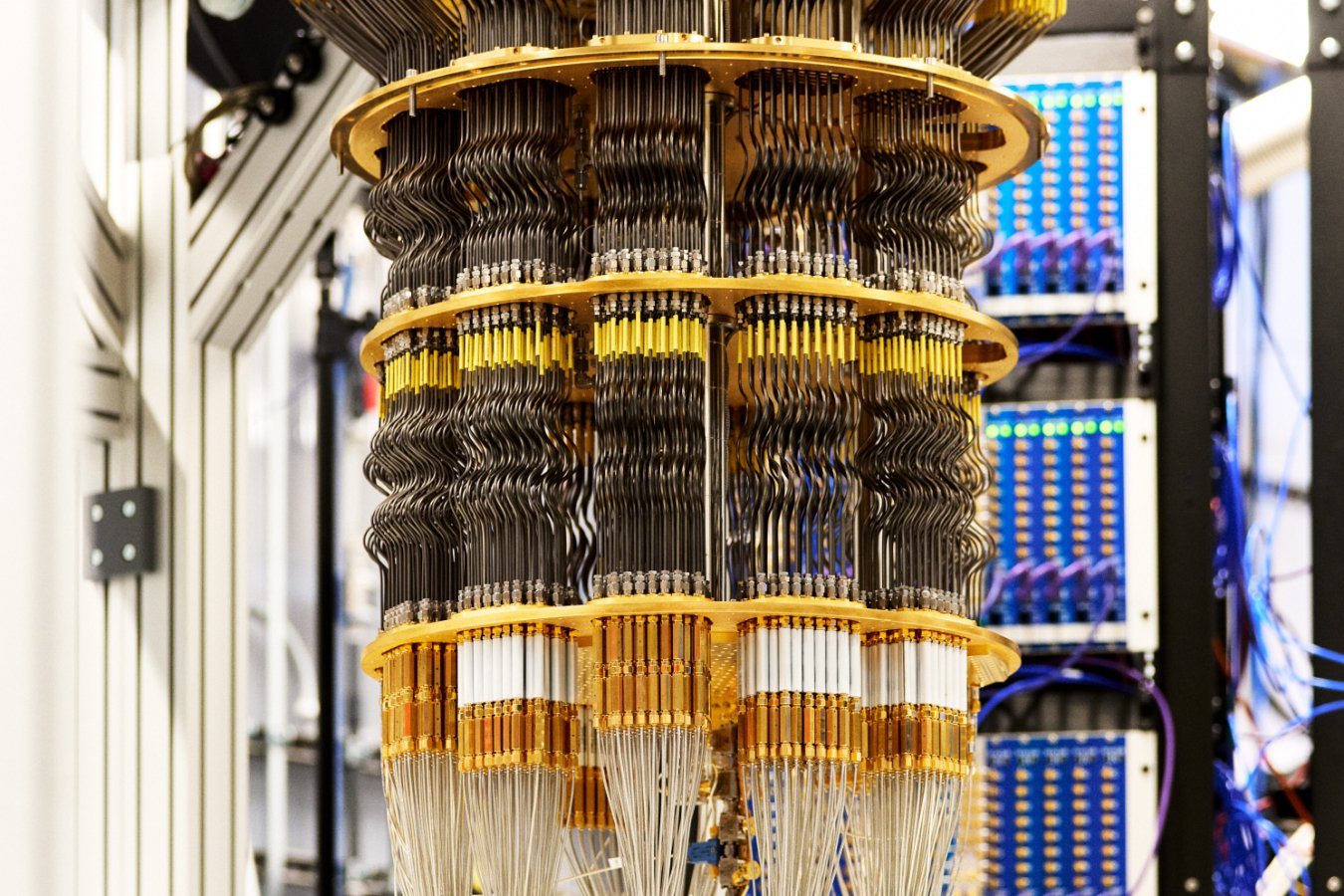
Google Quantum AI has demonstrated a more efficient method for correcting errors in quantum computers, using its Willow processor to show that a technique called magic state cultivation works in practice. The experiment reduced Willow's error rates 40 times, according to the company's researchers, and suggests that smaller quantum computers arriving in the next few years could be more capable than previously expected.
Quantum computers can perform mathematical operations that conventional machines cannot, making them suited to problems once considered unsolvable, including those underpinning cryptography. The most important of these operations are non-Clifford gates, the key ingredients for algorithms that go beyond classical computation. But quantum computers are highly error-prone, and their building blocks, called qubits, must be encoded into logical qubits before they can execute operations reliably. Running non-Clifford gates in an error-corrected way has required very large numbers of qubits, creating a formidable engineering challenge.
At the centre of the advance is the magic state, a special quantum state that qubits must assume before a quantum computer can run error-corrected non-Clifford operations. Creating these states had been a bottleneck, consuming large numbers of qubits and significant time, according to Emma Rosenfeld of Google Quantum AI. In 2024, her colleagues proposed a more efficient method called magic state cultivation, in which the magic state is grown within a smaller patch of qubits rather than combining and manipulating many imperfect qubits repeatedly. The researchers showed the approach could in theory allow consequential programs to run with just one-tenth the number of qubits previously expected.
The new experiment by Rosenfeld and her colleagues proves that magic state cultivation works in practice. It is not the first time new methods for making magic states have lowered error rates; advances have also been achieved with quantum computers whose qubits are based on ions. Willow's qubits, based on tiny superconducting circuits, achieved error rates similar to those past experiments, but Rosenfeld says they work more quickly, potentially reducing overall runtime.
Outside researchers welcomed the result. Isaac Kim of the University of California, Davis, called it an impressive demonstration of a promising recent idea pioneered by Google and said the approach could make fault-tolerant quantum computing substantially cheaper. Dominik Hangleiter of ETH Zurich in Switzerland said the work demonstrates one of the building blocks necessary for universal quantum computing and could be a gamechanger for building intermediately sized machines with hundreds of logical qubits.
Challenges remain. Zhenyu Cai of Imperial College London said that while the experiment is a significant step forward, Willow's errors will need to be reduced further before it can tackle truly useful problems. Kim noted that Willow generated good magic states in only 8 per cent of its computational runs. Rosenfeld said that percentage should increase as the technique is refined and Willow's hardware improved, and that it was also affected by a careful benchmarking method the team used, which may not be applied in future applications. «This is the first demonstration that the concepts work. We're not done,» she said. The research was published in the journal Science.
7