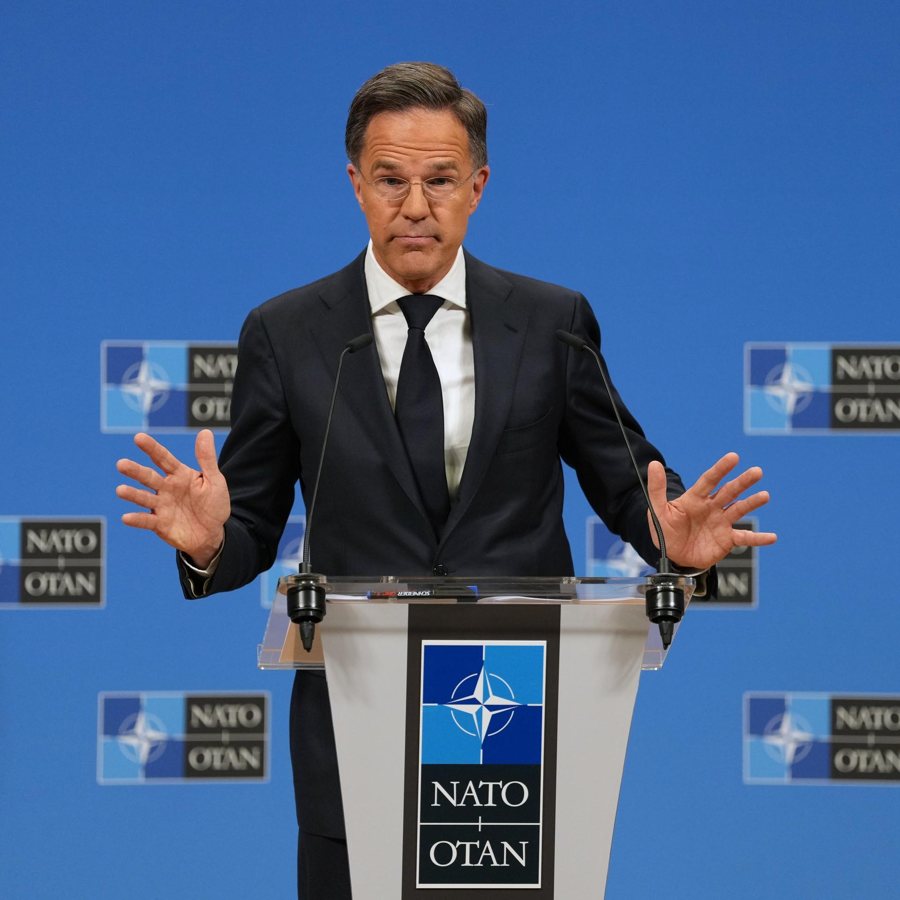
NATO Secretary General Mark Rutte has confirmed that the alliance's European members and Canada have collectively raised their defense expenditures to four percent of their combined gross domestic product, marking a significant increase from the previous year. The announcement, made just days before the NATO summit in Turkey, underscores ongoing efforts to meet the alliance's spending targets and address longstanding concerns from the United States about equitable burden-sharing.
Rutte emphasized that the rise in defense investments reflects a broader commitment among NATO partners to bolster their military capabilities in response to evolving security threats. The four percent figure represents a notable jump from earlier levels, though it remains below the alliance's official guideline of two percent of GDP for each member state. The Secretary General's remarks come at a critical juncture, as the summit is expected to address key issues including defense spending, regional security, and the alliance's strategic direction.
The increase in defense spending has been driven by heightened geopolitical tensions, particularly in Eastern Europe and the Indo-Pacific region. European nations have accelerated their military modernization programs, with several countries pledging to reach or exceed the two percent target in the coming years. Canada, which has historically lagged behind, has also committed to significant increases in its defense budget. Rutte praised these efforts, noting that they demonstrate the alliance's collective resolve to strengthen deterrence and defense.
However, the spending figures have been a point of contention between the United States and its NATO allies. Former President Donald Trump, who has been vocal in criticizing European allies for insufficient contributions, recently described the defense expenditures of Germany, the United Kingdom, and Italy as "ridiculous" based on outdated data. German Chancellor Friedrich Merz has since clarified that Berlin is doubling its defense spending within four years, calling it the largest such effort in the country's history. Merz discussed these developments in a phone call with Trump ahead of the summit, providing updated figures to counter the criticism.
The NATO summit in Ankara is expected to feature discussions on a range of security challenges, including the war in Ukraine, the rise of China, and the stability of the Middle East. Allies are also likely to deliberate on the alliance's future force posture and the need for greater investment in emerging technologies such as cyber defense and artificial intelligence. Rutte's emphasis on increased spending is seen as an attempt to preempt further friction with Washington and to showcase the alliance's adaptability in a rapidly changing security environment.
Beyond the spending debate, the summit will also address the ongoing conflict in Ukraine, where NATO has provided substantial military and humanitarian aid. The alliance has reiterated its support for Ukraine's sovereignty and territorial integrity, while stopping short of direct military intervention. The meeting in Turkey comes amid reports of new Russian offensives and continued civilian casualties, underscoring the urgency of maintaining a unified Western response.
In parallel, the United States has expressed concern over China's recent missile test in the Pacific, which Washington described as a destabilizing act. The test, conducted from a nuclear submarine, has raised alarms about Beijing's rapid and opaque nuclear buildup. NATO allies are expected to discuss the implications of China's military expansion for global security, particularly in the context of the alliance's 2022 Strategic Concept, which for the first time identified China as a systemic challenge.
The summit also takes place against a backdrop of internal political dynamics within NATO member states. In the United States, Trump's continued influence on foreign policy has created uncertainty about the reliability of American commitments. European leaders are wary of potential reductions in US troop deployments or intelligence sharing, which could undermine collective defense arrangements. The meeting in Ankara will therefore be a test of the alliance's cohesion and its ability to navigate divergent national interests.
Rutte's announcement of the four percent spending increase is likely to be welcomed by Washington as a positive step, though it may not fully satisfy critics who argue that more needs to be done. The Secretary General has called for sustained investment in defense, warning that the current security environment demands long-term commitment rather than temporary measures. As the summit approaches, the focus will be on translating spending pledges into concrete capabilities that enhance the alliance's readiness and deterrence posture.