Iran has promised a «decisive response» to the fourth consecutive day of US airstrikes, as the confrontation between the two countries escalates dramatically. The strikes, which have targeted Iran's southern port city of Bushehr for a second day, have killed more than 30 civilians, according to Iranian state media. The city is home to Iran's only civilian nuclear power plant, raising concerns about the potential for a broader conflict.
Mohammad Mozaffari, the governor of Bushehr, confirmed that three points in the city were attacked on Tuesday. «In continuation of the brutality of the American enemy, three points in the city of Bushehr were attacked today,» he was quoted as saying by the state news agency IRNA. The attacks have drawn widespread condemnation from Iranian officials, who have vowed to retaliate. The deputy foreign minister of Iran has stated that the interim nuclear deal is now all but «dismantled,» signaling a collapse in diplomatic efforts.
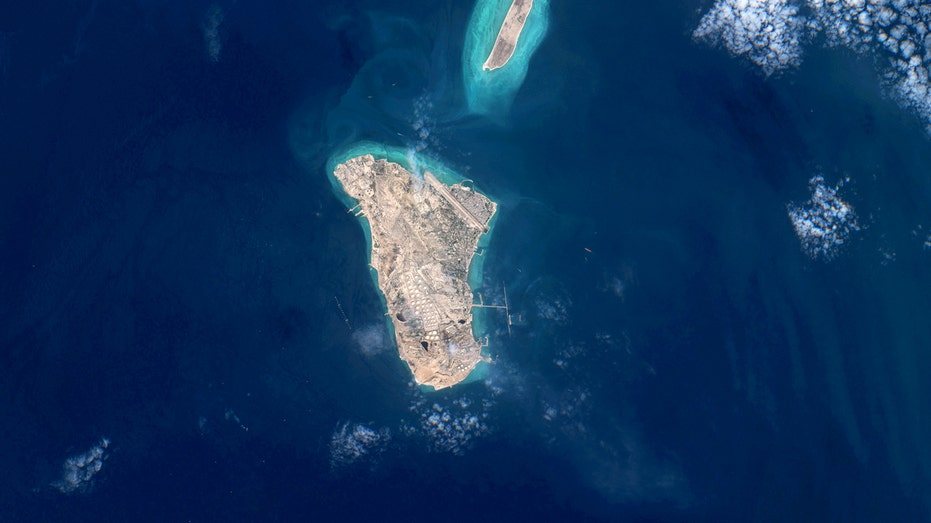
President Donald Trump has threatened to strike Iran's power plants and bridges if Tehran does not agree to a new nuclear deal. The impasse over the Strait of Hormuz, a critical waterway for global oil shipments, has further fueled tensions. Trump has also declined to rule out a potential US operation to seize Iran's Kharg Island, which handles roughly 90% of the Islamic Republic's crude oil exports. In an exclusive interview with Fox News, Trump said, «I can't say that to you because if I did, it would be foolish,» when asked about the possibility of taking the island. He added that previous US strikes intentionally avoided the island's oil facilities because they are «a chunk of the world economy.»
Military experts have outlined what a potential US assault on Kharg Island could look like. Vice Adm. (Ret.) Robert Harward, former deputy commander of US Central Command, described a scenario where a Marine Expeditionary Unit conducts an amphibious assault while US naval and air forces establish complete control over the battlespace. The goal, he said, would be to preserve the oil infrastructure for a future post-Islamic Republic government. «The real objective at the end of the day is to minimize risk, not only to your own forces, but to the people you're coming in contact with,» Harward told Fox News Digital.
Kharg Island's strategic importance is not new. British forces briefly occupied the island during confrontations with Persia over Herat in 1838 and again during the Anglo-Persian War in 1856. Iran later selected Kharg as a deep-water oil terminal, with construction beginning in the late 1950s. The terminal entered service in 1960, transforming the island into the principal outlet for Iranian crude. However, military analysts warn that capturing the island may be the easiest part of the mission. Located just 16 miles off Iran's Gulf coast, the island sits well within range of Iranian missiles, drones, and shore-based anti-ship weapons.
Iran has spent decades investing in denial capabilities designed to keep US forces away from its shores. These include anti-ship cruise missiles, drones, naval mines, and hundreds of fast attack craft intended to overwhelm superior naval forces. Nicholas Carl, assistant director of the Critical Threats Project at the American Enterprise Institute, noted that «Iran has spent decades investing in denial capabilities designed specifically to keep U.S. forces away from its shores.» The anti-access strategy is considered one of the most sophisticated in the Middle East, relying on asymmetric weapons to counter US military superiority.
The humanitarian toll of the strikes is mounting. The governor of Bushehr expressed condolences to the families of the more than 30 civilians killed in the recent attacks. «The south of Iran is the beating heart of this land. The south of Iran, the soul of Iran,» he said, honoring the memory of the fallen. The Iranian government has vowed to stand by the people with all its might, as the country braces for further escalation.
The international community is closely watching the situation, with concerns that the conflict could disrupt global oil supplies and destabilize the region further. The US strikes have targeted not only military sites but also infrastructure, raising questions about the rules of engagement. Trump's threats to target power plants and bridges represent a significant escalation, as such attacks could cripple Iran's civilian infrastructure and lead to a humanitarian crisis.
As the crisis unfolds, the possibility of a diplomatic resolution appears increasingly remote. The interim nuclear deal, which was seen as a last-ditch effort to curb Iran's nuclear program, is now effectively dead. Iran's deputy foreign minister has confirmed that the deal has been dismantled, leaving both sides with few options beyond continued military confrontation. The world watches as the Middle East teeters on the brink of a wider war.