Europe Strengthens Defenses Against Russia with Finnish Bunkers and Polish Drills
Europe is intensifying its defensive preparations against a potential Russian attack, with Finland completing a vast network of over 5,000 nuclear bunkers and Poland conducting large-scale military exercises.
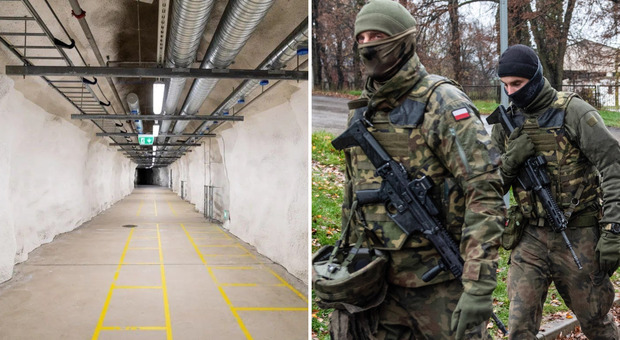
Europe is accelerating its defensive preparations against the possibility of a Russian attack, with Finland completing an extensive underground network of nuclear bunkers and Poland conducting large-scale military exercises. These measures reflect a growing sense of urgency among European nations as the war in Ukraine continues and tensions with Moscow remain high.
Finland, which shares a long border with Russia, has finished constructing a massive system of over 5,000 bunkers designed to protect its population in the event of a nuclear strike. The bunkers, located primarily in and around the capital Helsinki, are built deep underground and can shelter hundreds of thousands of people. They are equipped with ventilation systems, food supplies, and medical facilities to sustain occupants for extended periods. Finnish authorities have emphasized that the network is part of a broader civil defense strategy aimed at ensuring national resilience against any potential aggression.
Poland, meanwhile, is ramping up its military readiness through a series of exercises involving troops, tanks, and aircraft. The drills, which are taking place near the border with Russia's Kaliningrad exclave and Belarus, are designed to test the country's ability to respond to a conventional military threat. Polish officials have stated that the exercises are defensive in nature and are coordinated with NATO allies. The maneuvers include live-fire training, logistics operations, and command post simulations to improve interoperability among allied forces.
The European Union has also stepped up its support for Ukraine, providing billions of euros in military aid and economic assistance. This includes the delivery of weapons, ammunition, and training for Ukrainian forces, as well as sanctions against Russia aimed at crippling its economy. EU leaders have repeatedly stressed that Ukraine's defense is crucial for the security of the entire continent, warning that a Russian victory could embolden Moscow to target other neighboring countries.
NATO has bolstered its presence in Eastern Europe, deploying additional troops and equipment to countries such as Estonia, Latvia, Lithuania, and Poland. The alliance has also increased the frequency of joint exercises and intelligence-sharing to deter any potential incursion. NATO Secretary General Jens Stoltenberg has described the current security environment as the most dangerous in decades, urging member states to invest more in defense and maintain unity against Russian aggression.
Finland's bunker system is one of the most comprehensive in the world, reflecting the country's long history of neutrality and its pragmatic approach to national security. The bunkers are not only designed to withstand nuclear blasts but also to serve as command centers, hospitals, and shelters for essential government functions. Many of them are integrated into the urban landscape, with entrances disguised as ordinary buildings or parks. Finnish civil defense planners have conducted regular drills to ensure that the population knows how to reach the bunkers quickly in an emergency.
Poland's military exercises are part of a broader effort to modernize its armed forces, which have undergone significant upgrades since Russia's annexation of Crimea in 2014. Warsaw has increased its defense budget to over 4% of GDP, one of the highest in NATO, and has signed contracts for advanced weaponry such as F-35 fighter jets, HIMARS rocket systems, and Abrams tanks. Polish leaders have argued that a strong national defense is essential to deter Russian aggression and to reassure the Polish public.
The European Commission has also launched initiatives to strengthen the continent's defense industry, including joint procurement of military equipment and investment in research and development. These efforts aim to reduce Europe's dependence on external suppliers and to create a more integrated defense market. EU officials have acknowledged that the bloc must do more to protect itself, especially in light of the United States' shifting strategic priorities and the possibility of a reduced American military presence in Europe.
Despite these preparations, European leaders remain divided on how to respond to Russia's actions. Some countries, particularly those in Eastern Europe, advocate for a more aggressive posture, including the provision of long-range missiles and fighter jets to Ukraine. Others, such as Germany and France, have urged caution, fearing that escalation could lead to a direct confrontation between NATO and Russia. These divisions have sometimes slowed decision-making within the EU and NATO, but the overall trend has been toward greater defense cooperation and investment.
The situation in Ukraine remains the primary driver of Europe's security concerns. Russian forces have continued their offensive in the eastern Donbas region, while Ukrainian troops have mounted counteroffensives in the south. The war has caused tens of thousands of casualties and displaced millions of people, creating the largest refugee crisis in Europe since World War II. European countries have taken in millions of Ukrainian refugees, straining social services and housing markets in some areas.
Looking ahead, European defense planners are preparing for a long-term confrontation with Russia, regardless of how the war in Ukraine ends. The bunkers in Finland and the exercises in Poland are just two examples of a broader effort to build resilience and deterrence across the continent. As one Finnish official put it, the goal is to ensure that Europe is prepared for any eventuality, from hybrid attacks to full-scale war.