
Putin to Raise Military Spending to Record 35% of Russia's Budget
Russia plans to allocate a record 35% of its state budget to the military next year, funding a 17.1 trillion rouble war chest by cutting welfare, education and healthcare, according to reports.
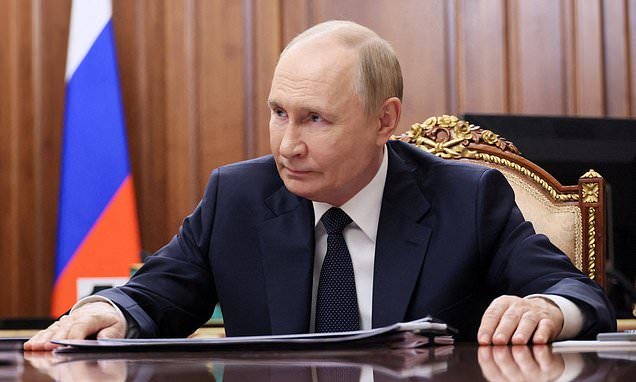
Russia is set to increase military spending to a record 35 per cent of its state budget next year, funding a 17.1 trillion rouble (£154bn) war chest by cutting welfare, education and healthcare, according to reports. The move represents one of the most significant shifts in Russian fiscal priorities in decades and underscores the Kremlin's determination to sustain its war in Ukraine regardless of the domestic cost.
The planned military allocation would mark the highest share of Russian state spending devoted to defence in modern history. To finance it, the government is preparing reductions in social programmes that have long formed the backbone of public support for the political leadership. Welfare payments, schools and hospitals are among the areas facing cuts as the finance ministry reorders budget priorities around the armed forces.
The scale of the reallocation is extraordinary. At 17.1 trillion roubles, the military budget alone exceeds the entire annual spending of most European states. The figure reflects not only the direct costs of combat operations but also the expense of replenishing depleted stockpiles, paying recruitment bonuses and sustaining defence industries operating at full capacity.
Analysts note that the shift carries long-term economic risks. Diverting resources from education and healthcare erodes human capital, while heavy military outlays stoke inflation and strain the labour market. Russia has already drawn on accumulated reserves and raised taxes to cover war costs, and the new budget suggests those pressures will intensify rather than ease.
The decision also has political implications. Social spending cuts can provoke public discontent, particularly in regions far from the front lines where the war feels more distant. The Kremlin appears to be calculating that tighter control over information and a steady flow of recruitment payments will contain any backlash.
For European capitals, the budget signals that Moscow is preparing for a prolonged conflict and is willing to sacrifice domestic development to sustain it. The 35 per cent figure will likely feature in debates about European defence spending and support for Ukraine, as governments assess the scale of Russian military commitment.
Details of the budget plan are expected to be finalised in the coming weeks. If implemented, the changes would reshape Russia's public finances for years, prioritising guns over classrooms and clinics to an extent unmatched since the Soviet era.
6