HMS Prince of Wales sails for Arctic in Nato show of strength
Britain's largest aircraft carrier has left Portsmouth to lead the UK Carrier Strike Group on a deployment to the Arctic and North Atlantic, the second phase of Operation Firecrest.
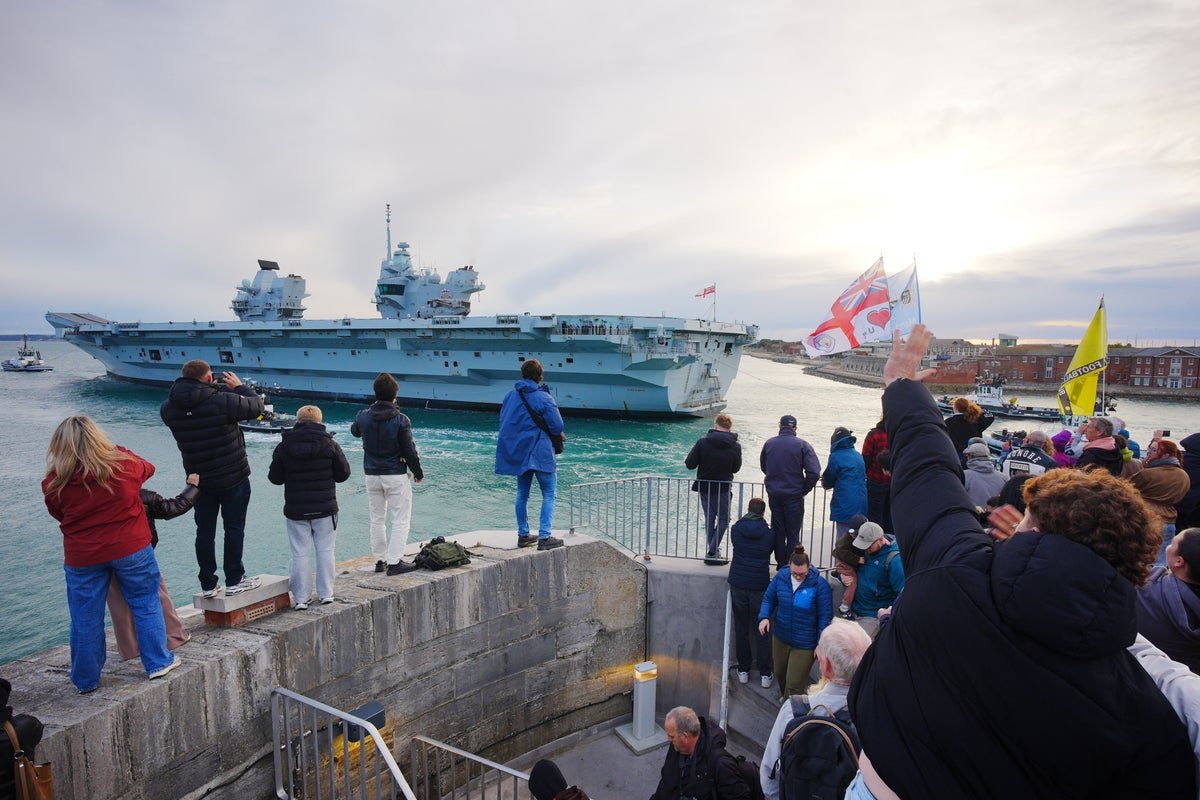
Britain's largest aircraft carrier, HMS Prince of Wales, has left Portsmouth Naval Base in Hampshire to lead the UK Carrier Strike Group on a deployment to the Arctic and North Atlantic, in a move intended to reinforce Nato's presence in the far north.
The departure marks the second phase of Operation Firecrest, the Ministry of Defence's programme for the carrier strike group. The deployment is the latest signal of Britain's commitment to the alliance's northern flank, where Russia's military activity has drawn increased attention from Nato members in recent years.
The carrier left port on Sunday. It will operate with allied forces in a region that has become increasingly important to western defence planning, as melting sea ice opens new shipping routes and exposes resources that were previously inaccessible.
HMS Prince of Wales is the second of the Royal Navy's two Queen Elizabeth-class carriers, and the largest warship ever built for the service. The vessel displaces around 65,000 tonnes and is designed to carry a mix of F-35B Lightning II fighter jets and helicopters, giving Britain a deployable air base that can operate far from home waters.
The Arctic deployment follows a period in which the carrier has been prepared for operations after earlier technical problems. The ship's return to the front line is seen as important for the Royal Navy, which has faced questions about the availability of its two carriers and the cost of maintaining them.
Nato has stepped up its activity in the High North in response to Russia's build-up of military infrastructure along its Arctic coastline. The alliance conducts regular exercises in Norway and the surrounding seas, and member states have increased patrols and surveillance in the region.
For the UK, the deployment serves both a military and a political purpose. It demonstrates that Britain can project power into the North Atlantic and Arctic, waters that are vital to the defence of northern Europe and to the sea lanes that connect North America with the continent.
The carrier strike group will operate alongside allied navies and air forces during the deployment. Such combined operations are intended to improve interoperability between Nato members, allowing them to work together more effectively in a crisis.
Defence analysts have noted that the Arctic is becoming a more contested environment. Russia has reopened Soviet-era bases in the region and has deployed new missile systems and radar installations. Nato's response has focused on reassurance for northern members, particularly Norway and Iceland, and on maintaining freedom of navigation in the Norwegian Sea and the Greenland-Iceland-UK gap.
The departure of HMS Prince of Wales is likely to be watched closely by allies and by Moscow. Carrier deployments are among the most visible instruments of naval power, and their movements are routinely monitored by rival navies.
The Ministry of Defence has not disclosed the full itinerary of the deployment or the specific exercises the carrier will take part in. Further details are expected to be released as the ship begins operations in northern waters.
5