French Leaders Face Anger on the Streets as Protesters Unite Over Sense of Betrayal
A journalist's account from Paris describes a weekend of rioting, looting and teargas, arguing that a shared feeling of betrayal has united protesters with heartfelt grievances and others seeking confrontation, and warning that further violence from the state will not resolve the underlying anger.
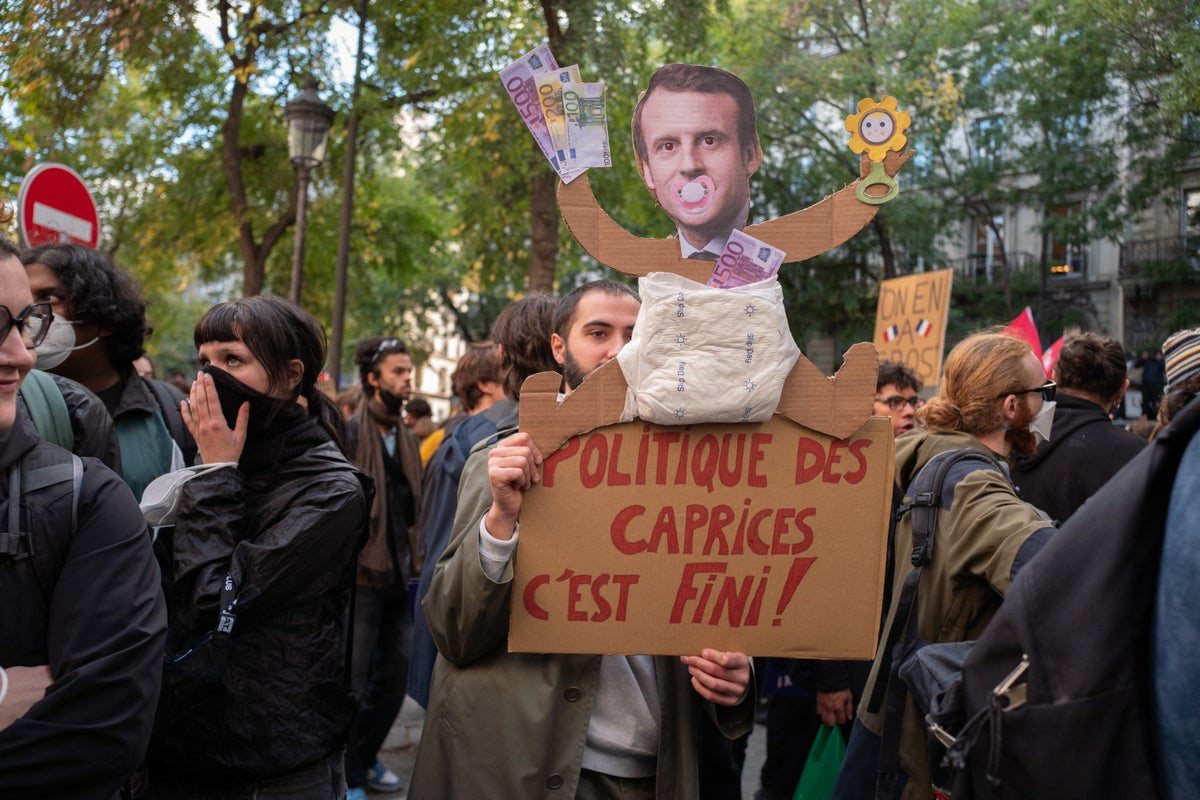
French leaders are confronting a volatile mix of protest and public anger in Paris, where a weekend of unrest saw rioting, looting and the heavy use of teargas, according to an eyewitness account from the capital. The journalist Oliver Haynes, co-host of a podcast on French presidential elections, described arriving at Place de la République shortly after 1pm to find a festive atmosphere that turned within moments as police fired volleys of teargas into the square from Rue du Faubourg-du-Temple.
Haynes writes that he did not see the inciting incident, if there was one, and that attempts to walk into the cloud of CS gas hanging in the air were impossible. The gas clings to the nose, burns the eyes and quickly makes breathing difficult, forcing a retreat towards Boulevard de Magenta while blinking to stop the stinging. The account captures how quickly a gathering can be transformed by the use of force, and how the physical effects of teargas shape the experience of those caught in it.
The central argument in the account is that the unrest cannot be understood simply as a security problem. Haynes describes a perfect storm of protesters with heartfelt grievances and others set on conflict, with the key factor being a sense of betrayal that united them on the streets. That framing places the emphasis on the political relationship between the state and those protesting, rather than on the disorder alone, and it carries a direct warning: if French leaders believe more violence will solve the situation, they are mistaken.
The unrest in Paris is set against a wider backdrop of economic and political strain in France. Commentary on the situation notes that the national debt is too large, the economy too sluggish, and that the parliament and president are jointly unable to bring state spending down to sustainable levels. That gridlock stands as the mirror image of the protesters' complaint, since many of those on the streets want more spending on subsidies and schools rather than less.
The result is a political impasse in which the government's fiscal constraints and the demands of protesters pull in opposite directions. For President Emmanuel Macron, the unrest presents a test of authority at a moment when the institutions of the Fifth Republic appear unable to deliver either fiscal consolidation or the public spending that demonstrators are demanding. The eyewitness account suggests that the anger on the streets is not a single-issue phenomenon but a broader expression of disillusionment, which makes a purely policing response unlikely to settle the situation.
The weekend's events also illustrate the difficulty of separating legitimate grievance from opportunistic violence. Haynes describes a crowd that included people with genuine complaints alongside others intent on confrontation, a combination that complicates both the political response and the public narrative. The use of teargas in a central Paris square, and the speed with which the mood shifted, underline how quickly peaceful assembly can give way to confrontation when force is deployed.
For French leaders, the immediate question is how to restore order without deepening the sense of betrayal that has brought disparate groups together. The account warns against treating further violence as a solution, implying that a security-led approach risks reinforcing the very anger it is meant to contain. The longer-term question is whether the political system can address the spending and economic pressures that sit behind the protests, or whether the gridlock identified by commentators will continue to feed the unrest.
4