
EU to hold emergency meeting after Sánchez condemns «selfish» response to Ceuta crisis
The EU has called an extraordinary meeting of interior ministers after Pedro Sánchez accused some member states of a «selfish» and «unlawful» response to the arrival of more than 50,000 migrants in the Spanish enclave of Ceuta. Spain sent troops and Morocco deployed water cannon as most migrants returned.
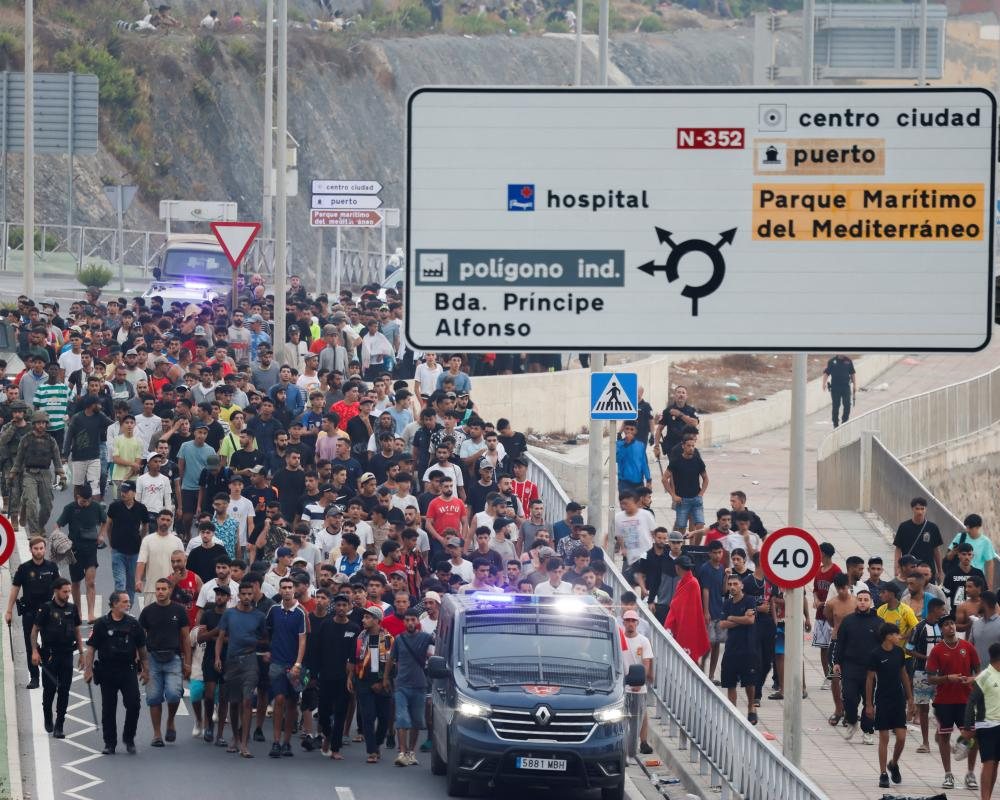
The European Union will hold an extraordinary meeting of interior ministers after a breakdown of political unity over the arrival of more than 50,000 irregular migrants in the Spanish enclave of Ceuta in north Africa.
Pedro Sánchez, Spain's prime minister, accused some EU countries — singling out Italy — of weaponising the crisis instead of showing «solidarity and empathy». He condemned what he described as a «polarising and unlawful reaction» from European partners as the mass crossing overwhelmed the enclave.
Officials representing EU member states and experts from Frontex, the European border agency, gathered for an emergency session on Saturday. The gathering was convened after Sánchez demanded a collective European response to what he described as a border emergency.
The crisis unfolded over several days as large numbers of migrants crossed from Morocco into Ceuta, a Spanish territory on the north African coast. Spanish authorities put the number of arrivals at up to 60,000, although most have since returned to Morocco.
At least dozens of people died during the crossings. Some drowned while trying to reach Spanish territory, while others were killed in a stampede as crowds surged over a breakwater barrier. The full death toll has not been confirmed.
Sánchez said the events had been turned into a political battleground by governments that chose to exploit them rather than stand with Spain. His criticism was aimed particularly at Italy, which he accused of weaponising Friday's events.
The dispute drew international attention when Donald Trump waded into the row, branding the border breach a «catastrophe». His intervention added to the pressure on European leaders already struggling to present a united front.
On the ground, Spain sent troops to deal with the crisis, while Moroccan authorities deployed water cannon trucks at the crossing gates. The joint deployment helped stem the influx, and most migrants have now returned to Morocco.
The episode has again exposed deep disagreements inside the EU over migration, with Spain insisting that the bloc must show solidarity with member states facing such challenges. Sánchez has made clear that he expects more than statements of support, and his reference to an unlawful reaction has set a markedly confrontational tone.
For Spain, the crisis is politically delicate. Sánchez said the response of some European partners had shown neither solidarity nor empathy, and his unusually sharp language reflected frustration that the burden of the crisis had fallen squarely on his country.
Saturday's emergency meeting brought together officials from EU member states and Frontex border experts. The extraordinary session of interior ministers, announced after the emergency talks, will test whether the EU's declarations of solidarity translate into concrete action. Spain has argued that a crisis at the border of one member state affects the European Union as a whole, and that collective action must follow.
With most of the migrants now back in Morocco, the acute phase of the crisis may be easing. But the political fallout looks set to continue, with Spain's accusations of selfishness adding to long-standing tensions over how Europe should respond to irregular migration.