
UK Doctor Receives First NHS Prosthetic Tongue After Cancer Surgery
Dr Imogen Brooks, diagnosed with squamous cell carcinoma at 26, has become the first patient in the UK to receive a custom-made prosthetic tongue on the NHS, restoring her ability to speak clearly after surgery removed most of her tongue.
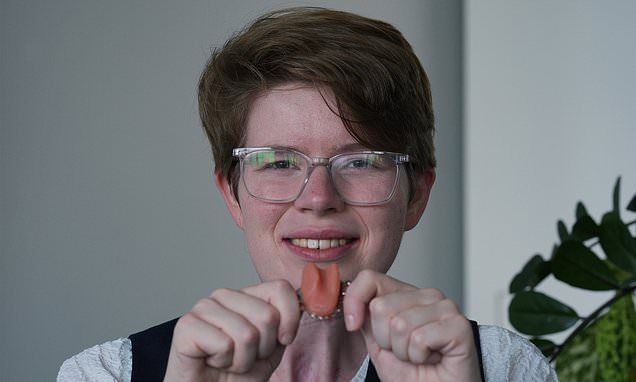
A doctor who lost most of her tongue to cancer has become the first patient in the United Kingdom to receive a custom-made prosthetic tongue through the National Health Service, in a procedure her medical team describes as a significant advance in reconstructive care for head and neck cancer survivors.
Dr Imogen Brooks was 26 when she was diagnosed with squamous cell carcinoma, the most common form of head and neck cancer. Surgery to remove the tumour took most of her tongue, leaving her with severe speech difficulties that affected both her professional life as a doctor and her day-to-day communication. After the operation, she struggled to make herself understood, a common consequence of major tongue resection that can isolate patients socially and professionally.
Determined to find a solution, Brooks recruited a team of colleagues to help design and build a replacement tongue. The resulting prosthesis is tailored to her anatomy and has allowed her to speak with far greater clarity. «People can understand me again,» she said, describing the practical and emotional impact of regaining a basic function that most people take for granted.
The case is being reported as an NHS first, meaning no other patient in the country has previously received a prosthetic tongue of this kind through the public health system. The device is intended to restore some of the tongue's role in shaping speech sounds, a function that is difficult to replicate with standard reconstructive techniques alone. While the prosthesis does not replace the biological tongue, it offers a non-surgical option for patients whose cancer treatment has left them with limited tongue function.
Head and neck cancers, including squamous cell carcinoma, often require aggressive surgery that can remove large portions of the tongue. Survivors may face long-term challenges with speaking, swallowing and eating. Traditional reconstruction typically uses tissue from other parts of the body, but such procedures do not always restore clear speech, and some patients are left with persistent impairment. The development of a custom prosthetic tongue represents an attempt to address that gap using a patient-specific device rather than relying solely on tissue grafts.
Brooks's background as a medical professional gave her unusual insight into both the clinical problem and the potential solution. By working with colleagues to design her own prosthesis, she turned her experience as a patient into a collaborative engineering and clinical project. The details of the materials and manufacturing process have not been fully disclosed, but the outcome — improved intelligibility — is the central measure of success in this case.
The procedure raises questions about how such bespoke devices might be made available more widely. Prosthetic tongues are not standard equipment in most hospitals, and each device must be individually fitted. Scaling the approach would require investment in specialist prosthetics services, collaboration between surgeons, speech and language therapists, and medical engineers, and a clear pathway for patients who have already undergone cancer surgery. For now, the NHS first remains a single case, but it demonstrates that the technology is feasible within a public health system.
For Brooks, the change is immediate and personal. Speaking clearly again restores her ability to communicate with patients, colleagues, friends and family without the frustration and fatigue that accompanied every conversation after her surgery. Her case also highlights the broader needs of head and neck cancer survivors, whose rehabilitation often focuses on swallowing and nutrition while speech receives less attention. The prosthetic tongue suggests that speech restoration can be treated as a distinct clinical goal, with dedicated devices designed for that purpose.
The team behind the prosthesis has not announced plans for further patients, and it remains unclear whether the approach will be adopted by other NHS trusts. Nevertheless, the case has drawn attention to the potential of custom-made implants and prosthetics in areas where standard reconstruction falls short. As cancer survival rates improve, demand for rehabilitation that addresses speech, appearance and quality of life is likely to grow, and Brooks's experience offers an early example of what patient-driven innovation can achieve within the health service.
7