Quantum Design completes takeover of Oxford Instruments NanoScience to create Quantum Design Oxford
US scientific instrument maker Quantum Design has completed its acquisition of Oxford Instruments' NanoScience business, forming Quantum Design Oxford, the largest global supplier of cryogenic equipment for materials characterisation.
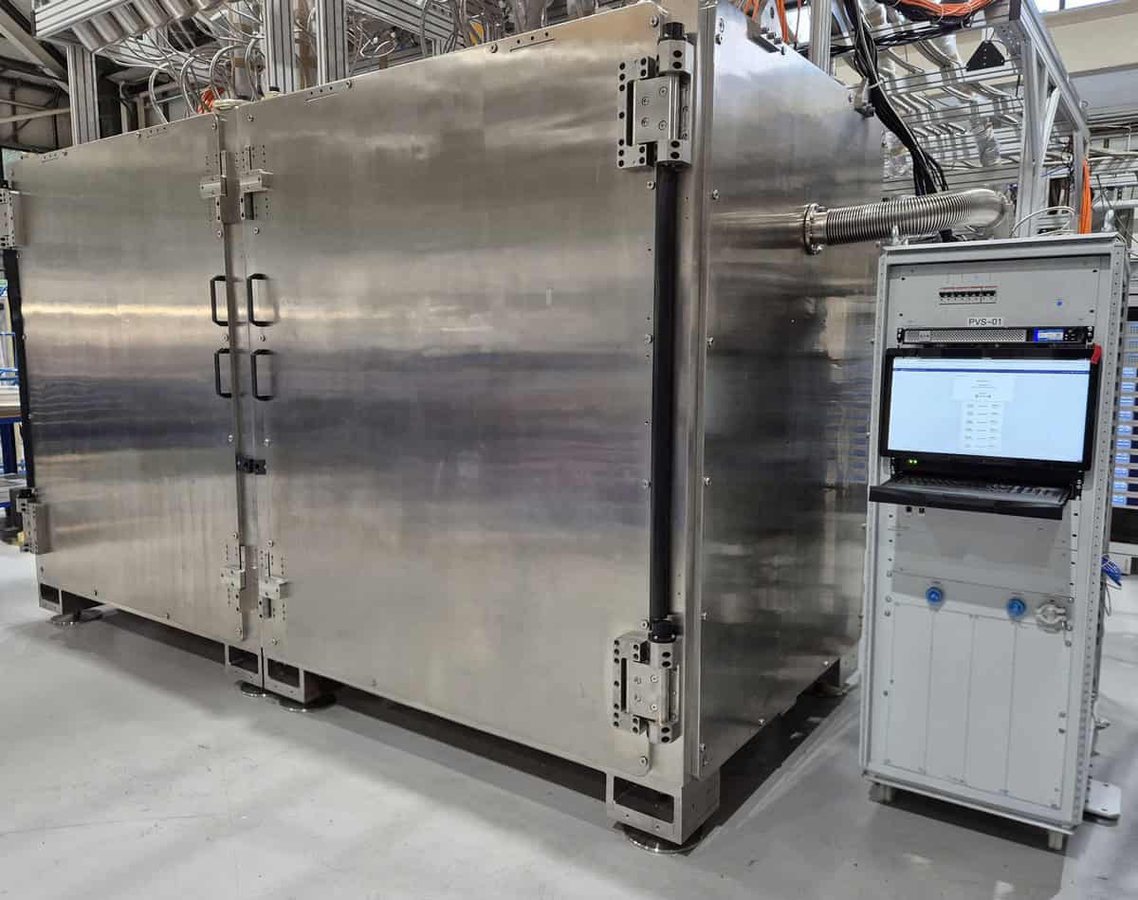
Quantum Design, a US instrument maker based in San Diego, California, has completed its acquisition of the NanoScience business of Oxford Instruments, creating a combined company called Quantum Design Oxford. The deal, completed in January 2026, has produced what the companies describe as the largest global supplier of cryogenic equipment for materials characterisation.
Oxford Instruments began looking to sell NanoScience in 2024, with the aim of finding a partner that would allow the physics-based unit to thrive in a global market. Matt Martin, Managing Director of Quantum Design Oxford, said the two businesses share a similar focus on cryogenics, magnets and the measurement of physical properties, as well as a philosophy of making complex technologies simple to use. "In Quantum Design, we have found a natural home," he said. "Quantum Design will enable us to scale quickly with its global network for sales and customer service."
Quantum Design is known in the research community for multifunction platforms that combine automatic protocols for measuring a range of physical parameters with flexibility for users to design their own experiments. The UK-based Quantum Design Oxford contributes a complementary suite of measurement systems and a core competency in designing superconducting magnets for high-field applications of up to 20 tesla. Its long history of producing dilution refrigerators, which use progressive cooling stages to reach temperatures down to a few millikelvin, is central to the deal.
Large-scale dilution refrigerators were once built mainly for physics experiments at ultralow temperatures. They have more recently become a critical enabling technology for building and testing quantum computers based on superconducting and spin qubits, and Quantum Design Oxford has installed a number of such systems around the world in recent years. John Burgoyne, Head of Strategic Partnerships and Business Development at Quantum Design Oxford, said the acquisition makes Quantum Design a major player in quantum systems and large-scale cryogenic platforms. "As Oxford Instruments, we had the technical expertise and a full range of dilution fridges, but we did not have the commercial reach that Quantum Design can provide," he said.
A central part of that commercial reach is Quantum Design's global sales and support network. Burgoyne said local access to expert support matters particularly for industrial quantum computing customers, for whom uptime and resilience are key requirements, especially as they move into quantum-enabled data centres. The company has already contracted to deliver cryogenic platforms to commercial quantum computing companies, including OQC, a UK-based full-stack quantum computing firm that is installing its superconducting Quantum-Computing-as-a-Service platforms in operational data centres in London, Tokyo and New York.
The dual nationality of the combined company is significant for quantum computing. Both the UK and the US have set clear priorities for maintaining sovereign capability in the technology, and the British government stipulated that Quantum Design Oxford should remain a UK-domiciled company after the acquisition. US ownership opens a much larger customer base and allows opportunities that would previously have been closed, such as supplying equipment to government or defence organisations. The firm remains anchored in the UK quantum supply chain, and its research and development will stay in the UK, preserving existing collaborations with Innovate UK and the science research councils.
Martin said Quantum Design bought the business for what it was already doing and that the company will continue its technology roadmap. The acquisition is already bringing extra investment to support development, with a continuing focus on hiding the complexity of cryogenics from users while delivering the reliability and repeatability needed for operational use. "We have lots of ideas and Quantum Design has given us the backing to ramp up our development activities," Martin said.
Source: physicsworld.com
5