
Jonathan the 194-year-old tortoise reveals genetic secrets of longevity
Genome analysis of the world's oldest known land animal shows exceptionally efficient mitochondria and unique DNA repair genes that may help fight ageing, offering potential insights for human longevity research.
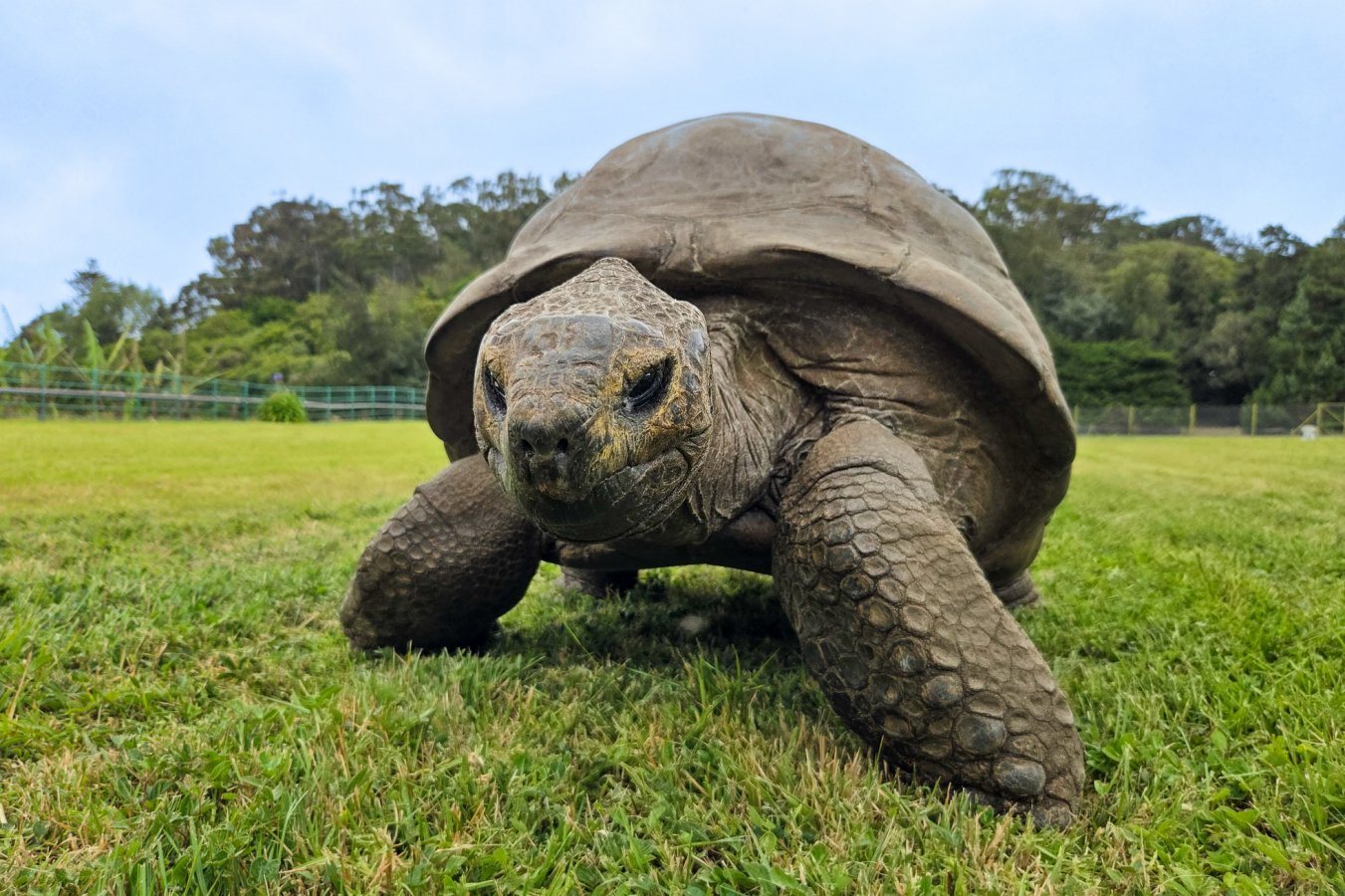
Scientists have sequenced the genome of Jonathan, a giant tortoise believed to be 194 years old, uncovering genetic mechanisms that appear to protect him from the effects of ageing. The analysis, published in the journal Science Advances, reveals that parts of his genome linked to mitochondrial function are as efficient as those of a five-year-old member of his species.
Jonathan, an Aldabra giant tortoise (Aldabrachelys gigantea), lives on the remote South Atlantic island of St Helena, a British territory. He is thought to have been shipped there in 1882 as a fully grown adult, already around 50 years old, making him a contemporary of Queen Victoria and Charles Darwin. He resides in the grounds of Plantation House, the official residence of the island's governor.
The research team, led by Manel Esteller at the Josep Carreras Leukaemia Research Institute in Barcelona, Spain, and including Stephen Clark of the Kallel Foundation in Nashville, Tennessee, compared Jonathan's genome with those of four other Aldabra tortoises. They identified 287 genes with changes unique to Jonathan, 41 of which are thought to be functionally significant. A dozen of these genes also appear in ageing databases of other long-lived animal species.
Clark said the findings suggest that efficient mitochondria may give Jonathan's DNA repair systems more energy to combat ageing. «This study adds to the body of evidence that the mechanisms of ageing may be conserved across species,» he said. The team had previously studied a 117-year-old woman, once officially the world's oldest person, and found she also had exceptionally efficient mitochondrial function.
Because St Helena authorities refused requests to draw Jonathan's blood, citing his fame and the risk of infection, researchers had to rely on saliva samples and cheek swabs. This limited their ability to isolate large, stable pieces of DNA, forcing them to assemble fragments and fill gaps using DNA from another Aldabra tortoise. The resulting composite genome was then compared with the other tortoises.
Aldabra tortoises have an average lifespan of around 80 years, but some individuals live far longer. Jonathan's exceptional longevity has made him a subject of global interest, and the new study offers clues that could inform research into human ageing. Esteller said he firmly believes that studying exceptions like Jonathan can reveal global mechanisms of ageing.
Not all scientists are fully convinced. Kousuke Hashimoto at the University of Osaka, Japan, described the work as «fascinating» but noted that Jonathan's genome was compared against only a few other tortoises, which may themselves carry unique genetic changes. The study nonetheless adds to a growing body of research suggesting that mitochondrial efficiency and DNA repair play central roles in determining lifespan across species.
4