
Epic Games CEO Tim Sweeney says games industry must build more factories to survive 'Crash 2.0'
Epic Games CEO Tim Sweeney argues the games industry's current downturn, marked by mass layoffs at major publishers, can be countered by expanding development capacity rather than contracting. He frames the crisis as 'Crash 2.0', driven by post-pandemic market contraction, rising costs, and AI-driven hardware shortages.
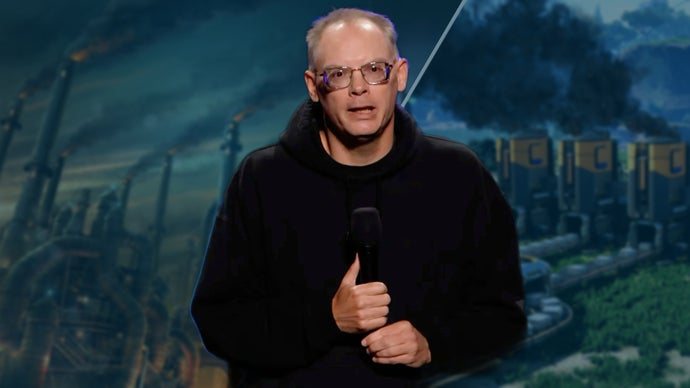
The games industry's current wave of mass layoffs and studio closures is not a temporary correction but a structural crisis that demands a fundamentally different response, according to Epic Games chief executive Tim Sweeney. His proposed remedy runs counter to the cost-cutting strategies adopted by most major publishers: instead of shrinking, the sector should be building more factories.
Sweeney's comments come as the industry endures what he describes as 'Crash 2.0', a downturn visible across the entire sector. Sony, Microsoft, EA, Ubisoft, Take-Two and Epic Games itself have all announced significant job cuts in recent months. The scale of the contraction has prompted widespread concern that the business model which sustained gaming through the previous decade is no longer functioning.
The causes identified by industry executives are numerous and interlocking. Companies typically point to the contraction of the market following the pandemic-era boom, when lockdowns drove record engagement and spending. That surge has now reversed, leaving budgets and headcounts calibrated for a demand level that no longer exists. Rising development costs, longer production cycles and higher wages have compounded the pressure, while shifts in consumer spending patterns have made the financial outlook for new projects increasingly uncertain.
An additional factor has emerged in the form of hardware shortages driven by surging demand for AI data centres around the world. The competition for components and manufacturing capacity has pushed up costs and created supply bottlenecks, further squeezing developers who rely on powerful hardware to produce and run their games.
Sweeney's 'more factories' argument reframes the problem as one of insufficient productive capacity rather than excessive cost. In his view, the industry's long-term health depends on expanding the infrastructure and tools needed to create games efficiently, rather than retreating into safer, smaller projects. The approach implies a bet on growth: that the current contraction is a supply-side problem which can be overcome by investing in the means of production.
The broader context for his remarks is an industry struggling to reconcile its ambitions with its economics. The pandemic boom encouraged aggressive expansion across publishers and platforms alike, and the subsequent correction has been brutal. Layoffs have hit every tier of the sector, from the largest multinationals to independent studios, and the pace of restructuring shows little sign of abating.
Whether Sweeney's prescription gains traction remains to be seen. Most major publishers have responded to the downturn by consolidating, cancelling projects and reducing headcount, the opposite of the expansionary strategy he advocates. His position, however, reflects a persistent debate within the industry about whether the current crisis is a cyclical downturn or a permanent shift in the economics of game development.
59