Edinburgh Quantum Software Lab Marks Three Years With £20m Project and Festival Expansion
The University of Edinburgh's Quantum Software Lab has grown to nearly 100 researchers in three years, is poised to lead a £20m quantum software project, and expanded its Quantum Fringe festival to 16 events in 2025.
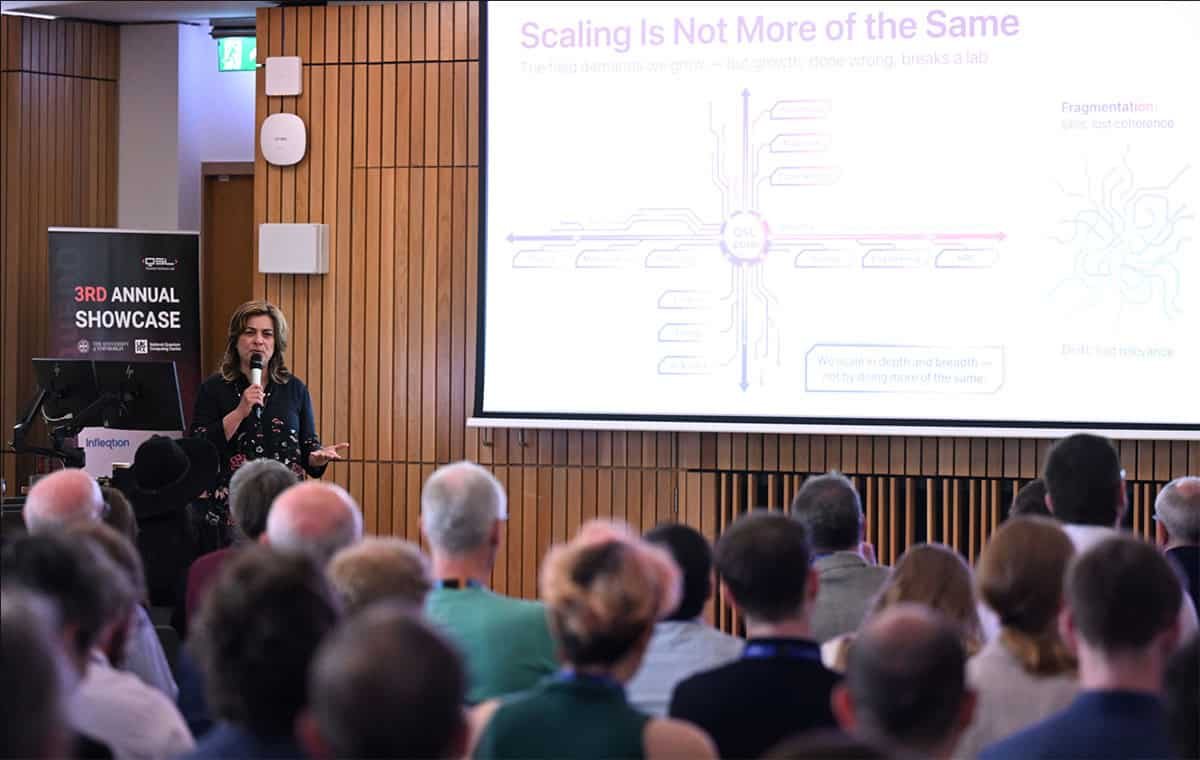
The Quantum Software Lab at the University of Edinburgh is set to lead a £20m project aimed at delivering the tools, methods and systems needed for useful quantum computing, marking a significant escalation of its role in the UK's quantum ecosystem. The lab, which launched in 2023, has grown from around 15 members to almost 100 researchers working across quantum software, algorithms and foundational theory, according to an update released during its third annual showcase.
The expansion reflects a broader push to ensure that emerging quantum hardware can generate practical, trustworthy results. Elham Kashefi, director of the QSL and chief scientist of the UK's National Quantum Computing Centre, said the focus on software is essential because a quantum machine only matters if it can produce an answer that is both useful and reliable. «Quantum computing is almost always told as a hardware story, but a machine only matters if it can give you an answer that is useful and that can be trusted,» she said. «That is a software problem.»
The lab's strategic partnership with the NQCC has been central to its growth, shaping its research agenda and providing a platform for collaboration between academia, government and industry. More than 70 researchers now work across applications, algorithms and the underpinning theory and software, with the lab positioning itself as a globally recognised hub for quantum software solutions.
Alongside its research milestones, the QSL has driven the creation of the Quantum Fringe, a festival of events that debuted in 2025 to mark UNESCO's International Year of Quantum Science and Technology. Modelled on Edinburgh's world-famous Fringe festival, the programme hosted 16 events this year, bringing together researchers, scientists in government and industry, and students. «The Quantum Fringe belongs to everyone who takes part, whether they are researchers, scientists in government and industry, or students at university or school,» Kashefi said. «That's the whole point: no-one can do this alone, and each of the 16 events in this year's festival provided an opportunity for the community to come together.»
The cross-cutting ethos was evident in several collaborative workshops. A two-day event organised by the Integrated Quantum Networks research hub enabled scientists from different sectors to share expertise on authentication requirements for future quantum communications. Another workshop, led by the QCi3 research hub, explored applications and integration challenges for quantum computing in the defence sector. The TartanQEC workshop, organised by the Universities of Edinburgh and Strathclyde, welcomed more than 120 researchers from the UK and Europe to discuss practical methods for quantum error correction, with a keynote on QEC schemes for superconducting quantum computers delivered by Andreas Wallraff of ETH Zürich.
Industry engagement featured prominently. The QSL convened a workshop bringing together hardware vendors and the research community to discuss scalable frameworks for verifying and benchmarking rapidly evolving hardware architectures. Legal firm Simmons + Simmons offered start-up firms insight into legislation protecting core technology, while the regular AIMday event attracted more than 60 participants to tackle industry-relevant challenges, including using quantum optimisation to design a multi-hub logistics network for the UK.
Educational outreach also formed a key part of the programme. A three-day summer school introduced high-school students to quantum computing and coding techniques, while a week-long event on the Isle of Skye offered postgraduate students and early-career researchers a deep dive into quantum informatics. The festival also featured an evening of music and poetry inspired by quantum physics, performed by quantum researcher Erika Andersson of Heriot-Watt University, computer scientist Ruth Aylett and professional musicians. The performance, titled «Quantum Worlds», explored concepts such as superposition, wave-particle duality and quantum entanglement, with audience members commenting that it helped them understand the science and made quantum physics feel more approachable.
The QSL's anniversary event showcased key achievements and highlighted how the NQCC partnership has enriched its research agenda. One particular benefit has been the opportunity for software specialists to work closely with hardware developers, ensuring that quantum computing advances translate into practical value. With the £20m project on the horizon and a growing community of researchers, the lab is positioning itself at the centre of efforts to build a trusted quantum software ecosystem.
4