
China’s Xi Jinping Calls for Both Control and Openness in Artificial Intelligence Development
Chinese President Xi Jinping has called for a balanced approach to artificial intelligence, urging both strict regulation and international openness as China competes with the United States for global AI leadership.
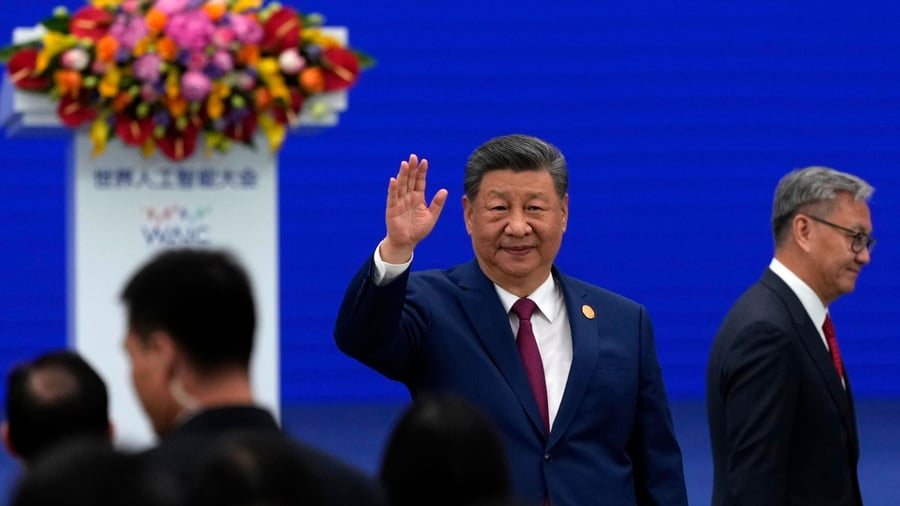
Chinese President Xi Jinping has called for a dual approach to artificial intelligence, demanding both tighter regulatory control and greater international openness as China vies with the United States for global leadership in the rapidly evolving technology. In a recent speech, Xi outlined a vision for AI development that emphasizes national security, ethical governance, and the need for China to chart its own distinct path in the global AI race.
Xi’s remarks come at a critical juncture, as the competition between Washington and Beijing intensifies over advanced technologies, including semiconductors, quantum computing, and large language models. The Chinese leader stressed that while AI offers immense opportunities for economic growth and social progress, it also poses significant risks that must be managed through robust oversight mechanisms. He called for the establishment of clear legal frameworks and ethical guidelines to ensure that AI development aligns with the country’s socialist core values and does not threaten public safety or national stability.
At the same time, Xi emphasized the importance of international cooperation, urging Chinese companies and research institutions to engage openly with global partners. He argued that China should not isolate itself in the AI field but should instead contribute to and benefit from global standards and collaborative research. This dual message of control and openness reflects Beijing’s broader strategy of pursuing technological self-sufficiency while avoiding a complete decoupling from the global innovation ecosystem.
The speech is widely seen as a response to growing concerns within China about the potential misuse of AI, including issues related to data privacy, algorithmic bias, and the displacement of jobs. Chinese authorities have already implemented some of the world’s strictest regulations on AI-generated content, requiring companies to label synthetic media and obtain approval for certain AI applications. Xi’s latest comments signal that the government intends to further tighten these rules while also encouraging innovation and international exchange.
China’s AI sector has grown rapidly in recent years, with companies like Baidu, Alibaba, and Tencent investing heavily in research and development. The country has also become a major player in AI research publications and patents, second only to the United States. However, tensions with Washington over technology transfers and export controls have complicated China’s efforts to access cutting-edge hardware and software, particularly advanced semiconductors needed for training large AI models.
Xi’s call for openness may be aimed at reassuring foreign investors and researchers that China remains committed to global collaboration, even as it strengthens domestic controls. Analysts note that the Chinese government is walking a fine line between fostering innovation and maintaining political and social stability. The outcome of this balancing act will have significant implications for the global AI landscape, as China’s policies influence everything from supply chains to international standards.
The United States has also been ramping up its own AI regulation efforts, with the Biden administration issuing an executive order on AI safety and security and Congress debating various legislative proposals. Both countries recognize that AI is not only an economic driver but also a strategic asset with military and intelligence applications. Xi’s speech underscores the geopolitical dimension of AI development, as each side seeks to shape the rules of the road for a technology that could redefine global power dynamics.
In his address, Xi also highlighted the need for AI to serve the people, calling for applications that improve healthcare, education, and public services. He warned against the concentration of AI power in the hands of a few large corporations and urged that the benefits of AI be shared more broadly across society. This populist framing is consistent with the Chinese Communist Party’s narrative of putting people at the center of technological progress.
While Xi did not announce specific new policies or funding initiatives, his speech is expected to guide the work of Chinese regulators and industry leaders in the coming months. The Chinese government is likely to release updated AI governance guidelines later this year, building on existing frameworks such as the 2023 Generative AI Regulations. These guidelines are expected to address issues like transparency, accountability, and the use of AI in sensitive sectors such as finance and healthcare.
International reactions to Xi’s remarks have been mixed. Some Western experts welcomed the emphasis on ethical governance and global cooperation, while others expressed skepticism about China’s commitment to openness given its track record of state surveillance and censorship. The European Union, which has been developing its own AI Act, may find common ground with China on certain regulatory principles, but differences over human rights and data governance remain significant obstacles.
As the AI race accelerates, Xi’s call for a balanced approach reflects a broader recognition that no single country can manage the risks and opportunities of AI alone. Whether China can successfully combine control and openness will depend on its ability to build trust with international partners while maintaining the political stability that the Communist Party prioritizes above all else. The coming years will reveal whether this dual strategy can sustain China’s momentum in AI without triggering a further escalation of technological tensions with the United States and its allies.
106