Palestine Action co-founder wins Supreme Court hearing on terror ban as 77 arrested at protest
Huda Ammori, co-founder of Palestine Action, has been granted permission to challenge the group's proscription as a terrorist organisation at the Supreme Court, as police arrested 77 supporters outside Westminster Magistrates' Court.
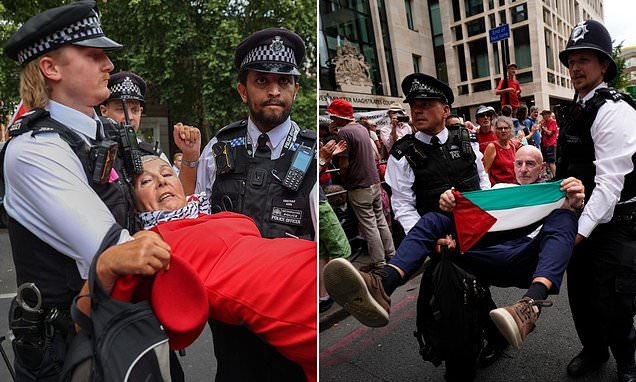
Huda Ammori, the co-founder of the direct action group Palestine Action, has been given permission to challenge the Home Office's decision to ban the organisation at the UK's highest court, as police arrested 77 of her supporters during a protest outside Westminster Magistrates' Court.
Ammori, who has led a mass civil disobedience campaign against the ban, will now have her case heard by the Supreme Court after lower courts upheld the proscription. The group was designated as a terrorist organisation in July last year under the Terrorism Act 2000, a move that made membership, support, and displaying its logo a criminal offence punishable by up to 14 years in prison.
The legal battle began when Ammori challenged the ban at the High Court, which dismissed her claim. In June, five judges at the Court of Appeal ruled unanimously that the proscription was a «justified and proportionate» interference with her right to freedom of expression under Article 10 of the European Convention on Human Rights. The Supreme Court has now agreed to hear the case, marking a significant development in a dispute that has drawn widespread attention from human rights advocates and civil liberties groups.
At the protest held outside Westminster Magistrates' Court on Monday, police arrested 77 people on suspicion of public order offences. The Metropolitan Police said the arrests were made after demonstrators blocked roads and refused to disperse. Videos from the scene showed large crowds chanting slogans in support of Palestine Action and carrying banners condemning the government's decision to ban the group.
Palestine Action, which describes itself as a network of activists using direct action to oppose Israel's military operations and the UK's arms trade with Israel, has been linked to a series of high-profile protests and occupations at factories and universities since its formation in 2020. The Home Office, under then-Home Secretary Suella Braverman, proscribed the group in July 2025, arguing that it was «concerned in terrorism» because its activists had caused criminal damage, disrupted commercial activities, and encouraged others to do the same.
Ammori and her legal team argue that the ban is disproportionate and infringes upon the right to peaceful protest and political expression. They contend that the group's actions, while disruptive, do not meet the threshold of terrorism as defined by UK law. The Supreme Court hearing is expected to examine these constitutional questions, potentially setting a precedent for how the government can restrict protest groups under counter-terrorism legislation.
Speaking after the ruling, Ammori said she was «grateful» that the Supreme Court had agreed to hear the challenge. «This is not just about Palestine Action,» she said. «It is about the right of all people in Britain to speak out against injustice without being labelled terrorists.» The Home Office has declined to comment on the upcoming case, citing ongoing legal proceedings.
The arrests at Monday's protest bring the total number of people detained in connection with demonstrations against the ban to over 200 since the proscription was announced. Civil rights organisations, including Liberty and Amnesty International UK, have called on the government to reconsider the ban, warning that it sets a dangerous precedent for criminalising legitimate protest activity. The Supreme Court is expected to schedule a hearing in the coming months.