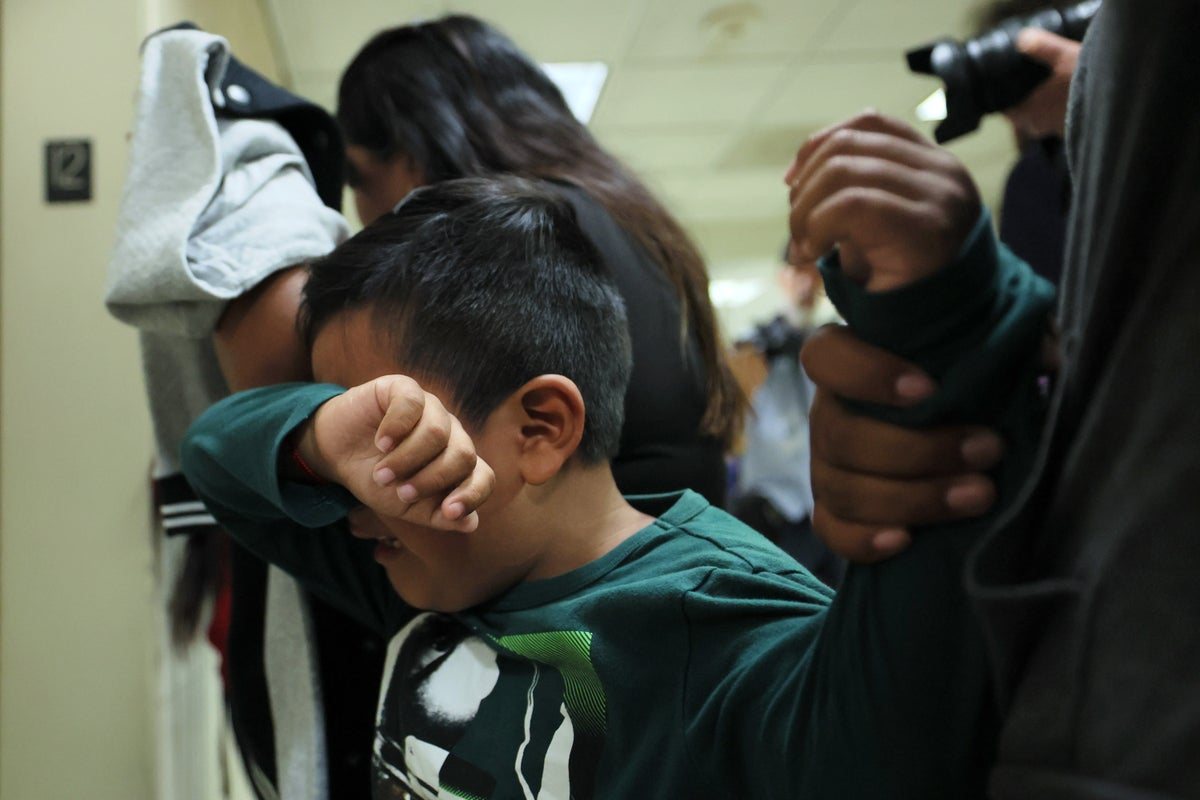
More than half of children facing deportation proceedings in United States immigration courts are representing themselves without legal counsel, according to newly released data from the Department of Justice. The figures highlight a growing crisis within the immigration system as the Trump administration continues its aggressive enforcement policies, with over 750,000 minors currently at risk of removal.
The data, obtained through public records requests, shows that 51 percent of children in Immigration and Customs Enforcement (ICE) proceedings do not have a lawyer. This lack of representation places an immense burden on young respondents who must navigate a complex legal system designed for adults, often without understanding their rights or the potential consequences of their cases.
Legal experts and child advocacy groups have long warned that unrepresented children are far more likely to be ordered deported than those with attorneys. Studies indicate that children with legal representation are five times more likely to succeed in their cases, whether through winning asylum, obtaining special immigrant juvenile status, or finding other forms of relief. Without a lawyer, many children miss critical filing deadlines, fail to present evidence properly, or inadvertently waive their right to a hearing.
The situation is particularly acute for children who have fled violence, persecution, or extreme poverty in Central America and other regions. Many arrive in the United States alone, separated from parents or guardians, and are placed in removal proceedings shortly after crossing the border. Once in court, they face a system where the government is represented by experienced attorneys, while they must argue their own cases in a foreign language and under strict procedural rules.
The Department of Justice data covers fiscal year 2024 and early 2025, reflecting a steady increase in the number of unaccompanied minors in immigration courts. The Trump administration has accelerated deportations and expanded detention capacity, contributing to a backlog of more than 3.5 million cases nationwide. Children's cases are often prioritised for speed, leaving little time for them to secure legal help.
Advocacy organisations, including the American Civil Liberties Union and the National Immigrant Justice Center, have called on Congress to fund universal legal representation for children in immigration proceedings. Several states and cities have launched pilot programmes to provide free legal services to minors, but coverage remains patchy and insufficient to meet the demand. In some jurisdictions, pro bono attorneys and nonprofit groups struggle to keep up with the volume of new cases.
The lack of legal representation also raises due process concerns under the US Constitution. The right to counsel in civil proceedings is not guaranteed in immigration court, unlike in criminal cases, where the state must provide a lawyer to defendants who cannot afford one. This gap has led to lawsuits challenging the fairness of immigration proceedings for children, with some federal judges ruling that the system violates basic principles of justice.
Immigration court is an administrative body within the Department of Justice, not part of the federal judiciary, which means that many standard procedural protections do not apply. Judges have wide discretion over cases, but they cannot appoint lawyers for respondents. The Trump administration has defended its policies by arguing that the immigration system must prioritise enforcement and that providing lawyers to all children would be prohibitively expensive.
Critics counter that the cost of legal representation is far lower than the long-term social and economic costs of deporting children to dangerous conditions. Many of these minors have strong legal claims to remain in the United States, including asylum based on persecution or family reunification petitions. Without a lawyer, however, these claims often go unheard or are dismissed on technicalities.
The data comes amid broader debates over immigration policy in the United States, which remains a deeply polarising issue. The Trump administration has made immigration enforcement a central pillar of its agenda, including mass deportations, border wall construction, and restrictions on asylum. Children have become a focal point of the controversy, with images of young migrants in detention centres drawing international condemnation.
In response to the data, several Democratic lawmakers have introduced legislation to guarantee legal counsel for children in immigration proceedings. The bills face an uphill battle in a divided Congress, where Republicans have largely supported the administration's enforcement-first approach. Meanwhile, advocacy groups continue to recruit volunteer lawyers and raise funds to cover legal fees for as many children as possible.
The situation is expected to worsen as the administration expands its deportation operations and the number of new arrivals at the southern border remains high. Without systemic reform, hundreds of thousands of children will continue to face the immigration court system alone, with life-altering consequences hanging in the balance.