
Map reveals England's most depressed towns as one in four adults diagnosed
Newly released data has exposed the scale of depression across England, with around one in four adults diagnosed in the worst-hit constituency and rates even higher in some neighbourhoods.
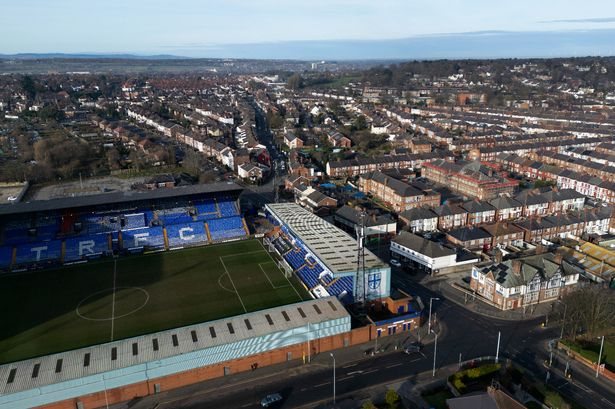
Newly released data has laid bare the scale of the mental health crisis across England, identifying the towns and constituencies with the highest recorded rates of depression. The figures show that in the worst-affected constituency, approximately one in four adults has received a depression diagnosis, with some individual neighbourhoods reporting even higher prevalence rates.
The data, which maps depression diagnoses across the country, provides a stark illustration of how mental ill-health is distributed unevenly across England. While the national picture remains concerning, the concentration of cases in specific areas points to deeper social and economic factors that shape mental wellbeing at a community level. Health experts have long warned that depression does not strike randomly, but tends to cluster in places affected by deprivation, unemployment, and limited access to services.
The worst-hit areas are spread across different regions, challenging the assumption that mental health problems are confined to any single part of the country. However, the pattern revealed by the data suggests that certain communities are carrying a disproportionate burden. In the most affected constituency, the diagnosis rate of around 25 percent of the adult population far exceeds the national average, indicating a serious public health challenge for local authorities and the National Health Service alike.
Neighbourhood-level breakdowns within the data show that the problem is even more acute in some pockets. In specific local areas, the proportion of adults diagnosed with depression rises above the constituency-wide figure, meaning that some communities are experiencing levels of mental ill-health that would have been unthinkable a generation ago. These micro-level variations are particularly important for health service planning, as they allow resources to be targeted at the places where need is greatest.
The release of these figures comes at a time when mental health services across England are under significant strain. Waiting lists for talking therapies remain long in many parts of the country, and campaigners have repeatedly called for greater investment in community-based mental health support. The new data is likely to intensify those demands, particularly from MPs and local leaders representing the hardest-hit constituencies, who will argue that their areas have been neglected for too long.
Mental health charities have responded to the figures by emphasising that a diagnosis of depression is not the same as a complete picture of mental distress. Many people suffering from depression never seek a formal diagnosis, meaning that the true scale of the problem could be considerably larger than the data suggests. At the same time, the fact that diagnosis rates are higher in some areas could reflect better awareness and more proactive screening by local GP practices, rather than simply higher levels of illness.
Despite these caveats, the overall message from the data is clear: depression is a major public health issue affecting hundreds of thousands of adults across England, and its impact is felt most acutely in specific towns and neighbourhoods. For policymakers, the challenge is not only to expand treatment capacity but also to address the underlying conditions that make some communities more vulnerable to mental ill-health in the first place. The map of England's most depressed towns is, in effect, also a map of inequality, and it will require more than medical intervention alone to change the picture it reveals.
55