
Inside the state machine that protects Vladimir Putin
Putin’s daily security is less a ring of bodyguards than a layered state system built around the FSO, secure communications, protected transport, controlled access and increasingly tight risk management.
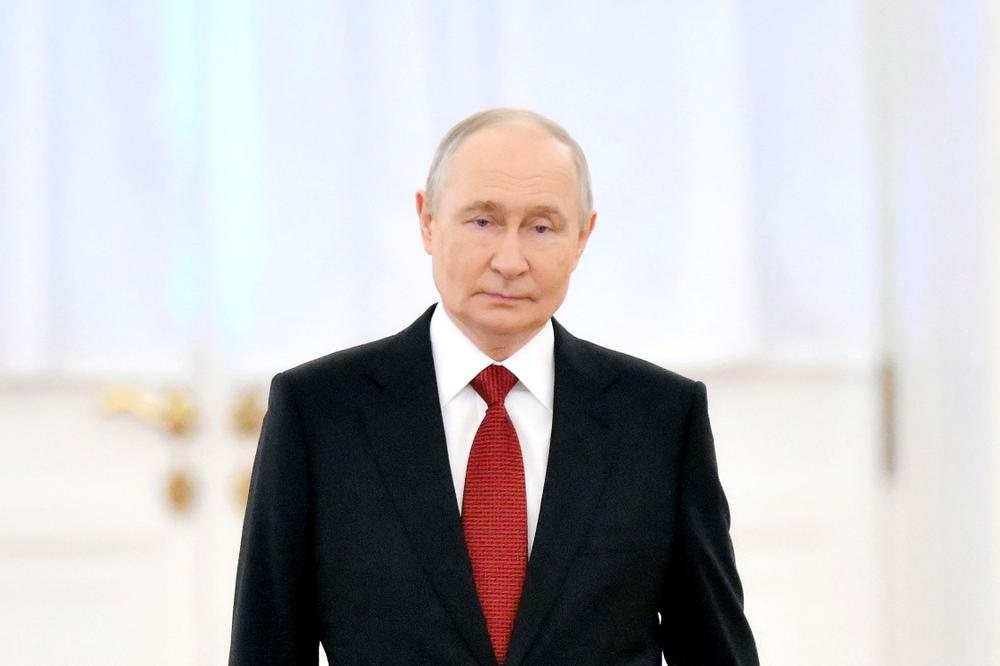
To watch Vladimir Putin enter a Kremlin hall is to see only the most visible edge of his security system. The men in suits near the Russian president matter, but the public record describes something much larger: a state apparatus that treats his safety as a continuous function of government, extending from physical protection and protected premises to transport, food, encrypted communications and the screening of access.
That apparatus is centred on the Federal Protective Service, or FSO. The agency is not simply Russia’s equivalent of a presidential bodyguard unit. Officially, it is a federal executive body responsible for state protection and for safeguarding presidential, government and other special communications. Its work is overseen directly by the president.
That distinction helps explain how Putin can remain one of the world’s most heavily protected political leaders without the public being given a reliable daily security routine. Russian law and official documents are unusually explicit about what the state is responsible for protecting. They are much less revealing about how those protections are executed in real time.
In 2026, that architecture has become more visible because the threat environment has changed. The Kremlin publicly said additional security measures were being taken around Putin for the May 9 Victory Day events. Separately, the Financial Times reported in May that the FSO had tightened protection around him amid growing fears of assassination and drone attacks, and that the president had reduced some visits and personal contacts. The Kremlin did not publicly confirm many of the report’s more detailed claims.
The most important fact is therefore not a particular car, room or bodyguard. It is the system.
Protection is written into the machinery of the presidency
The FSO’s own description of “state protection” is broad. It combines legal, organisational, protective, security-regime, operational, technical and information measures intended to let state power function safely and without interruption. Among the agency’s core tasks are forecasting and identifying threats to protected persons, preventing those threats, protecting designated officials and sites, operating special communications and participating in counterterrorism.
A current presidential regulation goes further. It assigns the FSO personal protection of the president and certain family members who live with or accompany him. The same regulation gives the service responsibility, within its authority, for transport, household support and “safe food” for the president and other protected persons.
That is a revealing phrase. Presidential security is not confined to the moment Putin appears in public. It can attach to ordinary necessities — movement, meals, rooms, communications and the people who have access to them. In institutional terms, the boundary between “security” and “daily life” largely disappears.
The public documents do not describe a single universal routine for every meal, meeting or journey, and operational procedures are deliberately opaque. But they do show why seemingly mundane activities can become security functions. If the state is legally responsible for safe food and transport, those services are not mere hospitality or logistics. They are parts of the protective perimeter.
The FSO is both a guard service and a communications service
Modern executive protection is also about preventing isolation in the wrong sense: a protected leader must still be able to command the state.
A 2015 presidential decree defines special government communications as telecommunications using technical means, including encryption, under information-security requirements. It assigns the FSO responsibility for organising, operating, developing and securing those communications for the president, government and other state bodies. The decree explicitly recognises “presidential communications” as a category designed for the president to exercise his constitutional powers.
The FSO has a dedicated Special Communications and Information Service. That makes secure connectivity part of the same institutional family as physical protection.
This matters because a president whose movements are restricted by a threat cannot simply become unavailable. The protection system must preserve continuity of decision-making: voice, documents and video must remain available through protected channels. The public record says little about the technical architecture for obvious reasons, but it makes the principle clear. Security is supposed to protect both the person and the presidency’s ability to function.
A lineage from the Soviet “Ninth Directorate”
The institutional roots of this system reach back well before Putin.
The FSO’s official history identifies the Soviet KGB’s Ninth Directorate as a predecessor responsible for the protection of senior leaders. In 1990–91, the Soviet presidential protection service succeeded that structure. After the Soviet collapse, Russian protective organisations were repeatedly reorganised. A separate Presidential Security Service existed in the 1990s before being merged into the FSO in 1996, the same year Russia adopted its federal law on state protection.
Special communications were later brought into the modern service: the FSO says a Special Communications and Information Service was created in 2003 and became an FSO structural unit in 2004. Dmitry Kochnev has led the FSO since May 2016, according to both the service and the Russian government.
The result is an agency that combines two traditions once associated with different images of state power: the close protection of leaders and the secure transmission of their decisions.
The Kremlin itself is another institutional layer. The FSO’s Kremlin Commandant Service is tasked with protecting guarded facilities and ensuring the security of protected officials while they are there. Again, official descriptions focus on responsibility rather than tactics.
The security ecosystem is wider than the FSO
Putin’s personal protection sits inside a larger Russian security system, but the agencies should not be conflated.
The FSB, for example, has statutory responsibilities for national security, counterterrorism, counterintelligence, border protection and information security. The National Guard has its own public-order, strategic-site and security functions. For the president personally, however, the FSO is the central state-protection institution.
That separation is significant. A threat to Putin may begin as an intelligence problem, a terrorism problem, an air-defence problem, a public-order problem or a cyber problem. The physical protection of the president is therefore only one endpoint of a chain that can involve several agencies.
The careers of senior Russian officials also show how close-protection work can connect to political power. Viktor Zolotov, now director of the National Guard, led the Presidential Security Service from 2000 to 2013, according to Rosgvardiya’s official biography. Alexei Dyumin, now a presidential aide and secretary of the State Council, served in the FSO from 1996 to 2013; Reuters has reported that he worked in Putin’s bodyguard service from 1999 during the president’s first two terms.
In Russia, proximity to the protected leader has at times become a route into the governing elite.
Covid showed how far a protective perimeter can expand
The pandemic provided the clearest public example of presidential security adapting to a threat that was not an assassin, bomb or drone.
In June 2020, Reuters reported that a disinfection tunnel had been installed for visitors to Putin’s Novo-Ogaryovo residence. In 2021, when cases were found in his entourage, Putin self-isolated and shifted planned participation in regional meetings to video.
Then, in February 2022, the Kremlin confirmed that French President Emmanuel Macron had been seated at the far end of a four-metre table because he declined a Russian Covid test before meeting Putin. Kremlin spokesman Dmitry Peskov said the arrangement was driven by the need to protect the Russian president.
Those episodes were sometimes treated as political theatre because of the striking images. But in security terms they exposed the underlying logic: risk controls can change access, room layout, travel and diplomacy themselves.
A protection system built to keep the presidency functioning can therefore reshape the presidency’s social environment. The safer the principal becomes, the more mediated contact can become.
Drones changed the equation again
The war in Ukraine has created a different kind of pressure.
In May 2023, Russia said two drones had targeted the Kremlin and described the incident as an attempt to assassinate Putin. Ukraine denied responsibility. Putin was not in the Kremlin at the time. Whatever the disputed attribution, the episode demonstrated that symbolic government sites in Moscow could no longer be treated as beyond the reach of unmanned aircraft.
By May 2026, the Kremlin was openly discussing additional security around Putin ahead of Victory Day. Peskov told reporters that extra measures are taken by the relevant special services around major holidays, particularly May 9.
The Financial Times went further, reporting that the FSO had sharply tightened security in recent months amid concern about drone attacks and assassination. It also described fewer visits and more restrictive access to Putin. Those claims rely partly on people close to the president and European intelligence sources and should be understood as reported assessments rather than an official FSO account.
Even at that level of caution, the direction is clear. The threat model around the Russian president has moved beyond the classic image of a gunman in a crowd. Uncrewed systems, long-range attacks, communications security and insider risk now sit alongside conventional close protection.
Secrecy is part of the design
For a subject that attracts endless speculation, the most striking feature of Putin’s security is how much can be established without resorting to folklore.
Official sources identify the responsible agency, its legal mandate, its communications role, its historical lineage and some of the everyday services that fall under protection. Public reporting shows how the system adapted during Covid and how the Kremlin has acknowledged heightened measures during wartime.
What the public record does not reliably provide is just as important: a live map of Putin’s movements, a fixed composition for his protective detail, response timings, the precise methods used to inspect venues or the technical specifications of countermeasures. Claims that purport to reveal those details are often impossible to verify and, in any case, can become obsolete as soon as security planners change them.
The durable story is institutional rather than tactical.
Putin’s daily safety is produced by a bureaucracy that treats the president simultaneously as a person, a command node and a protected state function. It is designed so that food can be a security matter, a video call can be a protected government channel, a meeting can depend on medical or access controls, and movement can be integrated with a larger protective system.
That system also carries a political cost. The tighter the perimeter becomes, the harder it can be for a leader to encounter people and problems without layers of mediation. The Financial Times’ 2026 reporting linked the latest tightening to greater presidential isolation and fewer public engagements. Whether that trend persists will depend on the war, the drone threat and the Kremlin’s own assessment of internal risk.
The central paradox of presidential protection is that success is almost invisible. A quiet day produces no headline. Yet around Vladimir Putin, “quiet” is not the absence of activity. It is the product of a permanent state machine built to keep both the man and the office operating.
70