Hegseth Orders 20% Cut to US Generals in Anti-Diversity Speech
US Defense Secretary Pete Hegseth has announced a 20% reduction in the number of generals and admirals, alongside six major initiatives to overhaul military standards, in a speech at Marine Corps Base Quantico railing against diversity policies.
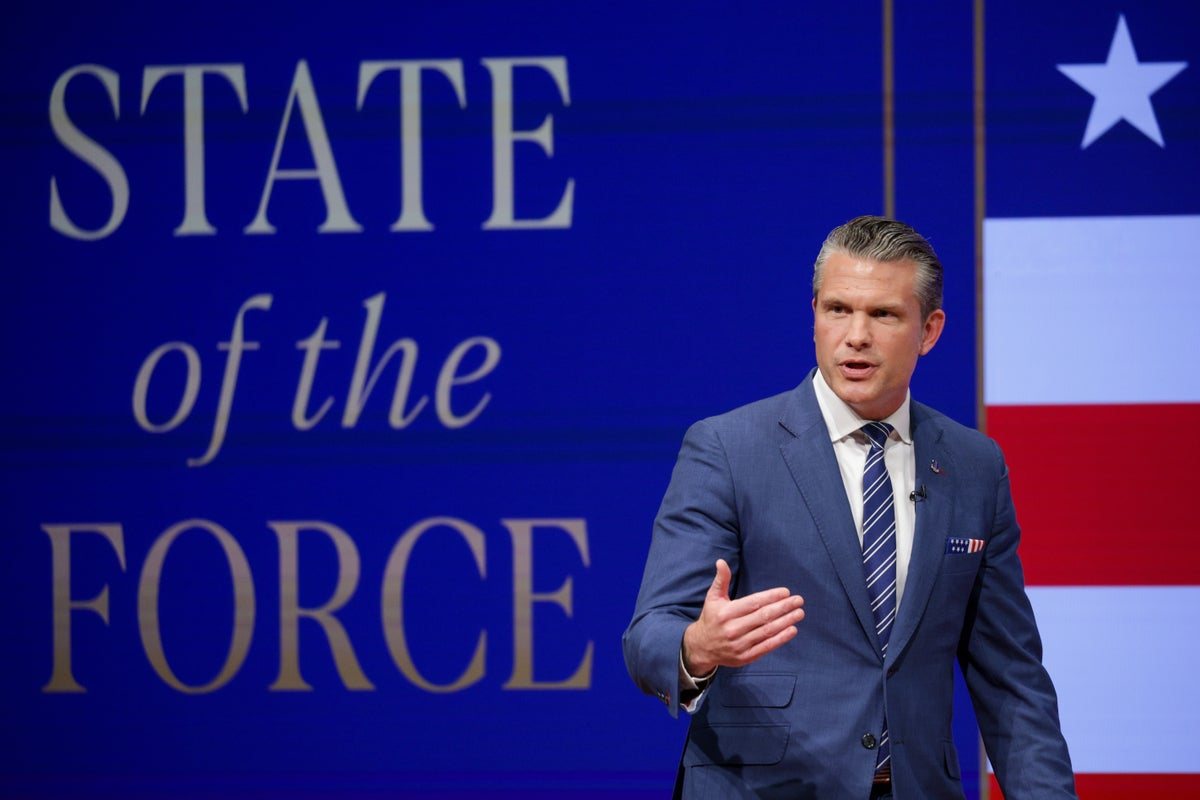
US Defense Secretary Pete Hegseth has ordered a 20% reduction in the number of generals and admirals across the armed forces, unveiling the measure as part of a broader overhaul of military standards in a speech delivered at Marine Corps Base Quantico. The address, framed as a state of the force assessment, railed against diversity policies and set out six major initiatives intended to reshape the military's culture and personnel system.
Hegseth told an audience of junior personnel that the armed forces would be stripped of what he characterised as distracting ideological priorities. His remarks included the declaration that the military would have «no beardos, no weirdos, no wimps», a phrase that quickly circulated across US political media. The defence secretary did not provide a detailed timeline for the reduction in senior officer numbers, nor did he specify which commands or branches would absorb the cuts.
The speech represents one of the most significant structural interventions in the US military's leadership since Hegseth took office. A 20% reduction in the general and admiral corps would mark a substantial contraction of the Pentagon's most senior ranks, which have grown steadily over successive administrations and now span hundreds of commissioned officers across the Army, Navy, Air Force, Marine Corps and Space Force. The announcement places the department on a collision course with congressional committees that oversee military appointments and force structure.
Hegseth's appearance at Quantico was billed as a direct address to junior service members, a framing that positioned the reforms as a corrective to what he described as a leadership culture detached from the realities of the ranks. The six initiatives he outlined were not fully detailed in the immediate aftermath of the speech, but the direction of travel was unambiguous: a reorientation of recruitment, retention and promotion criteria away from diversity, equity and inclusion programmes and towards what the secretary presented as combat-focused standards.
The anti-diversity framing places the Pentagon at the centre of a wider political battle in Washington. DEI programmes across federal agencies have been targeted by the current administration, and the military has become a focal point for that campaign. Hegseth's language signals that the Department of Defense will pursue the rollback more aggressively than other parts of government, using force structure and personnel policy as the instruments.
Reaction from military associations and former officers is likely to focus on the practical consequences of cutting senior leadership at a time of multiple overseas commitments. The general and admiral corps provides the command layer for operations in Europe, the Indo-Pacific and the Middle East, and any reduction will require careful redistribution of responsibilities. Critics of the plan argue that arbitrary percentage cuts risk weakening institutional memory and operational continuity, while supporters contend that the upper ranks have become bloated and politically captured.
The speech also lands amid a broader realignment of US defence priorities, with the administration pressing allies to assume greater responsibility for regional security and the Pentagon reviewing force posture worldwide. Hegseth's remarks at Quantico did not address specific deployments or budget figures, leaving open how the leadership reduction will interact with ongoing strategic reviews.
For now, the announcement stands as a clear statement of intent. The defence secretary has committed his department to a visible break with the personnel policies of the recent past, and the 20% target gives that commitment a measurable benchmark. How quickly the cuts are implemented, and whether Congress permits them to proceed in their current form, will determine whether the speech marks a lasting shift in the composition of America's military leadership.
7