
From Farm Bureaucracy to Faith: The Two Routes Behind the Walker Conflict
The pressure on Justus Walker can be traced through two public networks: agricultural regulation and Protestant mission. Belkovsky says the second route leads toward Moscow Patriarchate structures, but that link remains unproven.
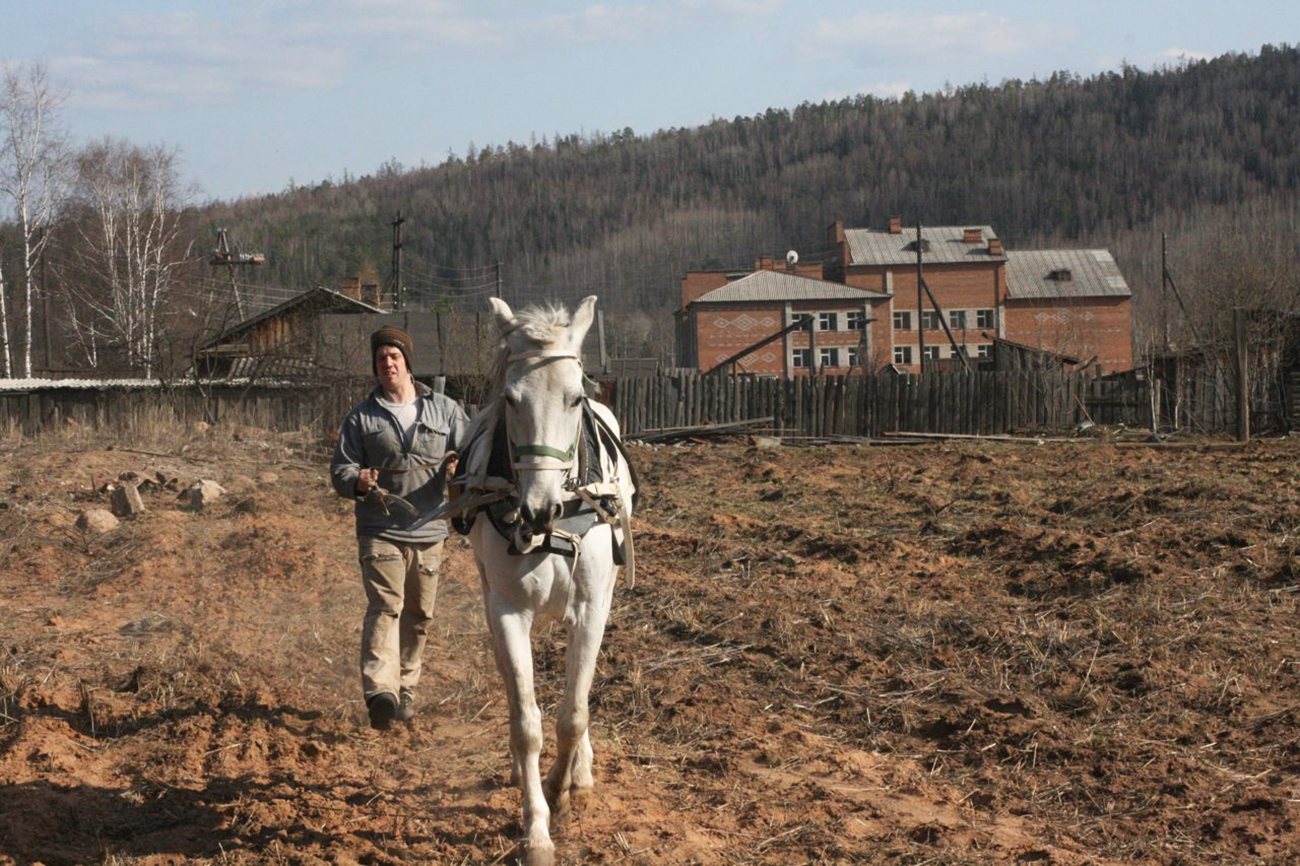
Justus Walker’s dispute with Russian authorities can be mapped along two routes. One runs through farms, regulators and the Ministry of Agriculture. The other runs through village churches, Protestant mission networks and a new allegation about the Russian Orthodox Church.
Walker, an American-born farmer who has spent most of his adult life in Russia, said in early August that officials were preparing to revoke his residence permit. His warning followed months of unusually sharp criticism of agricultural bureaucracy. That sequence created a straightforward political explanation: a once-useful public supporter of Russian rural life had become an inconvenient critic.
On Aug. 9, Stanislav Belkovsky proposed another route. He alleged that structures of the Moscow Patriarchate had inspired the pressure because Walker was an active Protestant missionary. Belkovsky also claimed that Walker helped create 14 Protestant congregations in Siberia.
There is no public document among the sources used here that links the Moscow Patriarchate directly to a migration decision, and the figure of 14 congregations has not been independently corroborated. The allegation about who caused the pressure remains just that — an allegation.
But Walker’s missionary network is not speculative.
RIA Novosti reported in February 2026 that Walker came to Russia with Protestant missionary parents and was ordained for ministry in 2004. His account of the following years is not of a ceremonial title but of continuing rural service. When his family moved to Altai in 2016, the possibility of missionary work was part of the location decision.
The Russian Union of Evangelical Christians-Baptists has repeatedly placed Walker inside its missionary ecosystem. In 2018 it described him as a missionary in Altai. In 2024 it invited him to preach at a youth conference focused on mission and described his service in Altai villages and his online evangelism.
The agricultural route is equally visible. Walker’s national fame grew from farming: goats, dairy production, village life and the “Merry Milkman” persona that Russian media turned into a durable human-interest story. That identity also carried a political message. An American publicly choosing Russia could be used as evidence that the country’s agricultural turn and rural culture had an appeal beyond its borders.
The same platform later amplified Walker’s criticism. By the spring of 2026, he was attacking the Ministry of Agriculture and what he described as a system hostile to small and medium-sized farmers. The Moscow Times reported his claims in March. On Aug. 8, The Daily Beast reported Walker’s statement that his residence permit could be revoked and his family might have to leave Russia.
Those two routes — agriculture and religion — intersect in a state where legal status is itself an instrument of power. A foreign-born resident can be economically useful, politically symbolic and religiously active at the same time. Conflict in one domain can change the value of his position in the others.
Belkovsky’s theory is that the religious route mattered most. If that is correct, Walker’s case would be less about punishment for criticism than about confessional competition and the ability of a dominant religious institution to influence administrative decisions. That would be a much larger institutional story.
The current evidence does not support making that leap. It supports a more disciplined conclusion: Walker had a long and public Protestant mission; he also had a recent and public conflict with agricultural officials; Belkovsky has now alleged that Orthodox Church structures connected those facts to the residency dispute.
The next decisive piece of information is therefore procedural. A formal record showing the legal grounds for the residency action, the agency that initiated it and any outside requests or complaints would establish which route actually reached the state apparatus.
Until that appears, the case is best read as an overlap of networks rather than a single solved mystery. The farmer who became a media symbol was also a pastor. The critic of agricultural bureaucracy was also an evangelical missionary. And the battle over whether he could remain in Russia brought those identities into the same political frame.
That is why Belkovsky’s intervention matters even before his central allegation is proven. It changes the map of the story. What looked like a narrow conflict between a farmer and regulators now includes another institutional route — religion — that had been public for years but rarely treated as central.
59