Davey Says Lib Dems Have Moral Duty to Block Reform as Party Prepares Snap Election Manifesto
Ed Davey has told his party it has a moral responsibility to stop Reform UK, as the Liberal Democrats begin drafting a manifesto for a possible snap election despite static poll ratings and internal frustration.
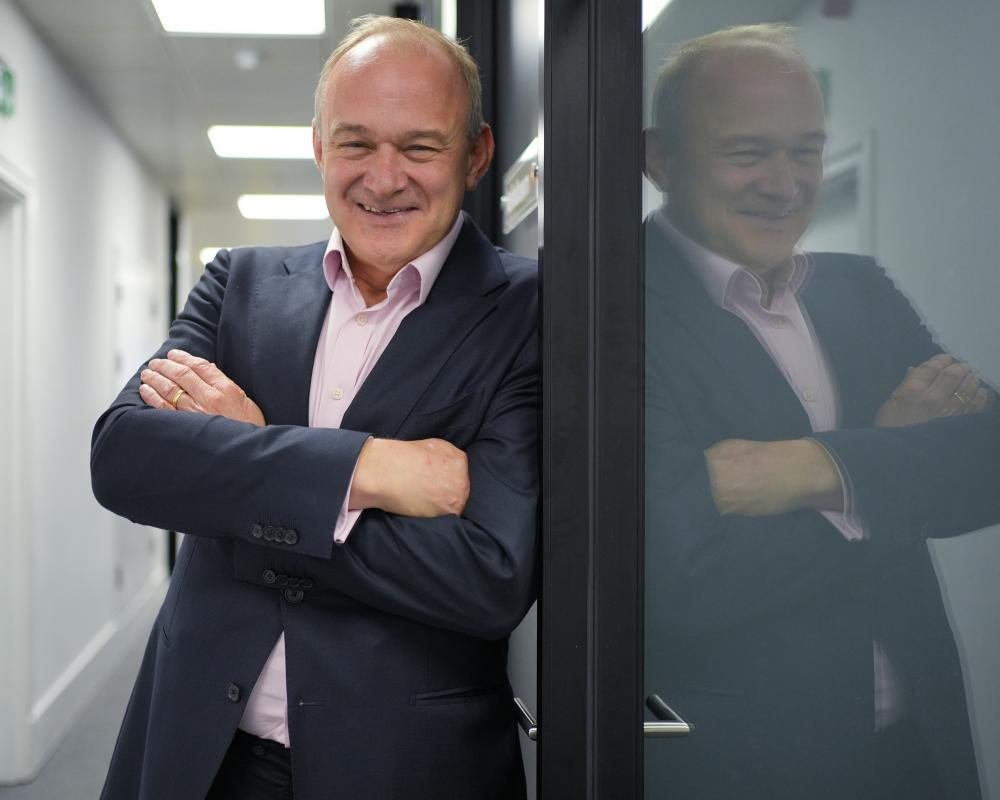
Ed Davey has said the Liberal Democrats carry a moral responsibility to block Reform UK, as the party begins work on a new manifesto in preparation for a possible snap general election. The Liberal Democrat leader made the argument as his party gathered for its conference, seeking to firm up the platform it would take into a national vote.
Davey acknowledged the frustrations of some of his MPs who fear the party's message is at risk of being lost, but urged colleagues not to panic over static polling numbers. He argued that with tactical voting and fragmented political loyalties, he fully expects the party to perform even better at the next election than it did in 2024, when it won 72 seats — its highest total for a century.
The Lib Dem leader has framed the coming contest as a fight against both the Conservatives and Reform UK, warning that the two parties want to turn Britain into what he described as a «Trump satellite state». He said his party's so-called «orange wall» would stop Reform UK's rise to power, positioning the Liberal Democrats as the main barrier to a realignment of the British right.
The conference is expected to firm up the party's election platform, with the leadership treating the possibility of an early national vote as a live scenario. Work on a fresh manifesto has already begun, according to the party, in a sign that the Lib Dems are preparing for a campaign that could come sooner than the scheduled parliamentary term would suggest.
Davey's message of reassurance comes amid signs of internal unease. One of his MPs said the party was «struggling for relevance», a remark that captures the broader anxiety among some Liberal Democrat parliamentarians about whether their message is cutting through. The leadership's response has been to stress that the party remains a strong force and that its electoral strategy is built for a fragmented political landscape rather than for uniform national swings.
The Liberal Democrats' 2024 result gave the party 72 seats, its best return in a century, and Davey has pointed to that outcome as evidence that its targeting of specific constituencies and its appeal to tactical voters can deliver gains beyond what national polling might imply. He has argued that voters are increasingly willing to lend their support to the party that can best defeat their least favoured candidate, a dynamic that could work in the Lib Dems' favour again.
Reform UK's rise has reshaped the terrain on which the Liberal Democrats are competing, particularly in seats where the Conservative vote is under pressure. Davey's framing of the choice as a moral one — blocking Reform — is intended to sharpen the party's identity at a moment when its poll ratings have been static and its message has been questioned by some of its own MPs.
The party's conference will now serve as the stage on which Davey tries to convert that argument into a coherent election platform. With manifesto work under way and the leadership openly preparing for a snap election, the Liberal Democrats are signalling that they intend to be ready whenever the vote comes, and that they see themselves as the pivotal force standing between Reform UK and power.