Colombian ex-guerrillas fear for their safety under new hardline president
Ninety-nine former Colombian guerrilla fighters who disarmed in June under the previous government's 'total peace' plan now fear for their fate as President Abelardo De la Espriella, who opposes the peace agreements, takes office.
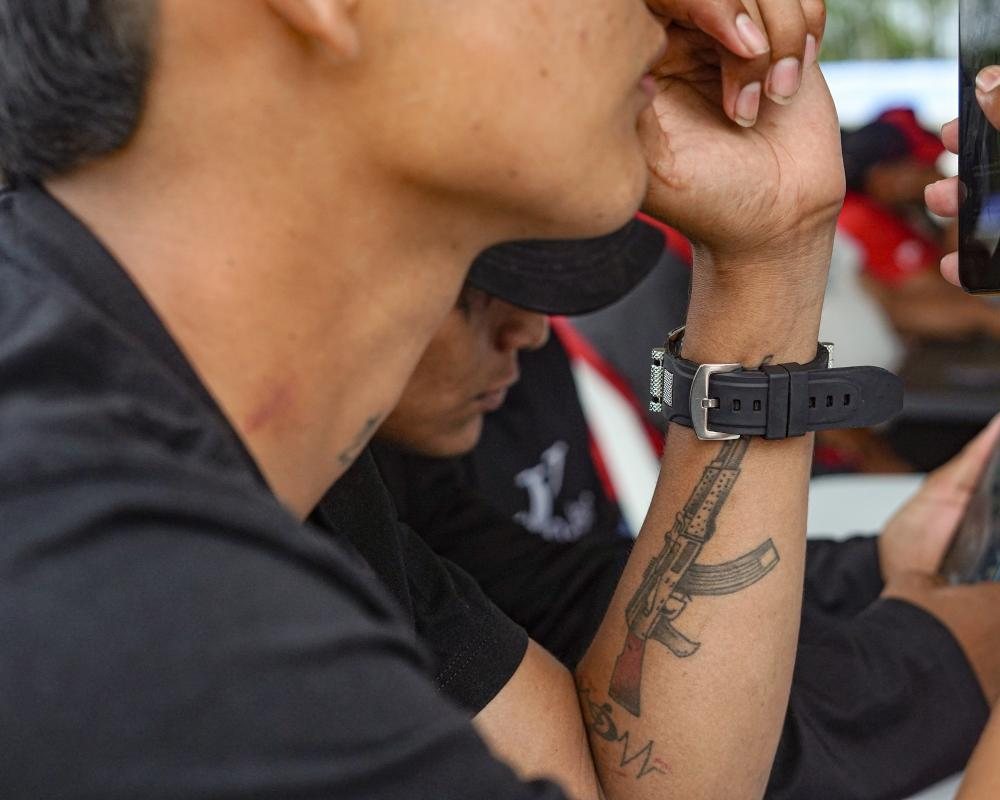
Former guerrilla fighters in Colombia who laid down their arms under the previous government's flagship peace initiative say they now fear for their safety under the country's new hardline president, Abelardo De la Espriella. The change of leadership has cast doubt over the future of a disarmament process that was already struggling to gain traction.
In mid-June, 99 guerrilla fighters were flown by helicopter to a small settlement in a rural area of southern Colombia, where they lined up and, one by one, handed their weapons to government officials. The arsenal included rifles, pistols, machine guns and grenade launchers. The fighters also stripped off their heavy tactical vests, field packs and camouflage uniforms, which were piled into a bonfire to mark the beginning of a new life away from an armed conflict that has claimed nearly half a million lives over the past six decades.
The disarmament was part of the 'total peace' plan championed by the previous administration, an ambitious strategy designed to end Colombia's long-running internal conflict by negotiating with armed groups and encouraging them to demobilise. However, the initiative yielded limited results. According to official figures, only 99 of Colombia's estimated 30,000 armed combatants ultimately chose to disarm under the programme, a fraction of the number the government had hoped to reach.
President De la Espriella, who has taken a markedly different approach, has publicly opposed the peace agreements that underpinned the disarmament process. His administration has signalled a shift towards a more security-focused strategy, raising concerns among former combatants that the protections and reintegration support promised to them may be withdrawn or weakened.
For the 99 former fighters now living in the remote settlement, the political change has created a climate of deep uncertainty. They had surrendered their weapons in the expectation of beginning a new chapter, but the arrival of a president hostile to the peace framework has left many wondering whether their safety can be guaranteed. The fear is that without robust state protection, they could become targets in a conflict that, while diminished, has not fully ended.
The situation highlights the fragility of peace processes in countries emerging from prolonged armed conflict. Colombia's six-decade war has left deep scars, and the transition from combatant to civilian is widely recognised as one of the most dangerous and difficult phases. The new president's stance threatens to unravel the limited progress made, potentially discouraging other armed groups from pursuing the path of negotiation.
Analysts note that the 'total peace' plan's failure to attract a larger number of combatants was already a significant blow to the previous government's ambitions. Now, with a president who rejects the agreements outright, the prospects for a comprehensive settlement appear even more remote. The former guerrillas, who took the risky step of laying down their arms, find themselves caught between a fragile peace and a hardening political climate.
57