Burnham sets three tests for UK climate-security agenda
The prime minister announced a UK climate-security agenda at Cop31 in Turkey, and a commentator sets out three tests to judge whether the government is serious about it.
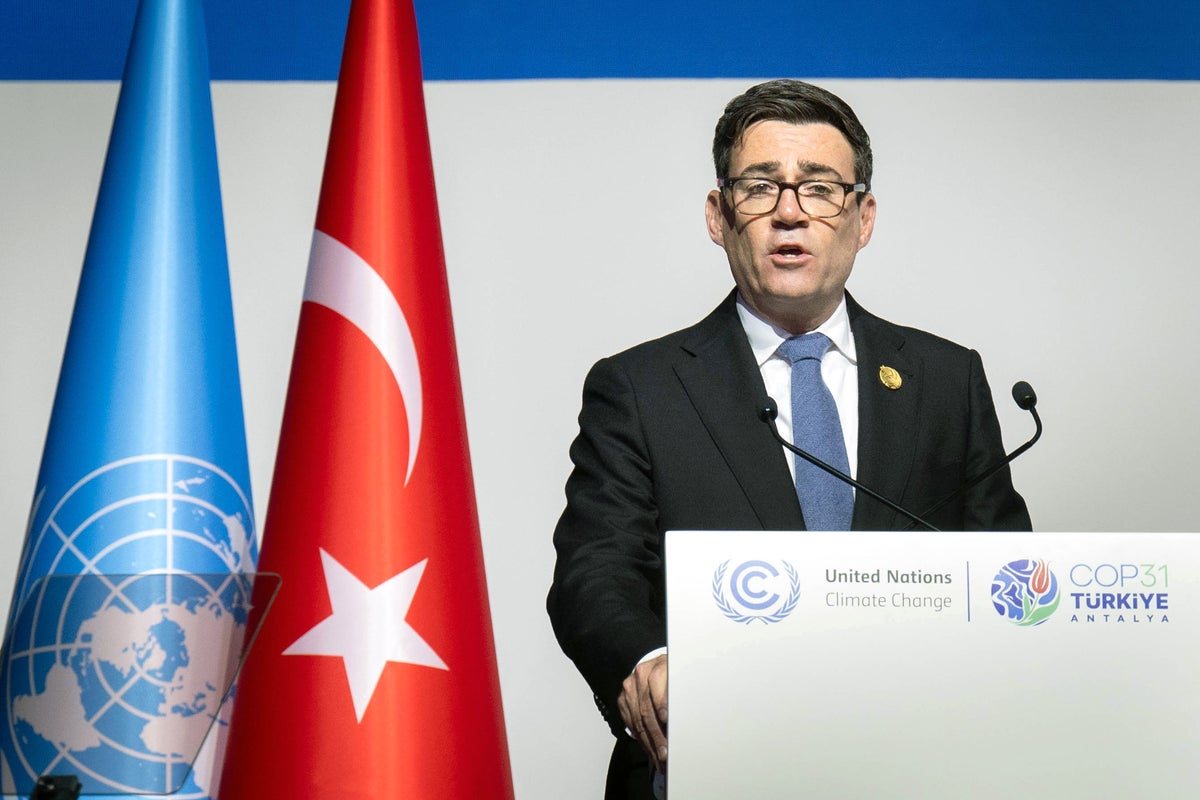
Whether the government is serious about climate security will be judged against three specific tests, according to an analysis of the UK's climate-security agenda. The agenda was announced by the prime minister at Cop31 in Turkey, and the tests are intended to show whether the policy goes beyond declaration. The analysis was written by Beatrice Mosello, who sets out the benchmarks as a way for the public to check progress rather than rely on headline commitments.
The framing matters because climate security links environmental risk to national security, food and water stability, and the pressures that can drive displacement and conflict. By setting out measurable benchmarks, the analysis aims to give readers a way to track whether commitments made on an international stage turn into domestic action. The tests are designed to be applied as the agenda moves from announcement to implementation, so that its credibility can be weighed against specific steps.
The question is also being asked against a wider political backdrop. Andy Burnham spoke at the Welsh Labour conference in Llandudno, where he urged the party to take stock after its defeat in the Senedd election in May. He said a party fightback had begun, a message aimed at restoring Welsh Labour's standing after a difficult result. The speech was addressed to party members rather than to the climate debate, and it set out the party's own path back to power.
In the same speech Burnham accused the Conservatives of burning bridges with the European Union over Brexit. His remarks have fuelled speculation about a possible return of the UK to the EU, although the speech itself centred on Welsh Labour's recovery. The climate-security tests and the EU debate are separate threads, but both raise the same underlying question: how seriously the government intends to pursue long-term commitments that depend on sustained international cooperation rather than short-term political positioning.
For readers following UK policy, the three tests offer a practical framework for the coming months. As Cop31 commitments are turned into domestic action, the agenda's supporters and critics alike will be able to measure its progress against the same yardstick, and the government's answer to the question of seriousness is likely to be found in those measurable steps rather than in the language of the announcement itself.
Source: independent.co.uk
68