Andy Burnham sparks political row as he says Irish unity poll ‘off the table’
Greater Manchester Mayor Andy Burnham has ignited a political controversy by declaring that a referendum on Irish unity is ‘off the table’ during the Prime Minister’s first official visit to Northern Ireland since taking office.
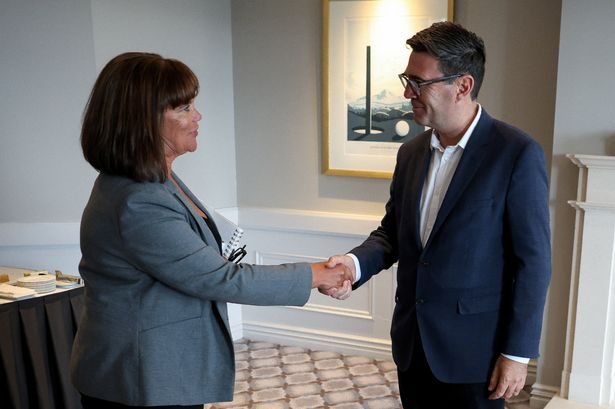
Greater Manchester Mayor Andy Burnham has provoked a political backlash after stating that a poll on Irish unity is ‘off the table’, a remark made as the Prime Minister undertook his first visit to Northern Ireland since entering Downing Street.
The comments, reported during the high-profile trip, have reignited debate over the constitutional future of the region. Mr Burnham’s assertion was immediately seized upon by political figures who accused him of overstepping his remit, while others welcomed the clarity of his position on a matter that remains deeply sensitive across communities in Northern Ireland.
The Prime Minister’s visit marks a significant early diplomatic engagement with the region, coming as the Northern Ireland Executive continues to grapple with a severe budget crisis at Stormont. The trip is seen as an attempt to reset relations between Westminster and Belfast, with the new administration signalling its intent to address pressing local issues, including public sector funding and the functioning of devolved institutions.
Mr Burnham’s intervention, however, has shifted attention away from the budgetary concerns that dominated the agenda. His use of the phrase ‘off the table’ in relation to a unity referendum has been interpreted by some as a definitive statement on a question that the UK government has traditionally insisted is a matter for the people of Northern Ireland to decide, in line with the Good Friday Agreement. That agreement explicitly provides for a border poll if the Secretary of State believes a majority might support unification.
Critics argue that Mr Burnham, as a regional mayor in England, has no authority to make such pronouncements on Northern Ireland’s constitutional status. They contend that his comments could inflame tensions and undermine the delicate political balance in the region. Supporters, by contrast, suggest that his remarks simply reflect the current political reality and a desire to focus on practical governance rather than speculative constitutional change.
The row underscores the fragility of Northern Ireland’s political landscape, where the legacy of the Troubles and the ongoing debate over identity continue to shape public discourse. The Prime Minister’s visit, intended to demonstrate stability and cooperation, has instead been overshadowed by the controversy generated by Mr Burnham’s statement.
Observers note that the episode highlights the sensitivity of Irish unity as a topic within UK politics, particularly when raised by figures from outside Northern Ireland. The government has so far declined to comment directly on Mr Burnham’s remarks, with officials emphasising the importance of the Prime Minister’s engagements in the region.
As the visit concludes, attention will likely return to the pressing matter of the Stormont budget crisis, which threatens the delivery of public services in Northern Ireland. The government has pledged to work with local leaders to find a sustainable solution, but the distraction caused by the unity poll row serves as a reminder of the constitutional questions that continue to loom over the region’s political future.
60