
Yayoi Kusama, Japanese artist who became a global superstar, dies aged 97
Yayoi Kusama, the Japanese artist whose polka-dot installations and hallucinatory visions made her one of the most recognised figures in contemporary art, has died in Tokyo aged 97.
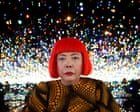
Yayoi Kusama, the Japanese artist who rose from an outsider in the New York avant-garde to become one of the most recognisable figures in contemporary art, has died aged 97. Her studio announced that she died in a Tokyo hospital on 14 August, with the news confirmed in a statement on her website on Thursday.
Kusama’s career spanned seven decades, from the 1950s to the 2020s, during which she produced vivid paintings, sculptures and vast installations that often drew directly on her experience of hallucinations. Her signature motifs — endless polka dots, pumpkins and mirrored rooms — turned personal psychological experience into immersive public spectacle that drew millions of visitors to museums worldwide.
Born in Matsumoto, Japan, in 1929, Kusama moved to the United States in the late 1950s, where she became part of the New York art scene. She gained attention for her avant-garde performances and large-scale installations, but struggled financially and socially for years before gaining wider recognition. In the 1970s she returned to Japan and voluntarily checked into a psychiatric hospital, where she lived for decades while continuing to work in a nearby studio.
Her breakthrough to global superstardom came later in life. Major retrospectives in the 1990s and 2000s, including a landmark show at the Museum of Modern Art in New York, introduced her work to a broad international audience. Her Infinity Mirror Rooms — installations of mirrored chambers filled with lights or sculptural forms — became cultural phenomena, drawing long queues and generating a wave of social media attention that cemented her status as a mainstream celebrity artist.
Kusama’s work was frequently described as a way of coping with the hallucinations she had experienced since childhood, which she translated into repetitive patterns and immersive environments. She once said that art was her way of overcoming the fear and anxiety caused by these visions, a theme that ran consistently through her paintings, sculptures and installations.
Her commercial success matched her critical acclaim. Kusama was among the most expensive living female artists at auction, and her exhibitions regularly broke attendance records at major institutions across Europe, Asia and the Americas. She collaborated with luxury brands and designed public artworks, making her name familiar far beyond the art world.
News of her death prompted tributes from artists, curators and cultural institutions around the world. Many noted the rarity of an artist who achieved both deep critical respect and genuine popular appeal, particularly one who spent most of her life living voluntarily in a psychiatric facility.
Kusama is survived by her studio and the vast body of work she produced over more than 70 years. Her legacy includes not only the installations and paintings that drew millions of visitors, but also the example of an artist who transformed private struggle into a public language of colour, pattern and light.
69