
Emirates A380 from Dubai to Heathrow diverts to Frankfurt after mid-air medical emergency
Emirates flight EK31 declared an emergency at 40,000ft while en route from Dubai to London Heathrow and was forced to land in Frankfurt. The Airbus A380 is expected to resume its journey after the medical diversion.
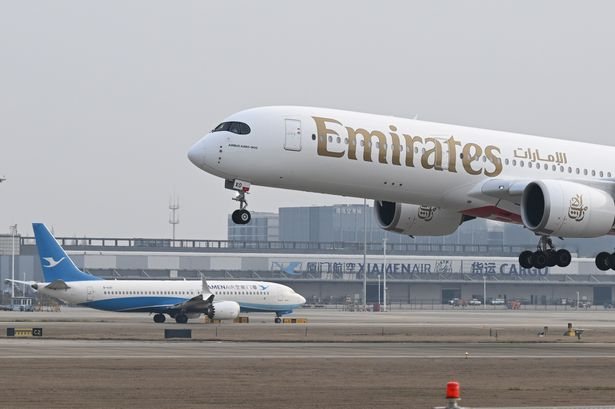
An Emirates Airbus A380 bound for London Heathrow was forced to divert to Frankfurt after declaring a mid-air emergency at 40,000 feet. The flight, operating as EK31 from Dubai, declared the emergency while cruising over Europe, prompting air traffic controllers to prioritise its descent into the German hub.
The nature of the emergency was medical, according to reports, and the aircraft landed safely at Frankfurt Airport. The diversion interrupted the scheduled service between Dubai and London, one of Emirates' busiest long-haul routes, which is normally operated by the double-decker A380.
Emergency declarations of this kind are routine in aviation when a passenger or crew member requires urgent medical attention. Squawking 7700, the standard transponder code for a general emergency, alerts air traffic control to clear the aircraft's path and prepare ground medical services. In this case, the crew elected to divert to Frankfurt rather than continue to Heathrow, indicating that the situation required immediate attention on the ground.
Frankfurt Airport is a major European hub with comprehensive medical facilities and is a common diversion point for transatlantic and long-haul flights crossing the continent. The decision to land there rather than press on to London reflects standard operating procedure when a medical emergency is deemed serious enough to warrant a faster landing.
Following the diversion, the flight was expected to be back in the air, with the aircraft due to resume its journey. The incident caused a delay to passengers on board but no further disruption was reported. Emirates has not issued a detailed statement on the specific medical circumstances, and the condition of the individual involved has not been disclosed.
Medical emergencies on commercial flights are relatively rare but not uncommon on long-haul routes. Cabin crew are trained in basic life support and have access to onboard medical kits and, on some aircraft, telemedicine support linking them to ground-based doctors. When a situation escalates, the captain may declare an emergency to obtain priority handling and reduce the time to landing.
The diversion of EK31 highlights the operational flexibility required on routes that cross multiple air traffic control regions. Controllers in Germany coordinated with the crew to bring the A380 down safely at Frankfurt, where the aircraft was met by airport emergency services as a precaution. Such responses are standard when an emergency is declared, even if the landing itself is uneventful.
Emirates operates multiple daily services between Dubai and London, using both Heathrow and Gatwick, and the A380 remains a mainstay of the route. The airline has not indicated whether the diversion will affect subsequent rotations of the aircraft, though delays of this kind can ripple through schedules depending on crew hours and aircraft positioning.
For passengers, the priority in any medical diversion is the health of the individual concerned. Airlines typically arrange for onward travel once the aircraft is cleared to continue, and in this case the flight was expected to depart Frankfurt shortly after landing. The incident did not involve any reported threat to the aircraft or those on board beyond the medical situation that triggered the emergency declaration.
The event is a reminder of the complex logistics behind every long-haul flight, where decisions made in minutes at altitude involve coordination between pilots, cabin crew, air traffic control, and ground medical teams. In this instance, that system worked as intended, bringing the aircraft safely to the ground and allowing it to continue its journey.
2