
British Airways Flight to Chicago Declares Emergency After 28,000ft Descent
A British Airways Boeing 777 bound for Chicago made an emergency descent over Ireland, dropping 28,000 feet before circling to burn fuel and landing safely at Heathrow.
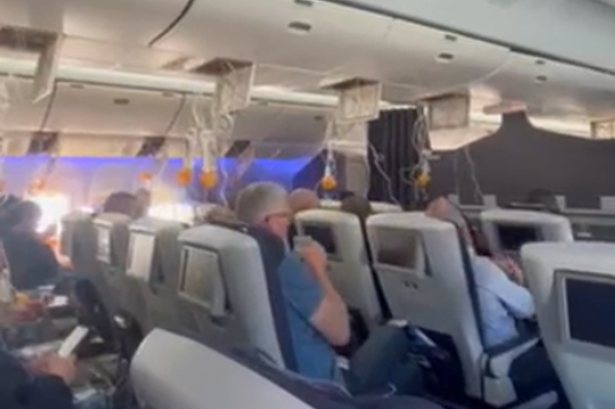
A British Airways flight from London Heathrow to Chicago was forced to declare an emergency and make a rapid descent over Ireland after what the airline described as a technical issue, dropping approximately 28,000 feet before turning back to London.
The aircraft, operating as flight BA295, was cruising at altitude when the crew initiated an emergency descent. Oxygen masks were deployed in the cabin as the plane dropped to around 9,000 feet. The flight had been heading west towards the United States when it made a U-turn above Irish airspace and began its return to Heathrow.
According to flight tracking data, the Boeing 777 then circled over the Bristol Channel to burn off fuel before landing safely at Heathrow Airport. The airline confirmed that the aircraft landed without further incident and that all passengers and crew were safe.
The emergency descent is a standard procedure used by pilots when there is a loss of cabin pressure or when the aircraft needs to reach a lower altitude quickly where oxygen levels are sufficient for breathing without supplemental supply. The deployment of oxygen masks is a key part of this protocol, ensuring that those on board remain conscious and safe during the rapid drop.
British Airways said in a statement that the flight had returned to Heathrow due to a technical issue and that it had landed safely. The airline did not provide further details on the nature of the technical problem, but confirmed that engineers would inspect the aircraft. Passengers were expected to be rebooked onto alternative flights to Chicago.
The incident is the latest in a series of mid-air emergencies involving commercial aircraft, though such events remain rare relative to the total number of flights operated daily. Aviation authorities in the United Kingdom and the United States are likely to review the circumstances, as is standard practice following any declared emergency.
The flight had departed Heathrow earlier in the day and was several hours into its journey when the emergency was declared. The decision to return to London rather than divert to an airport in Ireland or elsewhere was made by the crew, who followed established safety procedures. The fuel-burning manoeuvre over the Bristol Channel is a common step when an aircraft needs to reduce its weight before landing to avoid exceeding maximum landing limits.
No injuries have been reported among the passengers or crew. The aircraft involved is a long-haul wide-body jet, typically configured for several hundred passengers on transatlantic routes. British Airways operates multiple daily services between Heathrow and Chicago, one of its key long-haul destinations.
The airline has faced operational challenges in recent years, including staffing issues and technical disruptions, but it maintains that safety remains its highest priority. The Civil Aviation Authority, which oversees UK airlines, may request a report on the incident as part of its routine oversight.
For passengers on board, the experience would have been alarming, with oxygen masks dropping from the ceiling and the aircraft making a steep descent. However, the successful landing underscores the effectiveness of crew training and aircraft systems in managing such situations. The flight number BA295 is a regularly scheduled service, and the aircraft will undergo a thorough inspection before returning to service.
3