The AI buildout meets a landowner veto in Kentucky
A hyperscale project secured 2,080 acres of industrial zoning, but a family rejected more than $26 million for 534 acres — exposing the local bottlenecks behind global compute demand.
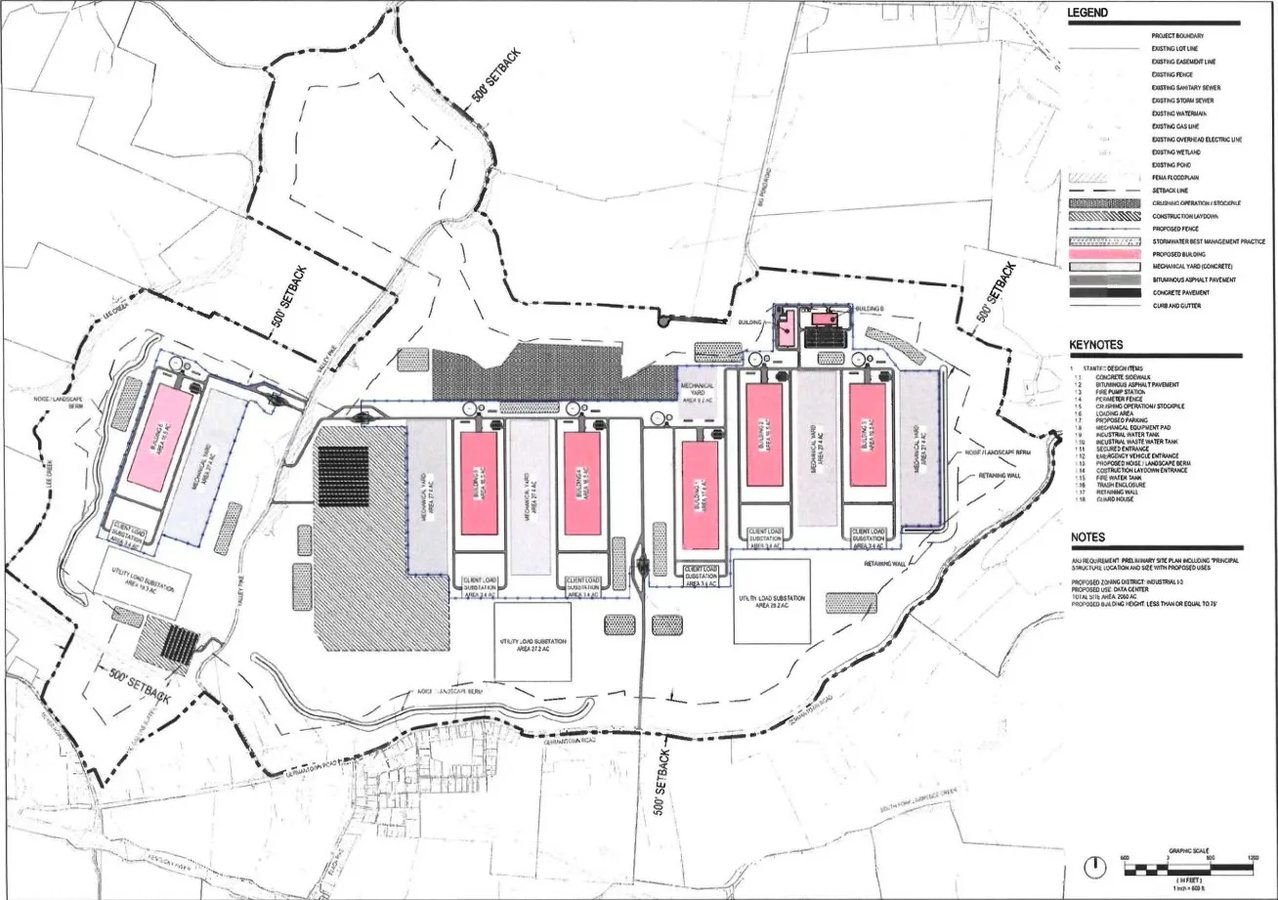
Global demand for AI compute eventually arrives somewhere as a local land-use decision. In Mason County, Kentucky, that translation has produced an unusual result: a hyperscale data-centre proposal has secured industrial zoning across roughly 2,080 acres, while two farmers inside the wider story have refused more than $26m for 534 acres.
Ida Huddleston, 82, was offered $60,000 an acre for 71 acres. Her daughter Delsia Bare was offered $48,000 an acre for 463. The numbers illustrate the premium hyperscale developers can place on strategic parcels when they are assembling large campuses near suitable power and network infrastructure.
Yet the offers failed because the sellers were not optimising for liquidity. The wider Huddleston family farm is about 1,200 acres and has been connected to the family for more than two centuries. It remains productive farmland and a place of family memory. Bare's late husband is buried there.
The initial negotiation also contained a power imbalance. PEOPLE reports that the women signed a contract after becoming afraid of eminent domain. Legal advice later clarified that the private developer could not simply compel the sale, and they withdrew. A transaction that looked inevitable under perceived coercion became unacceptable once the owners understood their legal position.
The project then rerouted. Mason County's Fiscal Court approved rezoning of 28 properties on 22 May, giving the unnamed developer a large industrial footprint without the Huddleston-Bare parcels. Local officials estimate around 400 permanent jobs and more than 1,500 construction jobs, and say the company will pay for required road and utility infrastructure.
This is where a local dispute connects to the larger AI infrastructure system. Lawrence Berkeley National Laboratory's latest estimate puts U.S. data centres at 9.5% to 15.3% of national electricity consumption by 2030, with an 11.8% reference case. The power race encourages developers to seek locations where land, grid access and permitting can converge at scale.
Water is another constraint but must be treated with engineering precision. Huddleston and Bare fear pressure on local supplies. U.S. Department of Energy guidance shows that data-centre water demand varies considerably by cooling method; cooling towers consume water through evaporation, while alternative configurations can reduce consumption. Without the final system design, a specific water impact in Mason County cannot be assumed.
The political network is equally important. The end user remained publicly undisclosed in July, even after rezoning. Residents organised as We Are Mason County have challenged the approval process in court. That means the project has passed a zoning gate without eliminating legal and legitimacy risk.
In infrastructure strategy, routes matter because bottlenecks are rarely where the product is most visible. For AI, the visible product is software. The bottlenecks are transmission, generation, cooling, fibre, land and community consent. Mason County has supplied enough parcels to keep the project moving, but not enough consent to make the process frictionless.
The family’s refusal is therefore more than a human-interest detour. It is a reminder that the route from global compute demand to a functioning data centre passes through thousands of local property decisions. Some can be bought at a premium. Others have no market-clearing price, and the project must learn to go around them.
79