Hundreds protest coal exports by boat at Newcastle port
Hundreds of demonstrators took to the water at Newcastle, one of Australia's largest coal export ports, calling for an end to coal shipments by 2030 and support for workers moving into other industries.
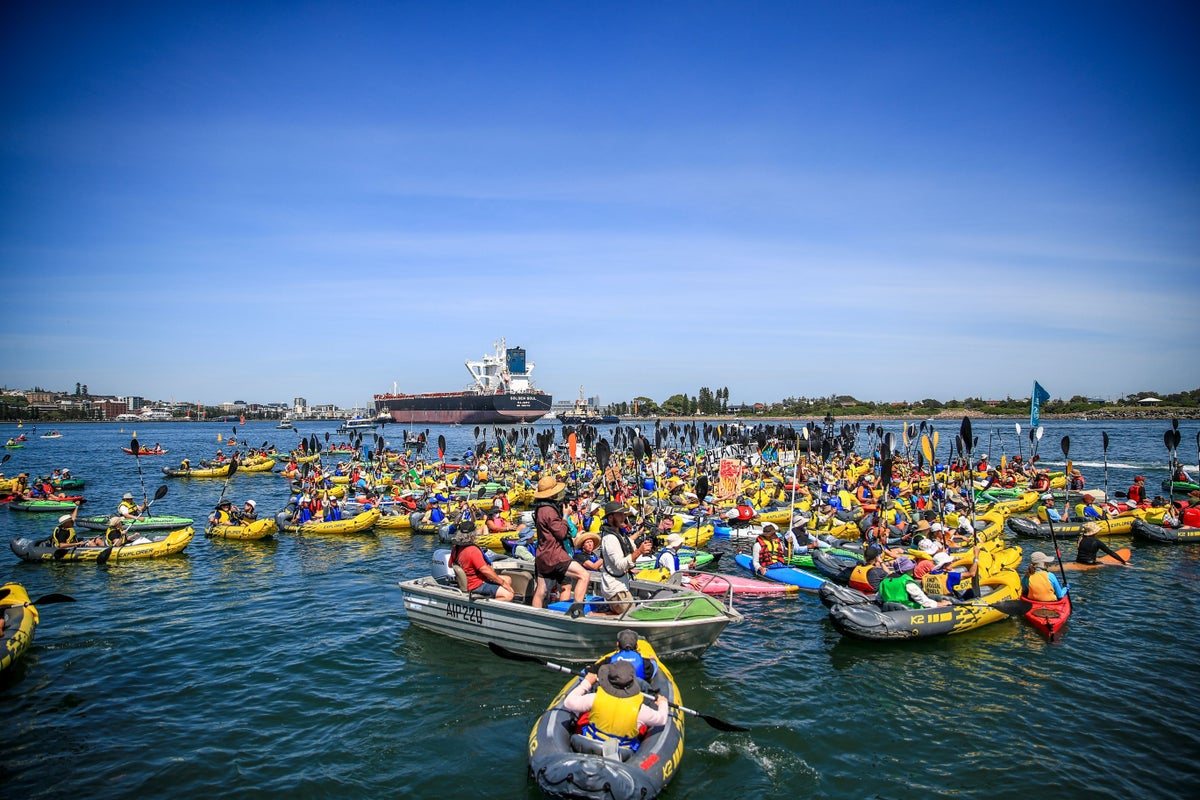
Hundreds of demonstrators took to the water at Newcastle port in Australia to protest the export of coal, one of the country's most important commodities. The action, carried out by boat, called for an end to Newcastle's coal exports by 2030 and came as Australia faces growing scrutiny over its climate policies.
Newcastle is one of the world's major coal export hubs, and the protest targeted the commercial heart of that trade. Organisers chose a waterborne format to bring their message directly to the port, where coal shipments leave for overseas buyers. The 2030 deadline they set gives a concrete timetable for winding down the port's coal business, placing the issue squarely within the national debate over how quickly the economy should move away from fossil fuels.
The protesters did not only call for an end to the trade. Organisers also want workers who depend on the coal industry to be supported as they move into other sectors. That demand reflects one of the central tensions in the transition debate: the environmental case for phasing out coal has to be weighed against the livelihoods of communities whose jobs and local economies are tied to mining and port operations. In the protesters' framing, support for workers is a condition of any shift away from coal rather than a secondary concern.
The demonstration unfolded against a backdrop of heightened attention to Australia's climate record. As one of the world's significant exporters of coal, the country has drawn scrutiny both at home and abroad over whether its export industry is consistent with its climate commitments. The Newcastle action adds to the pressure on policymakers, port operators and industry to explain how the coal trade fits into the country's long-term climate and economic strategy, and it signals that opposition to coal exports is being pursued through direct, visible public action on the water rather than only through conventional channels.
The choice of location carries its own weight. Newcastle's port is central to the regional economy, and the protest's focus on the point where coal leaves the country underlines that the campaign is aimed at the export link itself rather than at mines far inland. For that reason, the debate over the port is also a debate over the jobs, contracts and public revenue associated with the trade, which is why organisers have paired their call for a phase-out with demands for transition support.
At the time of reporting, no official responses to the demonstration were available in the material reviewed, and no figures on the volume or value of Newcastle's coal exports were confirmed. Reactions from port authorities, government bodies, industry groups and workers were not recorded in the available notes, so the immediate response to the protest remains unclear. The number of participants is described only as hundreds, and no further details on the organisers or the timing of future actions were confirmed.
Source: independent.co.uk
64