Finland Routes €28.5 Million Into Ukraine’s Distributed Energy Buildout
The money covers part of a €46.5 million technology package, with Ukraine funding the balance as Finnish development finance, EBRD credit and industrial supply converge.
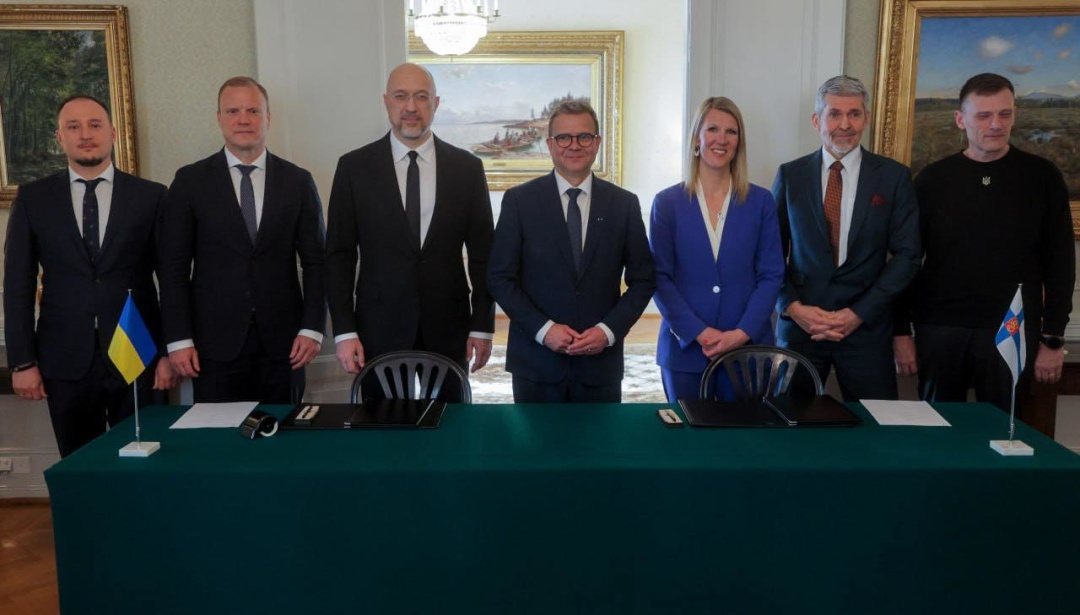
Finland is routing about €28.5 million of development-cooperation money into power-plant technology for Ukraine. The total technology cost is €46.5 million, and Ukraine is financing the remainder. The result is a small but instructive map of how reconstruction capital now moves: from a national development budget, through an investment framework, alongside Ukrainian funds and multilateral credit, into physical energy assets.
The numbers imply an Ukrainian contribution of roughly €18 million. That split means neither side is merely transferring risk to the other. Finland absorbs a large share of the upfront cost, while Ukraine retains enough financial exposure to make procurement, deployment and operation matters of direct domestic budget interest.
The route is institutional as well as financial. Finland’s development programme for Ukraine in 2024–2028 has a budget of at least €320 million and includes energy security among its priorities. The Finland–Ukraine Investment Facility was set up to finance public-sector projects worth up to €50 million in 2025–2026, using Finnish technology, products, services and expertise.
In the power sector, that mechanism intersects with a separate route through the European Bank for Reconstruction and Development. Ukrnafta and Wärtsilä signed a framework agreement in May for equipment used in distributed generation. The first stage had already secured an €80 million EBRD loan, while later stages were expected to draw on the Finnish-Ukrainian facility.
A June decision gave the strategy a regional map. Ukraine said nearly 939 million hryvnias would be directed to gas-engine generation projects in Ivano-Frankivsk and Lviv regions, with up to 60 megawatts of combined capacity. Instead of concentrating all new generation at one large site, the programme spreads units across locations that can serve regional demand and critical infrastructure.
That distribution has a geopolitical logic. Russia’s campaign against the energy system has repeatedly targeted large generation and transmission nodes. A network with more local sources is not invulnerable, but it is harder to disable through a small number of strikes. Each additional site creates another path by which electricity can reach consumers when the broader system is under stress.
The economic route also runs back to Finland. Development finance creates demand for Finnish industrial capability, while Ukrainian co-financing and multilateral procurement rules give the projects a commercial structure. This is one reason reconstruction is likely to blur the line between aid policy and export policy: governments are supporting Ukraine while creating channels for their own companies to supply long-term infrastructure.
There are still bottlenecks. Wartime logistics, permitting, grid connection, fuel arrangements and construction can slow even well-financed projects. Complex funding stacks can also add administrative layers, especially when several institutions apply different procurement and reporting requirements.
The value of the Finnish commitment therefore depends on whether the route remains open all the way to commissioning. If money, equipment and approvals move on schedule, the project adds real redundancy to Ukraine’s electricity system. If one link fails, the financing architecture will have succeeded on paper without delivering the strategic asset it was built to produce.
72